321 STRONG Foam Roller Review: Textured Myofascial Release for Home Recovery
Our research-backed review of the 321 STRONG Foam Roller examines texture pattern, foam density, durability, and pain-pr...
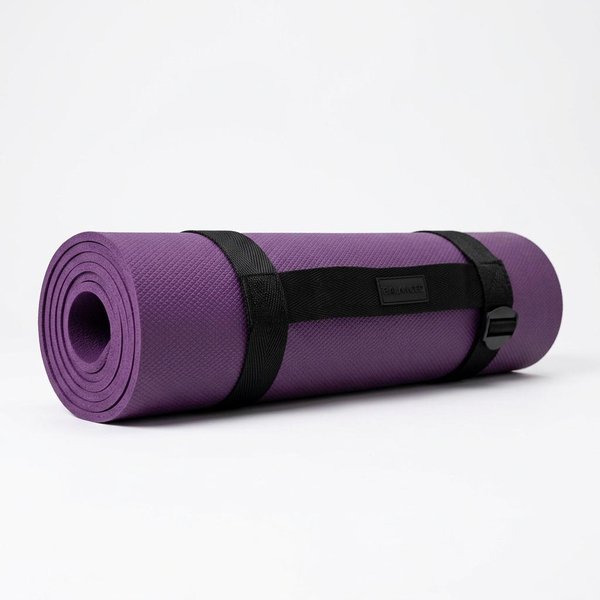
A comprehensive guide to PNF stretching—how it works, the science behind contract-relax techniques, benefits, risks, and how to incorporate it into your routine.
PNF stretching—short for Proprioceptive Neuromuscular Facilitation—is an advanced stretching technique that combines passive stretching with isometric muscle contractions to achieve greater range of motion than static stretching alone. Originally developed in the 1940s and 1950s by neurophysiologist Herman Kabat and physical therapist Margaret Knott at the Kabat-Kaiser Institute, PNF was first used to treat patients with neurological conditions like polio and multiple sclerosis. It has since been adopted by athletes, physical therapists, and fitness professionals for improving flexibility and rehabilitation.
Unlike static stretching, where you passively hold a stretched position, PNF involves actively contracting the muscle being stretched (or its opposite) against resistance before relaxing into a deeper stretch. This active component engages the nervous system in ways that allow the muscle to relax and lengthen more effectively.
PNF stretching operates through several well-documented neurological and mechanical mechanisms:
When a muscle contracts at high tension, specialized sensors called Golgi Tendon Organs (GTOs)—located in the muscle tendons—detect this tension and signal the spinal cord to relax the contracting muscle. This protective reflex prevents excessive force generation that could damage the muscle or tendon. In PNF, the isometric contraction phase activates the GTOs, which then send inhibitory signals that allow the muscle to relax more deeply during the subsequent stretch.
When one muscle contracts, its opposing muscle (antagonist) receives inhibitory signals that promote relaxation. This allows coordinated movement—when the bicep contracts to bend the elbow, the tricep automatically relaxes. In the Contract-Relax-Antagonist-Contract (CRAC) form of PNF, contracting the opposing muscle while stretching the target muscle takes advantage of this reflex to achieve greater lengthening.
Muscles and tendons exhibit viscoelastic properties—they behave somewhat like Silly Putty, gradually lengthening when a sustained stretch is applied. When you hold a stretch, the collagen fibers in the connective tissue gradually rearrange, allowing the tissue to "creep" to a longer length. The contraction phase in PNF increases the initial tension on the tissue, enhancing this viscoelastic response.
This is the simplest and most commonly used PNF technique:
Example: For a hamstring stretch, place your heel on an elevated surface. Have a partner gently push your straight leg toward your head. Then, press your heel down against your partner's hand (contracting the hamstring) for 6-10 seconds. Relax, and your partner will find they can gently move your leg further.
This variation adds a contraction of the opposing muscle:
Example: For the same hamstring stretch, after contracting the hamstring and relaxing, actively lift your leg toward your head using your hip flexors and quadriceps. This active component often produces greater range of motion than the CR method alone.
Similar to CR, but the initial stretch is held longer (30+ seconds) before the contraction phase. Some practitioners report this produces greater relaxation in very tight muscles.
A 2023 systematic review and meta-analysis in the International Journal of Exercise Science examined 42 studies and found that:
A landmark 2022 meta-analysis in the European Journal of Applied Physiology found that:
Practical implication: Save PNF stretching for after your workout, during a dedicated mobility session, or on rest days—not as part of your pre-competition warm-up.
Research in Physical Therapy in Sport (2023) found that PNF techniques were effective for:
While traditionally performed with a partner, you can adapt many PNF stretches for solo practice:
For maximum benefit, incorporate PNF stretching 2-3 times per week on dedicated mobility days or after intense training sessions. A complete PNF routine targeting major muscle groups takes 15-20 minutes. Always perform PNF after a general warm-up—cold muscles resist lengthening and are more susceptible to strain. The contraction phase should never be maximal; research shows that 20-50% effort produces comparable range of motion gains to 100% effort while significantly reducing injury risk.
Start conservatively: Use only 20-30% of your maximum contraction force initially. High-force contractions increase injury risk without proportionally greater flexibility benefits.
Don't hold your breath: Breathe normally during both the contraction and relaxation phases. Breath-holding increases blood pressure and muscle tension.
Avoid painful stretching: PNF should produce a mild-to-moderate stretching sensation, never sharp pain. Pain triggers protective muscle guarding that counteracts the relaxation response.
Contraindications: Avoid PNF if you have:
| Factor | PNF Stretching | Static Stretching |
|---|---|---|
| Single-session ROM gain | Greater (10-15% more) | Moderate |
| Long-term flexibility | Similar when matched for time | Similar when matched for time |
| Performance impact pre-exercise | Significant reduction in strength/power | Mild reduction |
| Skill required | Higher (technique matters) | Low |
| Equipment needed | Partner or strap | None |
| Risk when performed incorrectly | Higher | Lower |
For most people, the optimal approach is:
PNF stretching is a powerful, research-supported technique for improving flexibility and range of motion. Its combination of passive stretching with active muscle contractions engages the nervous system in ways that produce greater acute ROM improvements than static stretching alone. However, timing matters: perform PNF after exercise or on rest days, not before activities requiring maximal strength or power. When performed correctly and consistently, PNF is a valuable tool in any mobility and recovery program.
References: International Journal of Exercise Science (2023); European Journal of Applied Physiology (2022); Physical Therapy in Sport (2023); Journal of Bodywork and Movement Therapies (2021).