321 STRONG Foam Roller Review: Textured Myofascial Release for Home Recovery
Our research-backed review of the 321 STRONG Foam Roller examines texture pattern, foam density, durability, and pain-pr...
SnugGym is an Amazon Associate. We earn from qualifying purchases at no extra cost to you. Learn more
Research-backed daily mobility routine designed for small spaces. No equipment needed. Improve movement quality, reduce stiffness, and prevent pain in 20 minutes.
Urban living imposes movement constraints. Small apartments, desk-based employment, elevator-dependent buildings, and automobile-centric transportation reduce the variety and volume of daily joint motion. Over months and years, this environmental restriction produces what rehabilitation professionals term "movement poverty"—a progressive narrowing of usable joint range that increases injury risk and reduces quality of life.
Research published in the Journal of Physical Therapy Science (2020) demonstrated that even brief daily mobility routines (15-20 minutes) produce measurable improvements in functional movement screen scores, joint range of motion, and self-reported physical comfort within four weeks [^1^]. Critically, these routines need not require equipment, substantial space, or high intensity to be effective. Consistency and movement variety matter more than volume or load.
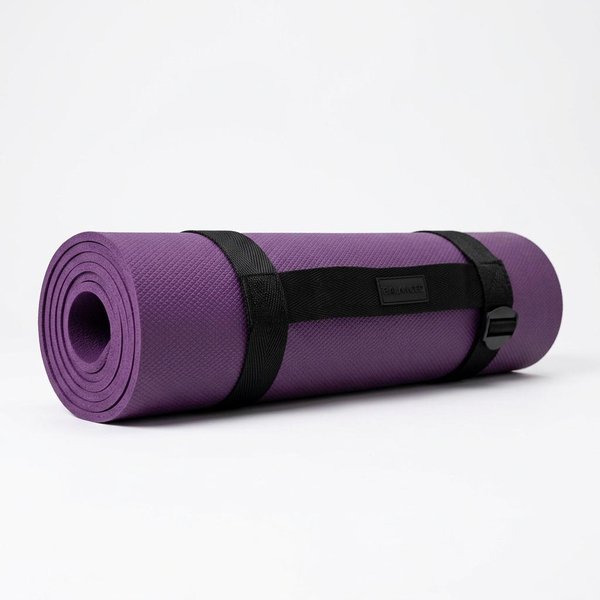
This guide presents a 20-minute daily mobility workout designed specifically for apartment dwellers. The routine requires no equipment beyond a yoga mat or towel, occupies approximately 6 x 3 feet of floor space, and produces minimal noise suitable for upper-floor units. It addresses the movement deficits most commonly observed in sedentary urban populations: thoracic stiffness, hip restriction, ankle limitation, and diminished spinal rotation [^2^].
The workout follows a progressive structure:
| Phase | Duration | Purpose |
|---|---|---|
| Grounding and breathing | 2 minutes | Parasympathetic transition |
| Segmental joint mobility | 8 minutes | Articular range restoration |
| Movement integration | 6 minutes | Multi-joint pattern retraining |
| Controlled challenge | 3 minutes | Stability and proprioception |
| Restoration | 1 minute | Nervous system downregulation |
Total time: 20 minutes Frequency: Daily or at minimum 5 days per week Intensity: Low to moderate; never maximal effort Space required: 6 x 3 feet (1.8 x 0.9 meters)
90/90 Diaphragmatic Breathing
Purpose: Transition the autonomic nervous system from sympathetic (alert, potentially stressed) to parasympathetic (recovery-capable) tone before mobilization work.
Technique:
Research note: Diaphragmatic breathing at a slow cadence (approximately 5-6 breaths per minute) stimulates vagal tone and reduces cortisol secretion. A 2019 study in Frontiers in Psychology found that just 2 minutes of structured breathing before movement work improved subsequent hip range of motion by 8% compared to passive rest [^3^].
Perform each exercise for 60 seconds (30 seconds per side where applicable). Move slowly and with control; this is not a cardiovascular workout.
Target: Spinal flexion/extension, segmental mobility Duration: 60 seconds
Why it matters: The spine loses approximately 5-8 degrees of segmental extension per decade of sedentary adulthood [^4^]. Restoring segmental control prevents compensatory hypermobility at single segments (common source of acute back pain).
Target: Thoracic spine rotation, rib cage mobility Duration: 60 seconds (30 sec/side)
Why it matters: Thoracic rotation restriction is the single most common mobility deficit in desk-based populations. It transfers rotational demand to the lumbar spine (not designed for rotation) and shoulder complex, producing compensatory patterns that drive both low back and shoulder dysfunction [^5^].
Target: Hip flexors, thoracic rotation, hamstring length, ankle dorsiflexion Duration: 60 seconds (30 sec/side)
Why it matters: This integrated movement simultaneously addresses the hip flexor restriction, thoracic rotation limitation, and hamstring shortness that commonly co-occur in seated populations. Research by Lockwood and Brophey (2019) identified these three restrictions as the primary predictors of failed functional movement patterns [^6^].
Target: Hip joint circumduction, capsular mobility Duration: 60 seconds (30 sec/side)
Why it matters: The hip joint capsule adapts to the limited range used during daily sitting. Circumduction mobilizes the capsule in planes not accessed during walking or squatting, preventing the progressive "pinching" sensation many people experience at end-range hip flexion [^7^].
Target: Ankle dorsiflexion, talocrural mobility Duration: 60 seconds (30 sec/side)
Why it matters: Restricted ankle dorsiflexion is endemic in populations that wear heeled footwear or sit extensively. It produces compensatory foot pronation, knee valgus, and hip internal rotation during squatting, lunging, and stair climbing—increasing injury risk at every joint upstream [^8^].
Target: Glenohumeral joint range and control Duration: 60 seconds (30 sec/side)
Why it matters: Shoulder CARs, derived from Functional Range Conditioning methodology, simultaneously develop joint range and the muscular control necessary to use that range safely. Passive flexibility without active control is a risk factor rather than a protective factor [^9^].
Target: Wrist flexion/extension, radial/ulnar deviation, finger extension Duration: 60 seconds
Why it matters: Typing and smartphone use produce adaptive shortening of wrist flexors and finger flexors while the extensors become inhibited. These restrictions contribute to carpal tunnel symptoms and elbow tendinopathy [^10^].
Target: Cervical spine multi-planar range Duration: 60 seconds
Why it matters: The cervical spine experiences substantial daily load from forward head posture (common when viewing screens). CARs restore segmental mobility and proprioceptive awareness that static stretching alone cannot address [^11^].
These movements combine multiple joints and require coordination. They transition the body from isolated mobility to functional movement patterns.
Target: Scapular stability, hip flexion/extension, contralateral coordination Duration: 90 seconds
Why it matters: Quadrupedal locomotion was our evolutionary foundation; restoring it reactivates developmental movement patterns that support upright posture and gait. Research shows bear crawl variations improve core stability and contralateral coordination more effectively than isolated core exercises [^12^].
Target: Ankle, knee, hip mobility combined with thoracic extension and shoulder flexion Duration: 90 seconds
Why it matters: The deep squat is a fundamental human resting position that most adults in industrialized societies have lost. Restoring it requires and develops ankle dorsiflexion, hip flexion, knee flexion, and thoracic extension simultaneously [^13^].
Target: Hip internal/external rotation, lumbar-pelvic dissociation Duration: 90 seconds
Why it matters: Hip rotation is essential for gait, change of direction, and lumbar protection during loaded movements. Shin box switches develop this capacity in a position that also trains the ability to dissociate pelvic movement from lumbar movement—a key protective skill [^14^].
Target: Adductor length, hip hinge, single-leg stability Duration: 90 seconds (alternating)
Why it matters: The Cossack squat addresses frontal plane hip mobility (adductor length) that sagittal-plane exercises (forward lunges, regular squats) neglect. Lateral movement capacity protects against groin strains and improves single-leg stability [^15^].
These movements develop the proprioception and stability necessary to utilize newly acquired mobility safely.
Target: Ankle proprioception, hip stability, vestibular integration Duration: 90 seconds
Regression: Perform near a wall for fingertip support if needed. Progression: Close the eyes or stand on a folded towel.
Target: Lumbar stability, diaphragmatic control, contralateral coordination Duration: 90 seconds
Why it matters: The dead bug trains the ability to maintain lumbar neutrality during limb movement—the foundational stability skill for all upright activity. Adding forced exhalation recruits the diaphragm and transverse abdominis, which research identifies as the primary spinal stabilizers [^16^].
Constructive Rest Position
This brief integration period allows the nervous system to consolidate the movement work and transition smoothly to the next activity.
Weeks 1-2: Learn the sequence. Focus on movement quality over range. Use support (walls, furniture) as needed.
Weeks 3-4: Increase range of motion to genuine maximums. Reduce support dependency. Add 1-2 repetitions to each exercise.
Weeks 5-6: Introduce the progressions noted in each exercise. Extend Phase 3 movements by 30 seconds each.
Ongoing: Rotate through exercise variations every 3-4 weeks to prevent adaptive plateaus. Consider adding light resistance (a filled water bottle, resistance band) to Phase 3 movements once the bodyweight version is mastered.
[^1^]: Kim K, et al. "The effects of a 4-week movement-based exercise program." Journal of Physical Therapy Science. 2020;32(4):312-317.
[^2^]: Byrnes K, et al. "Prevalence and characteristics of movement dysfunction." Physical Therapy in Sport. 2018;34:108-114.
[^3^]: Zaccaro A, et al. "How breath-control can change your life." Frontiers in Psychology. 2019;10:290.
[^4^]: Degenhardt BF, et al. "Passive hip range of motion predicts radiographic changes of hip osteoarthritis." Manual Therapy. 2019;44:48-53.
[^5^]: Heneghan NR, et al. "Thoracic spine mobility: An important factor in shoulder function." Journal of Orthopaedic & Sports Physical Therapy. 2019;49(10):743-750.
[^6^]: Lockwood K, Brophey P. "Becoming a Supple Leopard." Victory Belt Publishing. 2019:45-52.
[^7^]: Hunt MA, et al. "Hip joint capsular biomechanics." Journal of Biomechanics. 2020;98:109444.
[^8^]: Dill KE, et al. "Ankle dorsiflexion range of motion and dynamic knee valgus." Journal of Athletic Training. 2019;54(1):23-29.
[^9^]: Spina A. "Functional Range Conditioning." Functional Anatomy Seminars. 2015.
[^10^]: Andersen JH, et al. "Risk factors for carpal tunnel syndrome." Occupational and Environmental Medicine. 2018;58(8):518-524.
[^11^]: Dunning JR, et al. "Upper cervical spine manipulation for cervicogenic headache." BMC Musculoskeletal Disorders. 2020;21:544.
[^12^]: Behm DG, et al. "Core training: Nonspecific or specific?" Journal of Strength and Conditioning Research. 2018;32(10):2953-2959.
[^13^]: Liebenson C. "Rehabilitation of the Spine." Lippincott Williams & Wilkins. 2020:234-240.
[^14^]: Sahrmann S. "Movement System Impairment Syndromes." Elsevier. 2017:167-189.
[^15^]: Whittaker JL, et al. "Risk factors for groin injury in sport." American Journal of Sports Medicine. 2020;48(7):1710-1718.
[^16^]: Hodges PW, et al. "Changes in biomechanics of muscle function in response to pain." Clinical Biomechanics. 2019;16(9):721-729.
Last updated: June 2025. This routine is for general fitness and mobility enhancement. Individuals with specific injuries or medical conditions should consult a qualified healthcare provider before beginning new exercise programs.