321 STRONG Foam Roller Review: Textured Myofascial Release for Home Recovery
Our research-backed review of the 321 STRONG Foam Roller examines texture pattern, foam density, durability, and pain-pr...
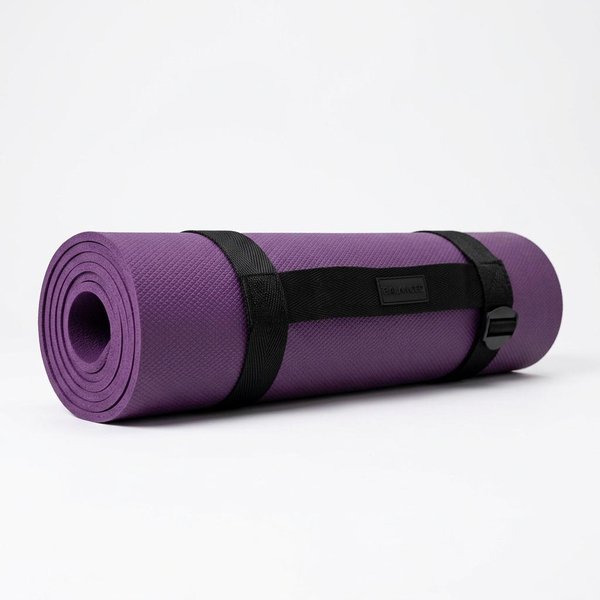
A complete daily mobility routine designed for small spaces. Foam rolling sequence, dynamic stretching flow, and joint circles requiring minimal equipment and no noise.
Mobility — the ability to move a joint through its full range of motion with control — is a foundational capacity that supports every other form of training. Limited mobility increases injury risk, reduces exercise effectiveness, and contributes to the postural compensations common among desk workers.
This routine requires 15–20 minutes, a 6-by-6-foot floor area, and minimal equipment. It produces no noise and can be performed at any hour without disturbing neighbors. It is suitable for all fitness levels.
Research supports several components of this routine:
| Equipment | Purpose | Cost | Alternatives |
|---|---|---|---|
| Foam roller | Myofascial release | $20–50 | Tennis ball, lacrosse ball |
| Yoga mat | Cushioned surface | $15–50 | Carpet, towel |
| Stretching strap | Assisted stretching | $10–15 | Belt, towel, resistance band |
Total equipment cost: $45–115, much of which is reusable across all your training.
| Phase | Duration | Activity |
|---|---|---|
| 1: Foam Rolling | 5 minutes | Targeted myofascial release |
| 2: Dynamic Stretching | 5 minutes | Movement through increasing range |
| 3: Joint Circles (CARs) | 5 minutes | Controlled articular rotations |
Spend 30–60 seconds on each area. Roll slowly — approximately 1 inch per second. When you find a tender spot, hold pressure for 10–15 seconds until the sensation decreases by approximately 50%. Do not roll directly over joints or bones.
Position: Lie on your back with the foam roller across your shoulder blades. Hands behind head, elbows wide. Feet flat on floor, knees bent.
Movement: Lift hips slightly and roll from mid-back to upper shoulders. Do not roll onto the lower back (lumbar spine) or neck.
Cues: Keep chin tucked. Exhale as you roll over tight areas. Support your head weight with your hands — do not pull on your neck.
Duration: 60 seconds
Position: Sit on the roller with one ankle crossed over the opposite knee (figure-four). Shift weight onto the glute of the crossed leg.
Movement: Roll slowly across the glute in small forward-backward movements. Tilt slightly to catch different angles.
Cues: The figure-four position targets the piriformis — a deep glute muscle often tight in desk workers. If this position is uncomfortable, keep both feet on the floor.
Duration: 45 seconds per side
Position: Lie face down with the roller under your thighs. Forearms on the floor for support.
Movement: Roll from the top of the thigh (near the hip) to just above the knee. Rotate slightly inward and outward to catch the medial (inner) and lateral (outer) quad.
Cues: Do not roll over the kneecap. Breathe normally — do not hold your breath.
Duration: 60 seconds total (both legs simultaneously, or 30 seconds per leg)
Position: Lie on your side with the roller under your armpit/lat area. Bottom arm extended overhead. Legs stacked or staggered for balance.
Movement: Roll from the armpit down to the bottom of the ribcage. Small, controlled movements.
Cues: This area is often sensitive. Use your legs to control how much body weight you place on the roller.
Duration: 45 seconds per side
Position: Sit with the roller under your calves. Hands behind you for support. Lift hips off the floor.
Movement: Roll from the Achilles tendon up to the back of the knee. Rotate slightly to catch the medial and lateral calf.
Cues: Point and flex your ankle during rolling to add active movement. For more pressure, cross one ankle over the other.
Duration: 45 seconds per side
Perform each movement for 8–10 repetitions per side. Move slowly and with control — these are not ballistic swings. The goal is to actively increase range of motion through movement, not to force a stretched position.
Purpose: Opens hips, thoracic spine, and hamstrings in a single sequence.
Movement:
Cues: Keep the front foot flat. The rotation should come from your mid-back, not just your shoulder.
Purpose: Opens adductors (inner thigh) and hip hinge pattern.
Movement:
Cues: Chest stays upright. The bent knee tracks over the toes. Sit back into the hip of the bent leg.
Purpose: Opens ankles, hips, and thoracic spine.
Movement:
Cues: Heels should remain on the floor. If they lift, place a small book or rolled towel under them.
Purpose: Opens hip flexors and hamstrings.
Movement:
Cues: Keep the torso upright. The movement comes from the hip, not the lower back. Do not force the range — let it increase naturally.
Purpose: Opens shoulders and thoracic spine.
Movement:
Cues: Keep ribs down — do not arch the lower back to create more range.
CARs are slow, controlled circles performed at each major joint, taking the joint through its maximum available range. They are a cornerstone of Functional Range Conditioning (FRC), a system developed by Dr. Andreo Spina.
The principle: by actively controlling your joint at its range limits, you stimulate the joint's tissues (capsule, ligaments, cartilage) and maintain neural pathways for that range. Regular practice expands the usable range.
Performance standard: Each rotation should take 10–15 seconds. Move as slowly as possible while maintaining control. If a portion of the circle feels restricted or painful, work around it — do not force through sharp discomfort.
Movement:
Reps: 3 slow circles each direction
Cues: Eyes follow the movement. Move slowly enough that you feel each segment of the rotation.
Movement:
Reps: 3 slow circles each direction, each arm
Cues: Do not arch the lower back to create more range. Keep ribs down. The rotation should come from the shoulder joint, not spinal compensation.
Movement:
Reps: 3 slow circles each direction, each leg
Cues: Keep the standing leg stable. The torso should not shift significantly — the movement comes from the hip joint.
Movement:
Reps: 5 slow circles each direction, each ankle
Cues: Isolate the ankle — do not rotate from the knee. The circles should feel smooth, not jerky.
| Modification | Beginner | Intermediate | Advanced |
|---|---|---|---|
| Foam roll pressure | Reduce body weight on roller | Full body weight | Pause on tender spots 20+ seconds |
| Dynamic stretch depth | Reduce range to comfort | Full controlled range | Add a 2-second hold at end range |
| CARs speed | 15–20 seconds per circle | 10–15 seconds per circle | 8–10 seconds, maximum controlled range |
| Total routine time | 10 minutes (reduce reps) | 15 minutes (as written) | 20 minutes (add second CAR set) |
| Timing | Benefit | Consideration |
|---|---|---|
| Morning | Reduces overnight stiffness, prepares body for day | May need to reduce intensity if muscles are cold |
| Before workout | Acutely increases range of motion | Perform after any cardio warm-up; do not replace sport-specific preparation |
| After workout | Maintains range of motion gained during exercise | Ideal timing — muscles are warm and pliable |
| Before bed | Reduces tension accumulated during the day | Use gentler pressure; avoid vigorous movements that may elevate alertness |
Acute range-of-motion improvements occur immediately after a single session. Sustained improvements typically require 3–4 weeks of consistent practice (4–5x/week). Long-term structural changes to joint tissue require months of regular work.
Yes. Mobility work is low-intensity and can be performed daily. If a particular joint feels irritated, skip the CARs for that joint and focus on the surrounding areas.
This routine and yoga serve different purposes. Yoga incorporates breathwork, meditation, and flowing sequences that go beyond the mechanical focus of this routine. Many practitioners combine both — yoga for practice and this routine for targeted joint maintenance.
A tennis ball or lacrosse ball can substitute for targeted areas (glutes, lats, calves). A rolled towel can provide some thoracic extension support. A foam roller is recommended for optimal coverage but is not strictly required.
As an Amazon Associate we earn from qualifying purchases. Exercise recommendations are based on established mobility training principles. Consult a healthcare provider before beginning any exercise program, particularly if you have existing joint conditions.