321 STRONG Foam Roller Review: Textured Myofascial Release for Home Recovery
Our research-backed review of the 321 STRONG Foam Roller examines texture pattern, foam density, durability, and pain-pr...
SnugGym is an Amazon Associate. We earn from qualifying purchases at no extra cost to you. Learn more
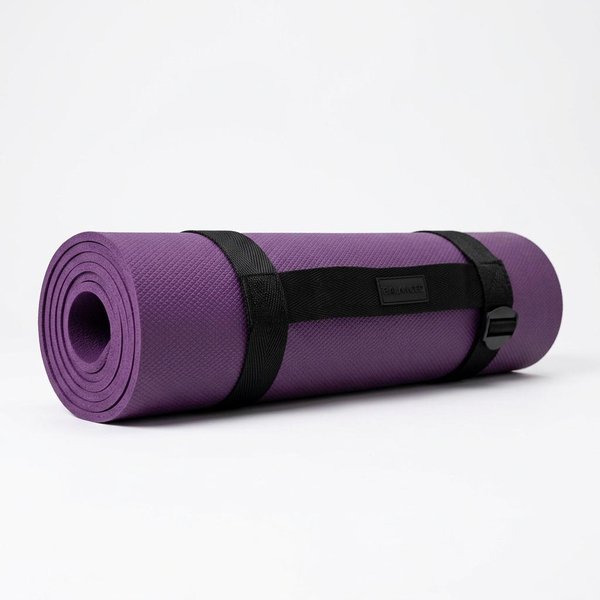
Research-backed full-body foam rolling routine for muscle recovery, mobility, and pain relief. Step-by-step guide with timing, technique, and sequence optimization.
Self-myofascial release (SMR) via foam rolling has transitioned from gym novelty to evidence-based practice. Systematic reviews and meta-analyses published in Frontiers in Physiology (2019) and the Journal of Athletic Training (2015) confirm meaningful benefits: reduced delayed-onset muscle soreness (DOMS), improved joint range of motion, and accelerated recovery of muscular performance following strenuous exercise [^1^][^2^].
Yet these benefits are contingent on proper application. Rolling haphazardly—too quickly, with inadequate pressure, in suboptimal sequences, or at inappropriate times—diminishes outcomes and may increase discomfort without corresponding recovery advantage. This guide synthesizes current research and practical biomechanics to present a comprehensive, actionable foam rolling protocol.
Before detailing the routine, several research-derived principles should inform practice:
Duration per muscle group: A landmark study by Pearcey et al. (2015) demonstrated that 20 minutes of post-exercise foam rolling (60-90 seconds per muscle group) significantly reduced DOMS and improved subsequent performance compared to passive rest [^1^]. Longer durations per area (2-3 minutes) show diminishing returns; shorter durations (<30 seconds) appear insufficient.
Pressure intensity: Research by Aboodarda et al. (2015) indicates that pressure should reach a 4-7 rating on a 10-point discomfort scale—substantial but tolerable [^3^]. Maximal tolerable pressure triggers protective muscle guarding, paradoxically increasing tension. The oft-cited "hurt so good" threshold is physiologically appropriate.
Movement speed: Studies consistently favor slow rolling at approximately 1 inch per second [^2^]. Rapid rolling generates insufficient sustained mechanical loading to produce tissue deformation or meaningful mechanoreceptor stimulation.
Timing: Post-exercise rolling shows the strongest evidence for DOMS reduction, though pre-exercise rolling also improves flexibility without the strength impairments sometimes associated with static stretching [^4^]. Morning rolling addresses overnight tissue stiffness; evening rolling may facilitate parasympathetic transition toward sleep.
Sequence: While research has not rigorously compared sequencing protocols, anatomical reasoning and fascial continuity suggest working from proximal to distal, and from larger to smaller muscle groups, prevents premature fatigue of stabilizing musculature needed for smaller-area precision work.
This routine assumes access to a standard high-density foam roller (6-inch diameter, 36-inch or 24-inch length). Users may also benefit from:
Perform this sequence in the order presented. Total time: approximately 15 minutes. For time-constrained sessions, the "Essential Five" (marked with ★) can be completed in 8 minutes with substantial benefit.
Duration: 2 minutes Target: Thoracic erector spinae, multifidus, costovertebral joints
Technique:
Then transition to mobilization:
Research note: Thoracic mobility restrictions correlate significantly with shoulder dysfunction and neck pain [^5^]. This segment provides exceptional return on time investment.
Common error: Allowing the lumbar spine to compensate. Keep the core engaged so extension is isolated to the thoracic region.
Duration: 90 seconds per side Target: Latissimus dorsi, teres minor, serratus anterior, lower trapezius
Technique:
Research note: Latissimus tightness restricts overhead reaching and contributes to compensatory lumbar extension in overhead athletes [^6^].
Progression: For deeper penetration, extend the arm fully overhead and internally rotate so the thumb faces backward—this lengthens the latissimus and exposes more tissue to the roller.
Duration: 90 seconds per side Target: Gluteus maximus, medius, minimus, piriformis, obturator internus
Technique:
Critical nuance: The piriformis and deep rotators respond better to sustained pressure (20-30 seconds) than to continuous rolling. Identify the tender point near the center of the glute and hold steady pressure while taking 3-5 diaphragmatic breaths.
Research note: Gluteal inhibition (neuromuscular "switching off") correlates with low back pain and knee dysfunction. Foam rolling before activation exercises improves subsequent gluteal engagement [^7^].
Duration: 90 seconds per leg Target: Rectus femoris, vastus lateralis, vastus medialis, vastus intermedius
Technique:
Segmental focus:
Research note: The quadriceps receive substantial eccentric loading during running, squatting, and descending stairs—making them primary DOMS generators. Foam rolling the quads post-exercise shows the largest effect size for soreness reduction in meta-analytic studies [^1^].
Intensity management: The quadriceps are typically the most uncomfortable area to roll. If pain exceeds 7/10, support more bodyweight on the free leg or roll over clothing rather than bare skin.
Duration: 60 seconds per side Target: Iliotibial band, vastus lateralis, tensor fasciae latae (TFL)
Technique:
Critical clarification: You cannot directly "release" the IT band—it is dense connective tissue, not contractile muscle. However, rolling the lateral thigh decompresses the tissue, improves blood flow to the underlying vastus lateralis, and reduces tension in the TFL and gluteus maximus (which attach into the IT band) [^8^].
Common error: Rolling directly over the greater trochanter bursa or lateral knee joint. Stay on the muscular tissue between these bony landmarks.
Duration: 60 seconds per side Target: Adductor longus, brevis, magnus, gracilis, pectineus
Technique:
Research note: Adductor tightness restricts frontal plane hip mobility and contributes to groin strain risk in multidirectional athletes. Rolling the adductors before lateral movement training improves available range of motion [^9^].
Alternative position: If prone positioning is uncomfortable, lie on your side with the top leg internally rotated and draped over the roller.
Duration: 60 seconds per leg Target: Biceps femoris (long and short heads), semitendinosus, semimembranosus
Technique:
Segmental focus:
Research note: Hamstring flexibility restrictions correlate with lumbar flexion compensation during forward bending, increasing disc loading. Foam rolling the hamstrings produces acute flexibility improvements comparable to static stretching but without the subsequent strength decrements [^4^].
Duration: 60 seconds per leg Target: Gastrocnemius (medial and lateral heads), soleus, tibialis posterior
Technique:
Progression:
Research note: Calf tightness restricts ankle dorsiflexion, which cascades into compensatory foot pronation, knee valgus, and hip internal rotation during squatting and gait. Maintaining calf extensibility through regular rolling has downstream biomechanical benefits [^10^].
Duration: 60 seconds per foot Target: Plantar fascia, intrinsic foot muscles
Technique:
Research note: Plantar fasciitis affects approximately 10% of the population at some point. Regular plantar surface rolling—combined with calf stretching—demonstrates efficacy comparable to orthotic intervention in clinical trials [^11^]. Even asymptomatic individuals benefit from maintaining plantar tissue extensibility to preserve arch mechanics.
Duration: 60 seconds per side Target: Pectoralis minor, pectoralis major (clavicular head), anterior deltoid
Technique:
Application context: This segment is particularly valuable for individuals with desk-based occupations, overhead throwing athletes, and those undergoing postural correction programs. Pectoralis minor tightness pulls the scapula into protraction and anterior tilt, contributing to impingement syndromes and thoracic outlet symptoms [^12^].
Alternative: A massage ball against a wall provides more precise pectoralis minor trigger point work for those with significant restriction.
Avoid foam rolling over:
Use caution with:
When to seek professional evaluation:
[^1^]: Pearcey GE, et al. "Foam rolling for delayed-onset muscle soreness and recovery of dynamic performance measures." Journal of Athletic Training. 2015;50(1):5-13.
[^2^]: Wiewelhove T, et al. "A meta-analysis of the effects of foam rolling on performance and recovery." Frontiers in Physiology. 2019;10:376.
[^3^]: Aboodarda SJ, et al. "Foam rolling of quadriceps decreases biceps femoris activation." Journal of Strength and Conditioning Research. 2015;29(12):3453-3460.
[^4^]: MacDonald GZ, et al. "An acute bout of self-myofascial release increases range of motion without a subsequent decrease in muscle activation or force." Journal of Strength and Conditioning Research. 2013;27(3):812-821.
[^5^]: Heneghan NR, et al. "Thoracic spine mobility, an important factor in shoulder function." Journal of Orthopaedic & Sports Physical Therapy. 2019;49(10):743-750.
[^6^]: Borstad JD, et al. "The effect of long versus short pectoralis minor resting length on scapular kinematics." Journal of Shoulder and Elbow Surgery. 2006;15(1):75-82.
[^7^]: Peacock CA, et al. "The effects of foam rolling on hip and knee extensor mechanics." Journal of Strength and Conditioning Research. 2018;32(11):3138-3144.
[^8^]: Fairclough J, et al. "The functional anatomy of the iliotibial band." Journal of Anatomy. 2006;208(3):309-316.
[^9^]: Mohr AR, et al. "Effect of foam rolling and static stretching on hip range of motion." International Journal of Exercise Science. 2014;7(4):312-320.
[^10^]: Dill KE, et al. "Ankle dorsiflexion range of motion and dynamic knee valgus." Journal of Athletic Training. 2019;54(1):23-29.
[^11^]: Rathleff MS, et al. "High-load strength training improves outcome in patients with plantar fasciitis." Scandinavian Journal of Medicine & Science in Sports. 2015;25(3):e292-e300.
[^12^]: Borstad JD, et al. "The effect of pectoralis minor stretching on scapular kinematics." Journal of Shoulder and Elbow Surgery. 2007;16(6):713-718.
Last updated: June 2025. This routine is educational content, not personalized medical advice. Consult a qualified physical therapist or physician for individual rehabilitation protocols.