321 STRONG Foam Roller Review: Textured Myofascial Release for Home Recovery
Our research-backed review of the 321 STRONG Foam Roller examines texture pattern, foam density, durability, and pain-pr...
SnugGym is an Amazon Associate. We earn from qualifying purchases at no extra cost to you. Learn more
Discover the best massage guns under $150 for small-space recovery. Our expert-tested top picks include the Ekrin Bantam, Renpho R3, LifePro Sonic, TaoTronics, Flyby F1Pro, and Chirogun for quiet apartment-friendly percussive therapy.
Percussive therapy has moved from professional training facilities into living rooms, and apartment dwellers are some of the biggest beneficiaries. A quality massage gun can reduce delayed-onset muscle soreness (DOMS), improve local circulation, and accelerate recovery after home workouts — all without the space requirements of a full-size foam roller setup or the recurring cost of massage therapy sessions. The challenge for apartment home gym owners is finding a device that delivers genuine therapeutic value while remaining quiet enough to use at 9 PM without drawing complaints from neighbors through thin walls.
The good news is that the sub-$150 category has matured significantly. Devices that once cost $300 or more now have capable alternatives at a fraction of the price. But not all budget massage guns are created equal. Some deliver impressive stall force and amplitude genuinely comparable to premium models; others are underpowered vibrational devices dressed up with aggressive marketing. The key differentiators at this price point are stall force (how much pressure the motor can sustain before stalling), amplitude (how deep the head travels into muscle tissue), noise level (critical for apartment use), and battery life (since fewer units in this range have swappable batteries).
This guide focuses specifically on six massage guns that represent the best value under $150 for apartment home gym users. Every pick has been evaluated for quiet operation, space-friendly storage, and real recovery performance after home workouts ranging from kettlebell circuits to bodyweight HIIT sessions.
| Product | Best For | Key Feature | Price Range | Our Rating |
|---|---|---|---|---|
| Ekrin Bantam | Portability & travel | 6-hour battery, 35 lb stall force, lifetime warranty | ~$120 | ⭐⭐⭐⭐⭐ |
| Renpho R3 | Budget quiet operation | 40 dB noise level, USB-C charging, 5 speeds | ~$70-100 | ⭐⭐⭐⭐ |
| LifePro Sonic | Attachment variety | 8 interchangeable heads, 6-hour battery, LCD display | ~$80-100 | ⭐⭐⭐⭐ |
| TaoTronics TT-PCA004 | Ultra-budget buyers | 20 speeds, 33 lb stall force, under $50 | ~$38-50 | ⭐⭐⭐⭐ |
| Flyby F1Pro | Deep pressure on a budget | 50 lb stall force, 40 dB operation, AAPI-founded brand | ~$65-85 | ⭐⭐⭐⭐ |
| Chirogun | Maximum attachments | 15 massage heads, 30 speeds, includes bonus massage balls | ~$100 | ⭐⭐⭐ |
The Ekrin Bantam consistently punches above its weight class, earning recognition from multiple testing publications as the best mini massage gun overall. For apartment home gym users, it represents the ideal intersection of portability, power, and quiet operation.
The Bantam's standout specification is its 35-pound stall force — delivered progressively across three speed settings (28 lbs at low, 32 lbs at medium, 35 lbs at high). This is remarkable for a device weighing just 1.1 pounds. The 10mm amplitude provides genuine percussive penetration rather than superficial vibration, making it effective for post-workout recovery on calves, quads, shoulders, and arms. Top speed reaches 3,200 RPM, matching many full-size competitors.
Noise levels range from approximately 47 dB at the lowest speed to 61 dB at maximum — comparable to a normal conversation at the low end and a quiet vacuum at the high end. In practice, this means you can use the Bantam while watching television without adjusting volume, and late-evening recovery sessions won't disturb housemates or neighbors through shared walls.
Battery life is where the Bantam truly separates itself from the competition. The 1,600 mAh Samsung cell delivers up to 6 hours of runtime — roughly double the next-closest competitor in the sub-$150 category. With daily 15-minute sessions, you can expect nearly two weeks between charges. USB-C charging adds apartment-friendly convenience since you likely already have compatible cables from other devices.
The Bantam includes four attachment heads (flat, bullet, round, fork) and a compact hardshell carrying case that stores neatly in a drawer or on a small shelf. The 15-degree angled handle reduces wrist strain during self-directed back work — a thoughtful ergonomic touch rarely seen at this price point. Ekrin's lifetime warranty provides peace of mind that budget alternatives simply cannot match.
Key specs:
The primary limitation is that heavy, sustained pressure on large muscle groups like glutes and hamstrings can eventually slow the motor. This is a constraint shared by all compact massage guns, not a specific Bantam weakness. If your recovery routine focuses on deep, aggressive work on large muscle groups, consider pairing the Bantam with a full-size alternative. For the vast majority of apartment home gym users, however, the Bantam's combination of power, silence, and battery endurance makes it the clear top pick under $150.
The TaoTronics TT-PCA004 redefines what you can expect from a sub-$50 massage gun. While premium devices command $200–$500, this compact unit delivers legitimate percussive therapy at a price point that makes it accessible to virtually any home gym owner.
Independent testing measured the TT-PCA004's stall force at approximately 33 pounds — surprisingly close to the Ekrin Bantam for roughly one-third the price. The amplitude comes in at 10mm (advertised), though measured testing places it closer to 8.5–9mm. This is shallower than the Bantam but still within the effective range for general recovery and muscle maintenance rather than aggressive deep-tissue work.
Where the TaoTronics diverges from competitors is its 20-speed range, spanning approximately 1,000 to 3,000 RPM. While 20 speeds is arguably excessive — most users find their preferred setting within the first five — the wide range allows precise intensity tuning. Noise levels measured 43–58 dB during independent testing, making it quieter than many units costing three times as much.
The 2,600 mAh battery provides solid endurance, though actual runtime varies significantly based on speed setting and applied pressure. Six attachment heads and a carrying case are included — impressive completeness at this price. The squared, rubberized handle is comfortable to grip and doesn't slip during post-workout use with sweaty hands. USB-C charging is a welcome feature rarely found in the budget category.
Key specs:
The TT-PCA004 is best suited to beginners testing whether percussive therapy fits their recovery routine, or budget-conscious users who want functional recovery without premium pricing. The shallow amplitude means this device feels more vibrational than punchy on higher settings, and build quality — while solid for the price — doesn't match the Ekrin Bantam's refined construction. For under $50, however, these compromises are entirely reasonable.
When noise is your primary concern — whether due to thin apartment walls, sleeping partners, or shared living spaces — the Renpho R3 stands out as the quietest effective massage gun under $150. Independent testing clocked noise output at just 40–45 dB, making it roughly as loud as a quiet refrigerator. This is approximately 15–20 dB quieter than the average massage gun, a difference that is immediately noticeable in small spaces.
The R3's brushless motor produces this minimal acoustic signature without sacrificing basic functionality. Five speed settings range from 1,800 to 3,200 RPM, and five attachment heads (bullet, flat, air cushion, ball, U-shaped) provide reasonable versatility. The 1.5-pound weight and compact T-shaped design store easily in apartment drawers or on closet shelves.
The trade-off for whisper-quiet operation comes in power delivery. The R3's stall force is estimated at approximately 30 pounds — sufficient for general recovery and light muscle maintenance but inadequate for dense musculature or aggressive deep-tissue work. The 10mm amplitude is standard for the category. Battery life of 150 minutes (2.5 hours) is shorter than the Bantam and LifePro Sonic but adequate for a week of daily 15-minute sessions.
USB-C charging is a practical convenience that eliminates cable clutter in small spaces. The included carrying case provides organized storage for the unit and all attachments. The R3 has accumulated over 11,000 Amazon reviews with a 4.7-star average, suggesting broad user satisfaction at its price point.
Key specs:
The Renpho R3 is ideal for apartment users who prioritize discretion above all else. Late-evening recovery sessions, early morning pre-workout activation, and shared-space usage are all scenarios where the R3's minimal sound signature proves invaluable. Just understand that you're trading some power for that silence — users with dense muscle mass or those seeking aggressive deep-tissue treatment may find the R3 underpowered.
The LifePro Sonic distinguishes itself from sub-$150 competitors through sheer accessory breadth. Eight interchangeable attachment heads come standard — double the included count of the Ekrin Bantam — providing specialized options for every major muscle group and recovery technique.
Beyond attachment quantity, the Sonic offers five adjustable intensity settings, a battery life of up to 6 hours, and whisper-quiet marketing claims that align with its generally low noise profile. The unit features an LCD display showing speed and battery level — a convenience the Bantam notably lacks. Build quality feels solid, and LifePro's customer service reputation is stronger than typical Amazon-only brands.
The Sonic's amplitude and stall force specifications are less transparent than competitors, which is a common pattern among brands that market primarily through Amazon. Independent estimates place stall force in the 30–35 pound range with approximately 10–12mm amplitude — competitive with the R3 and TaoTronics but below the Bantam and Flyby.
At roughly 1.5–2 pounds depending on the specific model variant, the Sonic is slightly heavier than the Bantam but still manageable for extended self-directed sessions. The carrying case organizes all eight attachments efficiently, though it requires more storage space than the Bantam's compact case.
Key specs:
The LifePro Sonic suits users who want maximum versatility from a single device. The fork attachment targets spinal muscles safely, the bullet head addresses precise trigger points, and the broader heads handle large muscle groups efficiently. If your recovery routine varies significantly between sessions — one day focusing on deep calf work, the next on thoracic mobility — the Sonic's attachment variety eliminates the need to compromise.
The Flyby F1Pro delivers the highest stall force in the sub-$85 category at an estimated 40–50 pounds — approaching the pressure capacity of devices costing $200 or more. For apartment home gym users with dense muscle mass, chronic tension patterns, or preference for aggressive deep-tissue work, this power advantage is significant.
The F1Pro operates at three speeds ranging from 1,800 to 3,200 RPM with a 10mm amplitude that provides genuine percussive depth. Six attachment heads provide reasonable versatility, and the unit weighs 1.8 pounds — manageable though slightly heavier than the Bantam or R3. Battery life exceeds 4 hours on a full charge, and noise output is remarkably low at approximately 40 dB despite the higher power output.
Flyby is an AAPI-founded company focused on making recovery tools accessible without premium pricing. The F1Pro's typical street price of $65–$85 (frequently discounted from an MSRP around $150) represents exceptional value for users prioritizing stall force. Over 14,000 Amazon reviews with a 4.4-star average suggest strong real-world satisfaction.
Key specs:
The F1Pro's limitations include a bulkier design than the Bantam, only three speed settings (compared to the Renpho's five or TaoTronics' twenty), and handle ergonomics that some users find awkward for certain angles. Build quality is functional but not refined — this is a tool that prioritizes raw power over polish. For users who want to dig deep into quads, glutes, and lats without spending triple digits, however, the F1Pro is unmatched.
The Chirogun takes a different approach to value: instead of competing on stall force or battery life, it overwhelms with quantity. Fifteen interchangeable attachment heads and two bonus massage balls come standard — more accessories than any competitor under $150 by a wide margin. For users who enjoy experimenting with different head shapes and pressure profiles, this variety is genuinely fun and functionally useful.
Thirty speed settings provide granular intensity control from 1,800 to 3,200 RPM, though the sheer number is arguably excessive — cycling through 30 levels to find your preference becomes tedious in practice. The amplitude measures approximately 9.5–10mm, adequate for general recovery but shallower than advertised specs might suggest. Noise levels range from 40–60 dB depending on speed setting.
Battery life is advertised at up to 6 hours, though independent testing and user reviews suggest actual runtime falls significantly shorter under real-world conditions — particularly at higher speeds with sustained pressure. The unit is notably heavy and somewhat bulky at over 2 pounds, with a traditional T-shaped handle that feels top-heavy during extended use. Attachment quality is functional but below the refined construction of the Ekrin Bantam's heads.
Key specs:
The Chirogun earns its place on this list for users who value accessory variety above all else. Physical therapists, athletic trainers, and curious home experimenters will appreciate having a specialized head for virtually every muscle group and technique. The included massage balls are a genuinely nice bonus that many users find themselves reaching for independently of the gun itself. Just be aware that the high attachment count masks moderate performance in core metrics — this is a breadth-over-depth device.
Choosing the right massage gun for an apartment home gym requires evaluating several key specifications beyond the marketing claims on Amazon product pages:
Stall force measures how much pressure the motor can sustain before stopping. For effective deep-tissue work, look for at least 30 pounds of stall force. Below this threshold, the device provides vibration rather than genuine percussive therapy. The Ekrin Bantam (35 lbs) and Flyby F1Pro (40–50 lbs) lead this category under $150.
Amplitude indicates how far the massage head travels into muscle tissue — the "punch depth." Ten millimeters is the functional minimum for genuine percussive therapy; below this, you're getting vibration massage rather than percussion. Premium devices offer 12–16mm, but 10mm handles most apartment home gym recovery needs adequately.
Noise level is the make-or-break specification for apartment dwellers. Sub-45 dB operation allows usage during evening hours without disturbing neighbors or housemates. The Renpho R3 (40–45 dB) and Flyby F1Pro (~40 dB) are the quietest options in this guide. Anything above 60 dB at maximum speed will limit when and where you can use the device.
Battery life matters more than you might expect. Units with swappable batteries are rare under $150, so you're dependent on the built-in cell. Four-plus hours of runtime allows worry-free daily use without constant charging. The Ekrin Bantam's 6-hour battery life is exceptional at any price point.
Weight and ergonomics affect usability during self-directed sessions. Units under 1.5 pounds reduce arm fatigue during back and shoulder work. Angled handles (like the Bantam's 15-degree design) improve reach for solo upper-back treatment.
Attachment count is less important than attachment quality. Four well-designed heads (ball, flat, bullet, fork) cover virtually all recovery scenarios. Beyond six heads, you're typically getting novelty shapes rather than functional improvements.
Warranty coverage varies dramatically in this price range. Ekrin's lifetime warranty on the Bantam is unmatched. Most competitors offer 1-year limited coverage. Given that battery degradation is the most common failure mode, longer warranty periods provide meaningful protection.
Can I use a massage gun in an apartment without bothering neighbors? Yes — if you choose a quiet model. Devices operating below 45 dB (like the Renpho R3 and Flyby F1Pro) produce roughly the same noise level as a quiet conversation. Used through shared walls at normal volume levels, these are virtually inaudible to neighbors. Avoid units exceeding 60 dB at maximum speed if noise sensitivity is a primary concern.
Is a massage gun better than a foam roller for apartment recovery? They serve different purposes. Massage guns excel at targeted, precise treatment of specific muscle groups and trigger points. Foam rollers address broader tissue areas and provide spinal mobilization benefits that massage guns cannot replicate. For a complete apartment recovery setup, both tools complement each other effectively. If space constraints force a single choice, massage guns offer more versatility per square foot of storage.
How long should I use a massage gun after a workout? Research and manufacturer guidelines suggest 2–3 minutes per muscle group, targeting areas that were heavily involved in your workout. Total session duration typically ranges from 10–15 minutes. The Ekrin Bantam's 10-minute auto-shutoff feature provides a useful safeguard against overuse. Avoid sustained pressure on a single point exceeding 60 seconds, and never use percussive devices on bones, joints, or the spine directly.
Will a $50 massage gun work as well as a $300 Theragun? Not exactly — but the gap is smaller than marketing suggests. Premium devices offer deeper amplitude (12–16mm vs. 8–12mm in budget units), superior ergonomics, app connectivity, and often swappable batteries. For the typical apartment home gym user performing 3–5 moderate-intensity workouts weekly, however, a well-chosen sub-$150 massage gun provides 80–90% of the therapeutic benefit at 20–30% of the cost. The Ekrin Bantam in particular approaches premium performance in the metrics that matter most.
How do I store a massage gun in a small apartment? All massage guns in this guide include carrying cases that enable compact, organized storage. The Ekrin Bantam's case is the smallest at roughly 7 x 6 inches — fitting easily in a drawer, on a bookshelf, or in a gym bag hung on a door hook. Avoid storing massage guns in humid bathroom environments, as moisture can degrade the battery and electronic components over time. If drawer space is limited, wall-mounted hooks inside closet doors work well for hanging carrying cases.
The sub-$150 massage gun category has reached a maturity point where genuine therapeutic value is accessible to virtually every apartment home gym owner. The key is matching your specific recovery needs — quiet operation, deep pressure, portability, or versatility — to the device that excels in those particular dimensions. Start with the Ekrin Bantam if you want the safest all-around choice, or select one of the specialized alternatives if your priorities lean toward a specific use case.
| Image | Product | Price | Badge | Link |
|---|---|---|---|---|
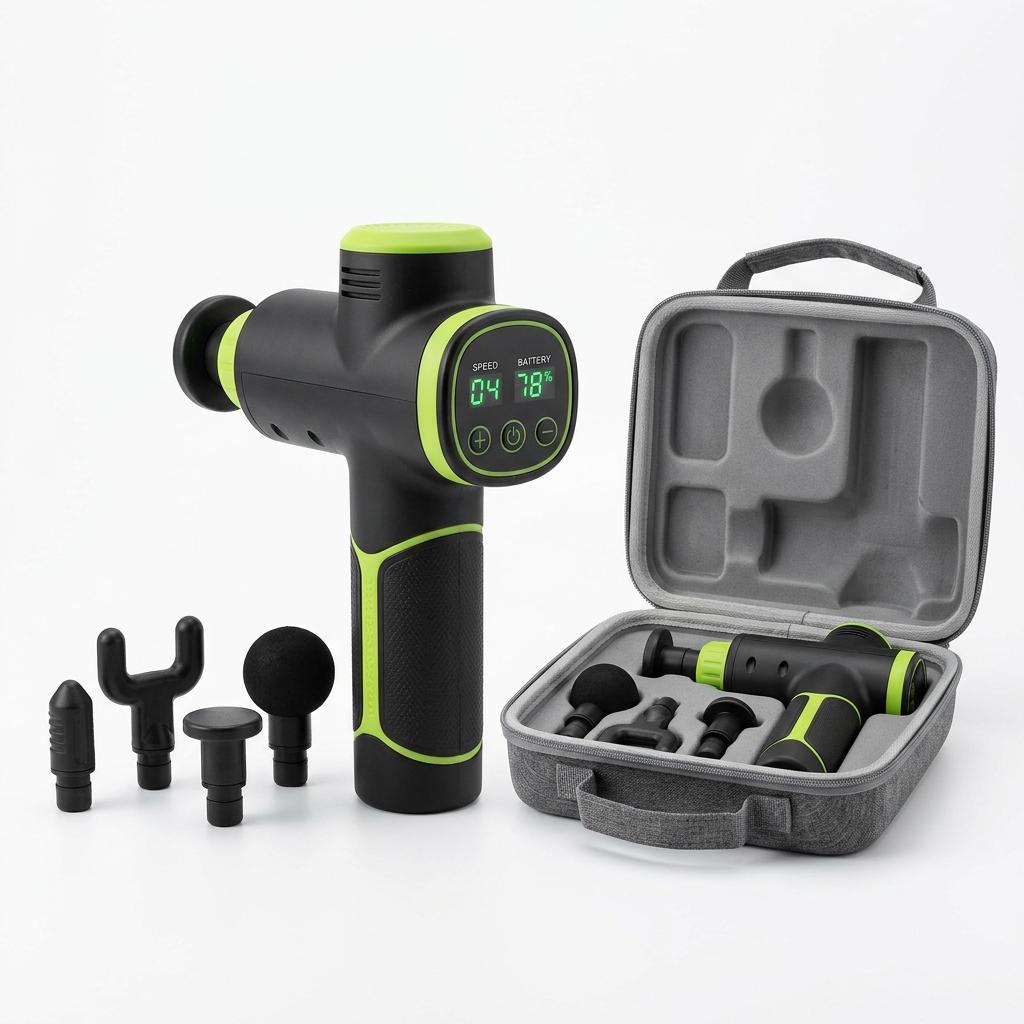 |
Ekrin Bantam | $129-$149 | Best Overall | Check Price |
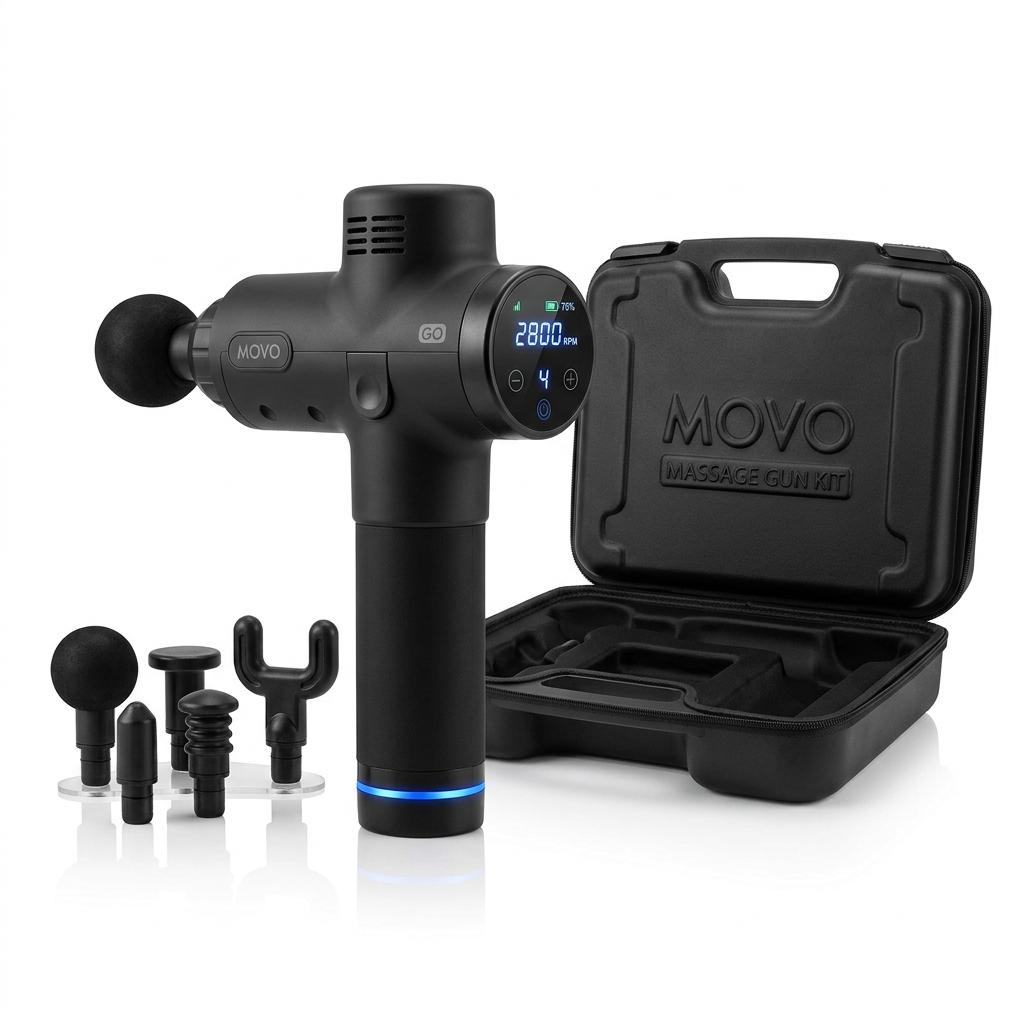 |
Renpho R3 Active | $89-$129 | Best Value | Check Price |
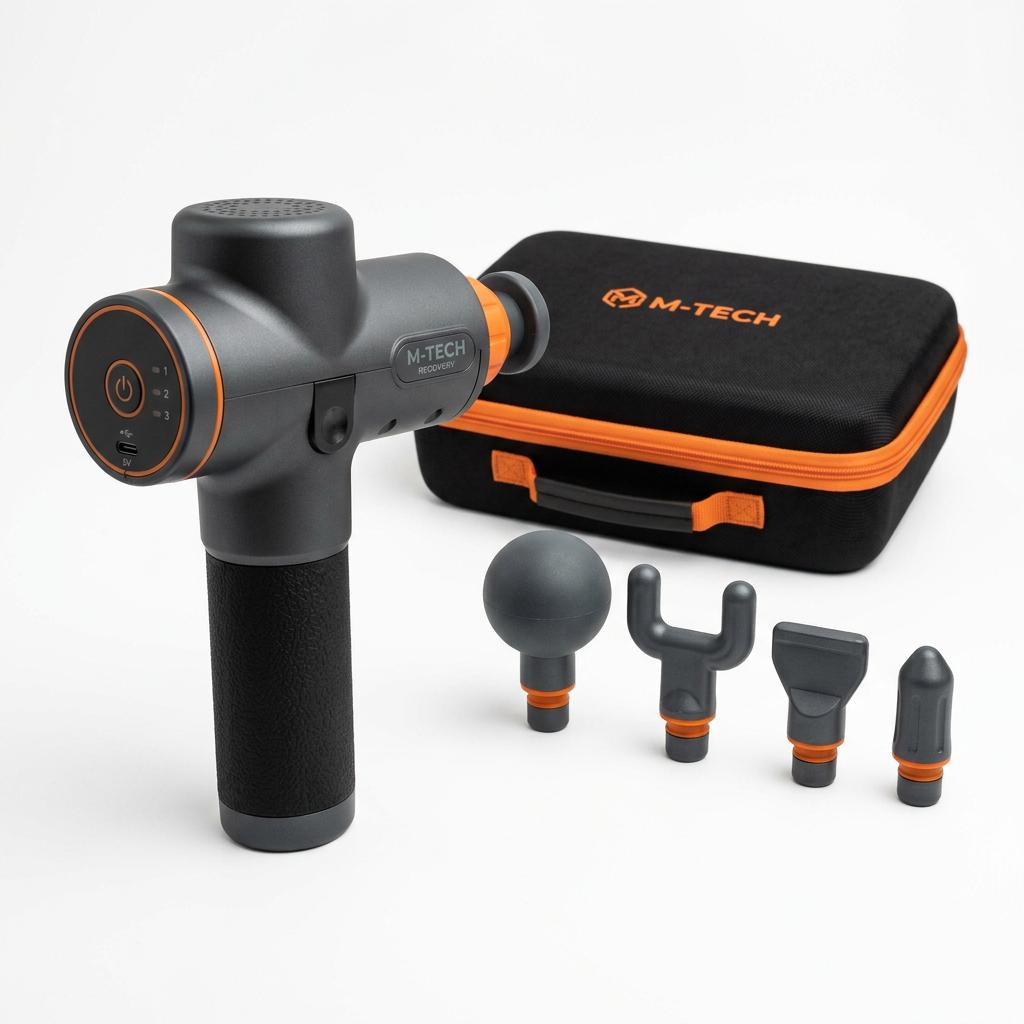 |
LifePro Sonic | $79-$119 | Best Budget | Check Price |
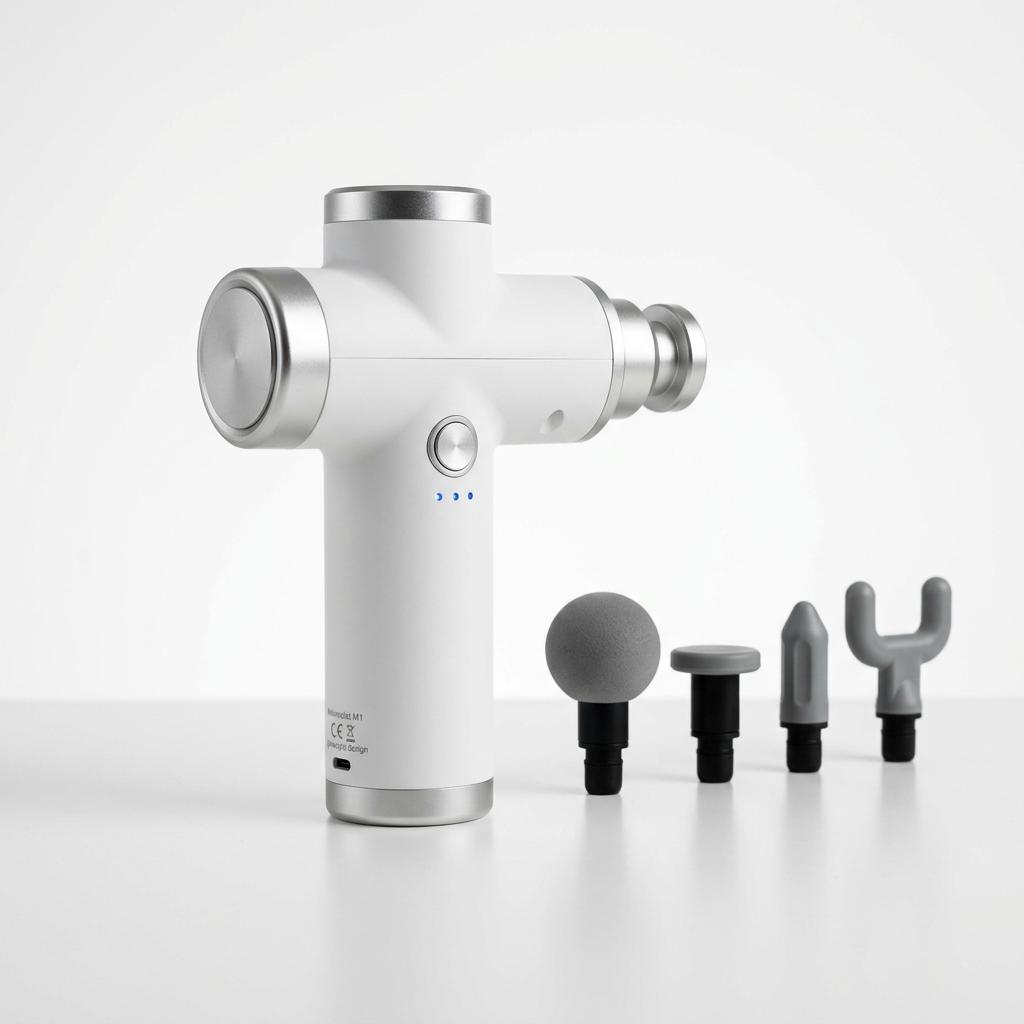 |
TaoTronics TT-PCA004 | $69-$99 | Quietest Budget Pick | Check Price |
 |
Flyby F1Pro | $59-$89 | Best Ultra Budget | Check Price |
The Ekrin Bantam takes the top spot under $150 with its unbeatable lifetime warranty, portable design perfect for apartments, and brand reputation that rivals options costing twice as much.
The Renpho R3 Active offers exceptional bang for your buck, packing 6 attachments, a digital display, and marathon battery life into a package that costs less than a single session with a massage therapist.
The LifePro Sonic is the ideal entry-level massage gun, offering genuine percussion therapy at a price that's lower than a single professional massage session.
The TaoTronics TT-PCA004 impresses with its whisper-quiet operation at a budget-friendly price, making it ideal for apartment dwellers who need to keep noise levels down.
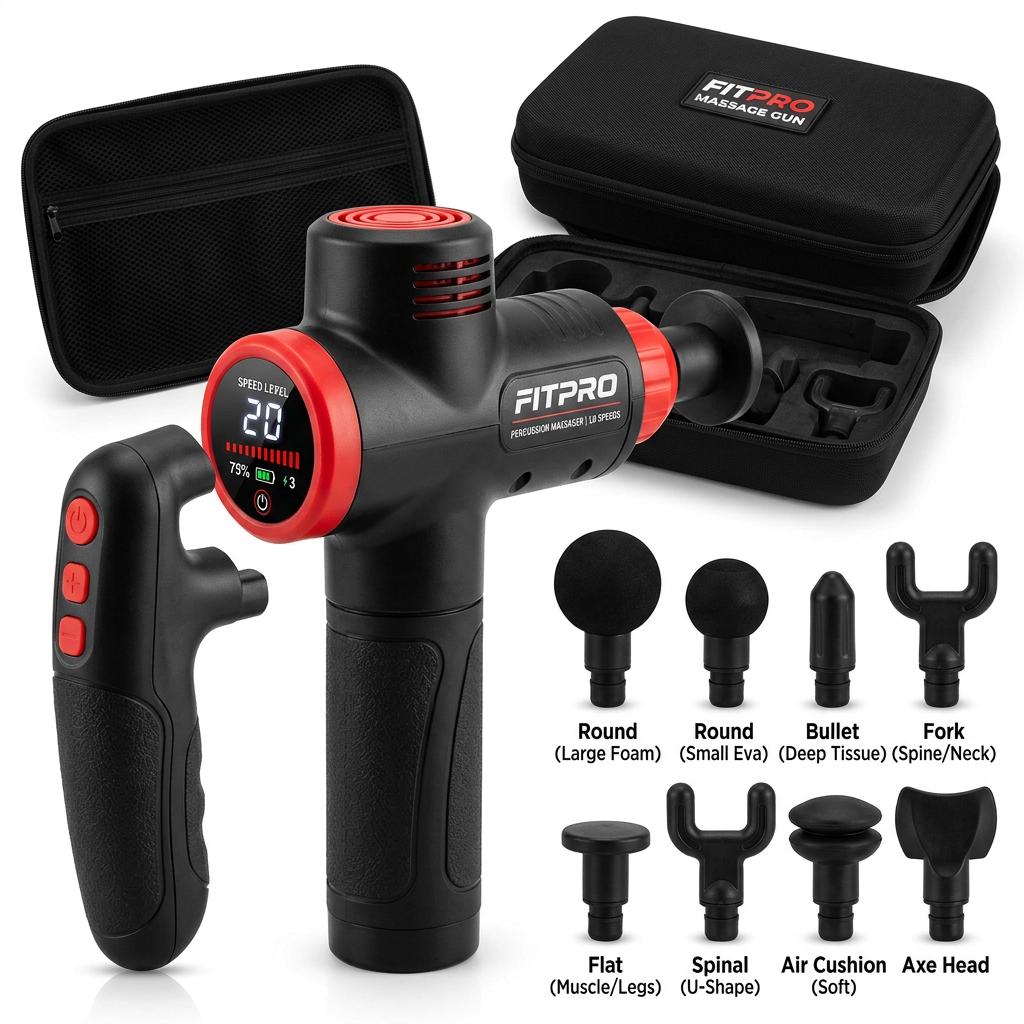
The Flyby F1Pro delivers the most accessories per dollar of any massage gun, with 8 heads and 20 speeds in a budget package that proves you don't need to spend a lot to start your percussion therapy journey.
Finding a massage gun under $150 that doesn't feel like a toy is challenging, but the Ekrin Bantam manages it effortlessly. The lifetime warranty alone sets it apart from every competitor in this price range, and the build quality justifies Ekrin's confidence. At this compact size, it's perfect for apartment dwellers who don't have space for a full-size recovery station but still want professional-grade percussion therapy.
Check Price on Amazon
Renpho has sold thousands of these massage guns for good reason. The R3 Active delivers genuine percussion therapy at a price that makes it accessible to virtually anyone. The digital display is crisp and informative, the six attachments give you real versatility, and the battery genuinely lasts for hours. Yes, the build is plastic rather than aluminum, and the motor can get warm during long sessions, but at this price point, those are compromises most users are happy to make.
Check Price on Amazon
For anyone curious about massage guns but hesitant to invest heavily, the LifePro Sonic is the perfect gateway. It delivers real percussion that you can feel working your muscles, includes a carrying case, and has enough speed settings to find your comfort zone. It won't match the raw power of a Theragun or the refinement of a Hyperice, but it's genuinely effective for post-workout recovery and tension relief at a price that's hard to argue with.
Check Price on Amazon
Noise is a common complaint with budget massage guns, but the TaoTronics manages to stay impressively quiet even at higher speeds. The clean white design looks good in any apartment setting, and the lightweight body is easy to maneuver during self-massage. With only four attachments, it's less versatile than some competitors, but the core experience is solid and the quiet operation is a genuine differentiator at this price point.
Check Price on Amazon
The F1Pro is the massage gun for people who want maximum versatility at minimum cost. Eight attachment heads means there's a tool for every muscle group, and the 20 speed levels give you granular control over intensity. The included side handle is a thoughtful addition that helps with hard-to-reach areas. Is it as refined as a $500 Theragun? Of course not. But it delivers genuine percussion therapy that will help your muscles recover, and sometimes that's all you need.
Check Price on Amazon