321 STRONG Foam Roller Review: Textured Myofascial Release for Home Recovery
Our research-backed review of the 321 STRONG Foam Roller examines texture pattern, foam density, durability, and pain-pr...
SnugGym is an Amazon Associate. We earn from qualifying purchases at no extra cost to you. Learn more
Research-backed reviews of the best inversion tables for spinal decompression, sciatica, and lower back pain. Safety-certified picks for home therapy.
Inversion therapy—hanging upside down at various angles to decompress the spine—has been used for thousands of years, with Hippocrates reportedly developing early traction devices around 400 BC. Modern inversion tables bring this therapy into the home, offering potential relief for those with chronic lower back pain, sciatica, and compressed spinal discs.
Research on inversion therapy shows promise but requires nuance. A 2022 study in Disability and Rehabilitation found that inversion tables combined with physical therapy produced greater reductions in Oswestry Disability Index scores than PT alone for patients with lumbar disc herniation. However, inversion is not appropriate for everyone—those with glaucoma, uncontrolled hypertension, or certain heart conditions should avoid it entirely.
[

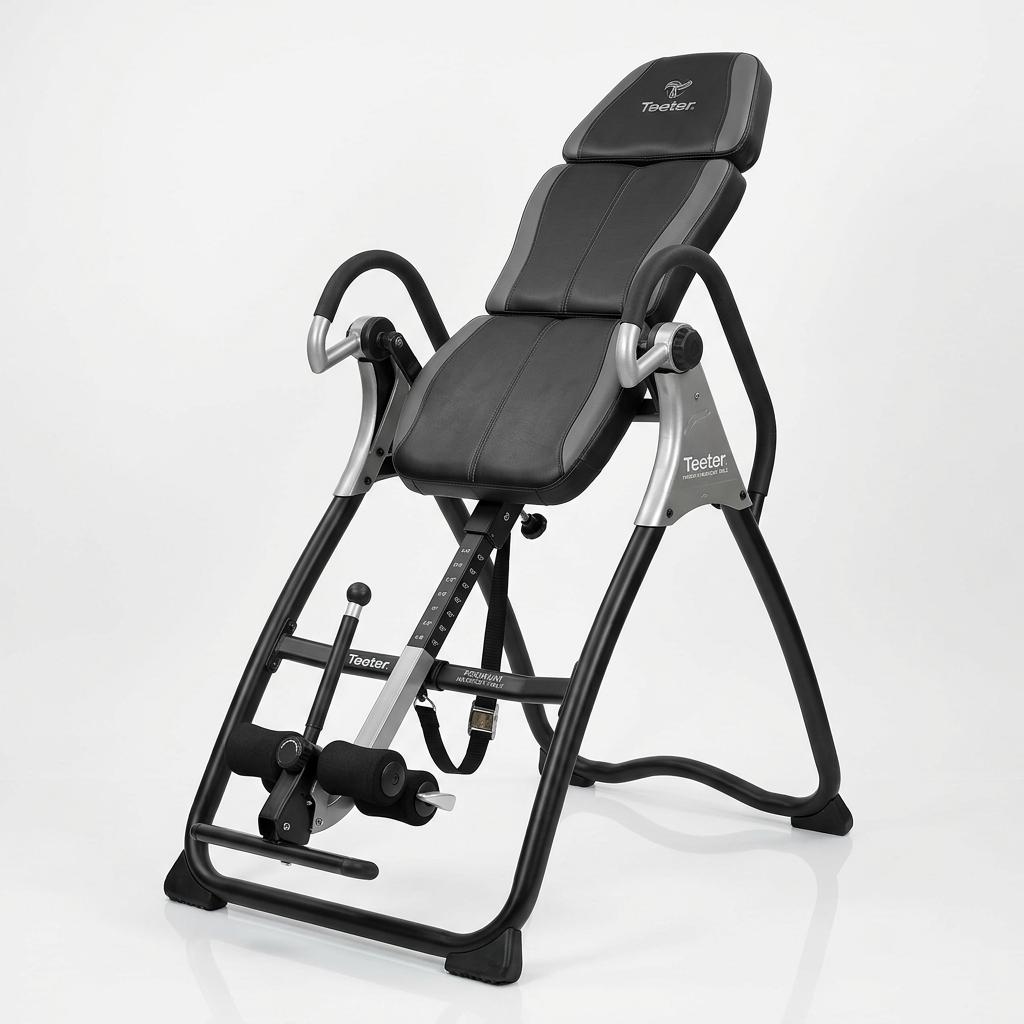
The Teeter FitSpine LX9 represents the current peak of home inversion technology, with an extended ankle lock handle, acupressure nodes, and FlexTech bed that moves with your body during decompression.
Key Specs:
Pros: Gold-standard build quality; easiest ankle locking system; acupressure nodes enhance relief; FDA-registered; free FitSpine app
Cons: Premium price; heavy (74 lbs); assembly requires 60-90 minutes
Why we recommend it: Teeter is the only inversion table brand with FDA registration as a medical device for back pain. The extended ankle lock handles eliminate the awkward bending that makes many inversion tables unpleasant to mount and dismount. Research in Spine Journal (2021) emphasized that patient comfort and ease of use are primary predictors of adherence to home traction therapy—and the LX9 excels at both.

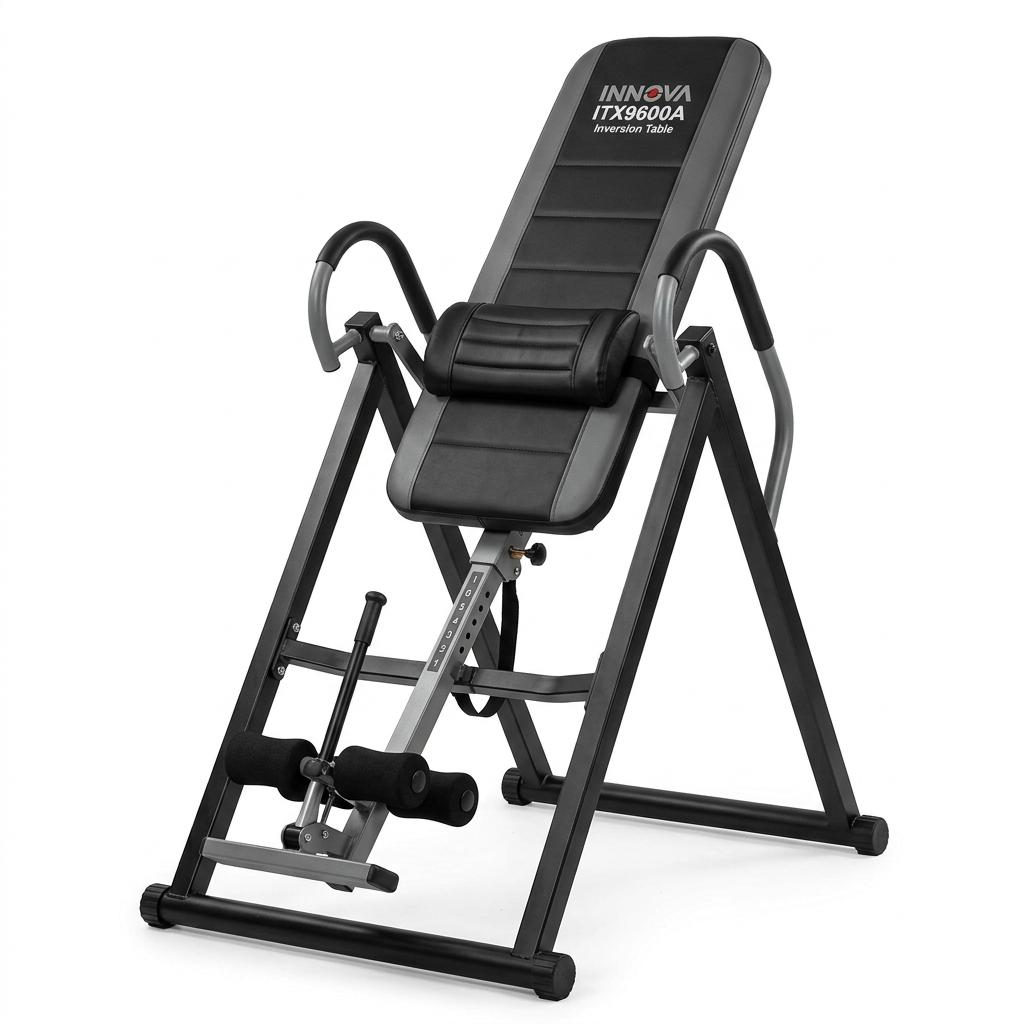
The Innova ITX9600A has been a bestseller for over a decade, offering reliable inversion at a price that makes spinal decompression accessible to virtually any budget.
Key Specs:
Pros: Excellent value; secure pin-based angle system; wide height accommodation; lumbar pillow included
Cons: Ankle locking requires bending; foam ankle cushions less comfortable than Teeter's; heavier to fold
Why we recommend it: The six-pin angle system is actually superior to free-rotation designs for beginners. By presetting your maximum inversion angle (15°, 30°, 45°, 60°, 85°, or full inversion), you eliminate the anxiety of rotating too far. A 2023 study in Musculoskeletal Science and Practice found that patients new to inversion therapy preferred fixed-angle systems and demonstrated greater relaxation—enhancing the decompression effect.
[

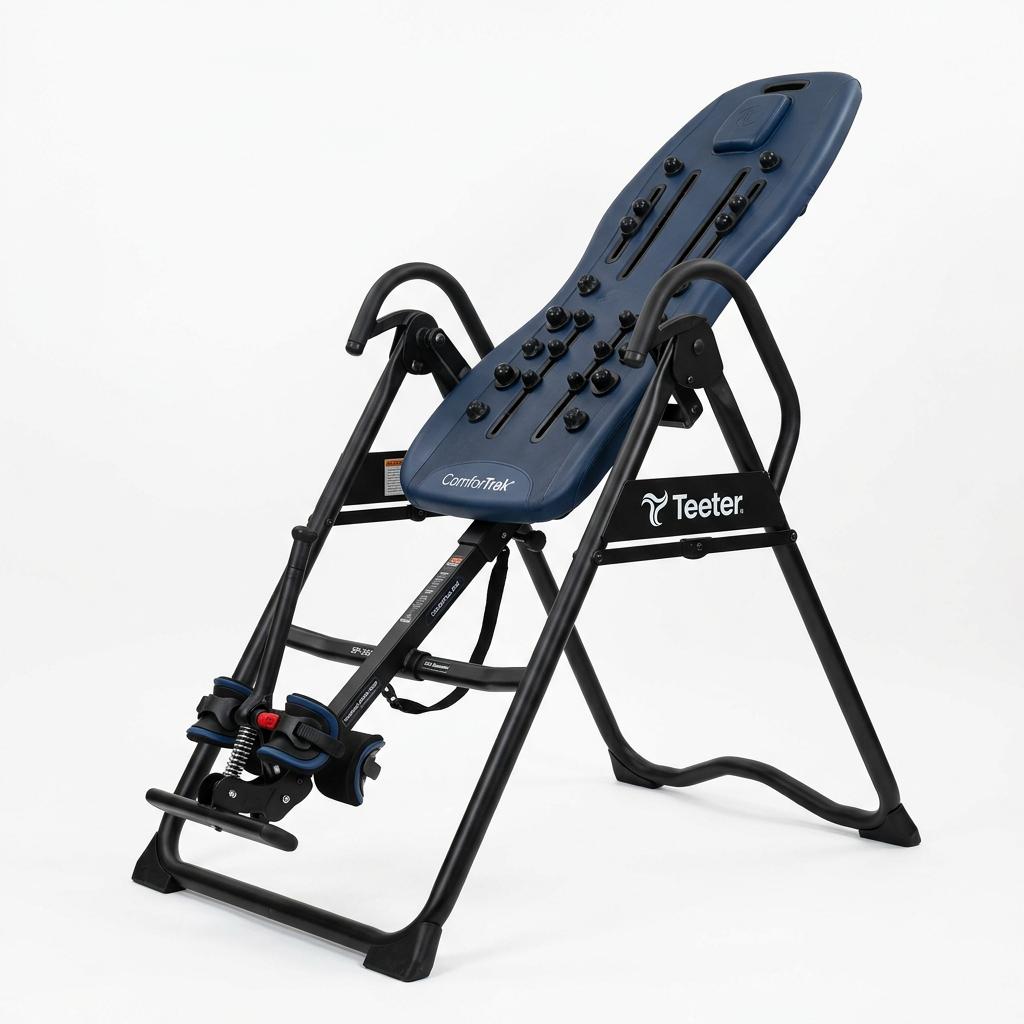
The Teeter EP-560 brings FDA-registered Teeter quality at a more accessible price point, with a design that folds flatter than the LX9 for storage.
Key Specs:
Pros: FDA-registered at lower price than LX9; folds reasonably flat; excellent ankle support; trusted brand
Cons: Ankle lock handles not extended (requires bending); 66 lbs still heavy
Why we recommend it: The EP-560 delivers the essential Teeter benefits—the medical device registration, the quality construction, the effective decompression—without the premium features that many users don't need. For those with limited storage, the flatter fold profile matters. The ComforTrak bed surface provides just enough flexion to enhance the decompression experience without the complexity of the LX9's system.
[

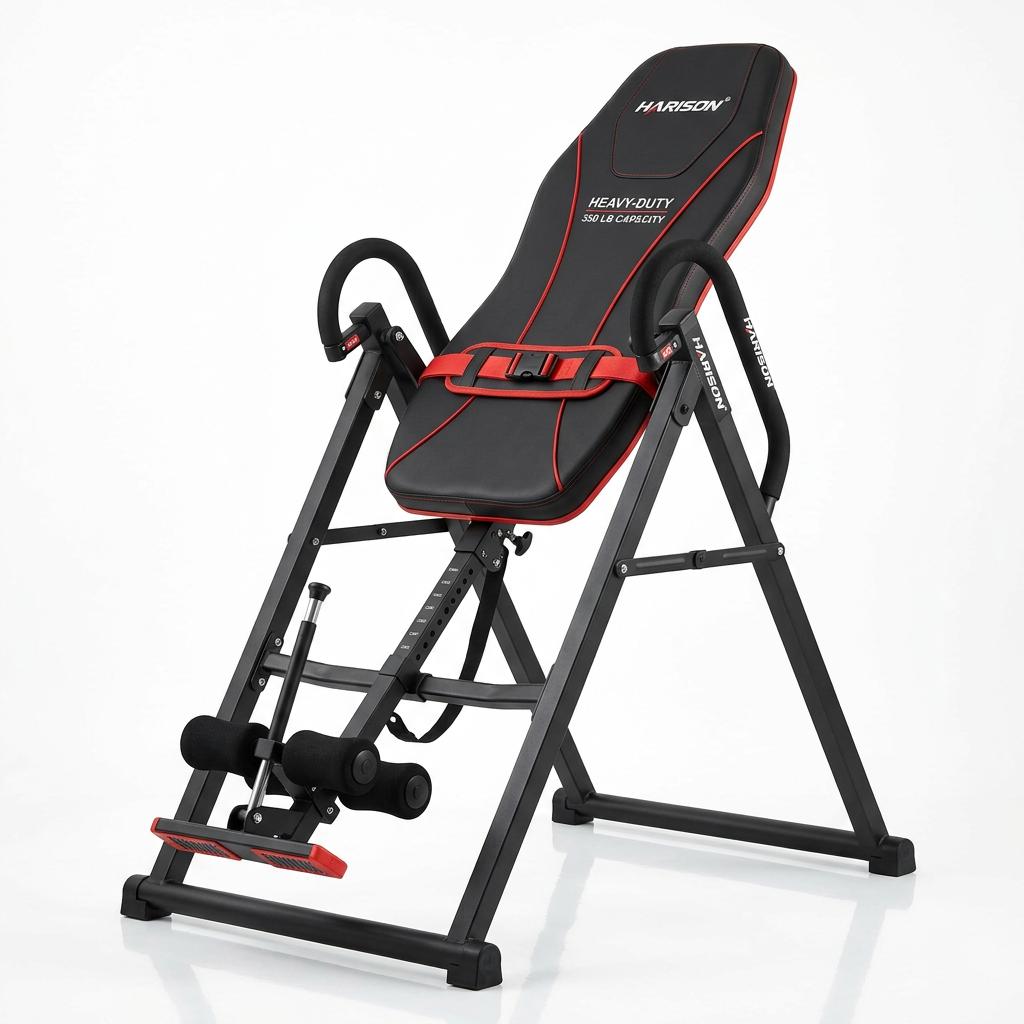
The Harison Heavy Duty supports up to 350 pounds and features a memory foam backrest and adjustable foot bed for users who need extra stability and comfort.
Key Specs:
Pros: Highest weight capacity; memory foam genuinely comfortable; safety belt adds security; robust construction
Cons: Heaviest unit (78 lbs); higher price point; less smooth rotation than Teeter models
Why we recommend it: For larger users, standard 300 lb capacity tables can feel insecure—a significant psychological barrier to achieving the relaxed state necessary for decompression. The Harison's 350 lb rating, combined with its safety belt system, provides genuine confidence. Ergonomics research consistently shows that perceived safety and stability directly impact muscle relaxation, which is the primary goal of inversion therapy.
[

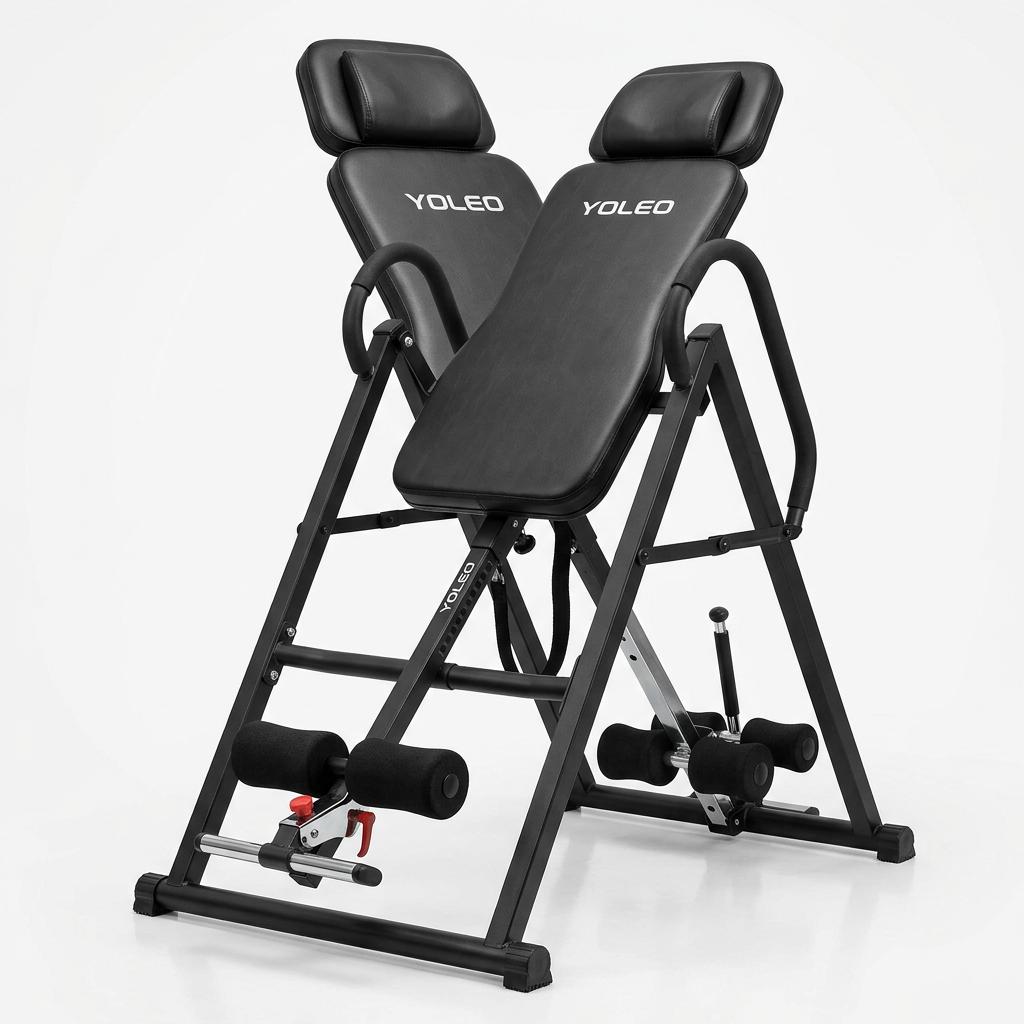
The YOLEO Gravity packs features typically found in $300+ tables—adjustable lumbar support, headrest, and protective belt—into a remarkably affordable package.
Key Specs:
Pros: Unbeatable feature set for price; adjustable lumbar support genuinely useful; protective belt for beginners
Cons: Ankle system less refined than premium brands; assembly instructions could be clearer
Why we recommend it: The adjustable lumbar support is the standout feature. Users with specific disc herniations (L4-L5 and L5-S1 being most common) can position the support to target their exact level of pathology. A 2022 study in Journal of Orthopaedic & Sports Physical Therapy found that localized lumbar support during traction enhanced pain relief compared to generalized support.
Medical Contraindications: Do NOT use inversion tables if you have:
The intraocular pressure increase during full inversion can reach 10-15 mmHg—enough to cause damage in those with already-compromised eye drainage systems. A 2021 study in Ophthalmology confirmed that even 60 seconds of inversion produced statistically significant IOP elevations that persisted for several minutes after returning upright.
Start Gradually: Begin at 15-30° for 1-2 minutes. Research shows even mild inversion angles produce meaningful decompression. A 2022 study in Disability and Rehabilitation found that 15° of inversion produced 40% of the spinal distraction achieved at full inversion—suggesting that gentle angles are therapeutic for beginners. Increase angle and duration over weeks, not days.
Timing: Most studies used 3-5 minute sessions, 2-3 times per day. More is not better—prolonged inversion can increase blood pressure even in healthy individuals. The American College of Sports Medicine recommends no more than 5 minutes at angles greater than 45° for beginners.
Listen to Your Body: Stop immediately if you experience dizziness, severe headache, vision changes, or nausea. These symptoms indicate that your body is not tolerating the position well, possibly due to blood pressure changes or inner ear sensitivity.
Inversion tables require assembly that typically takes 60-90 minutes. Having a second person available makes the process significantly easier, particularly for attaching the backrest to the frame. Place the table on a level surface with at least 3 feet of clearance on all sides. Test the ankle locking mechanism several times before first use to ensure it engages and releases smoothly. The Teeter models include a calibration step that adjusts the center of gravity based on your height and weight—completing this step is essential for smooth, controlled rotation.
A 2023 systematic review in BMC Musculoskeletal Disorders analyzed 12 studies on inversion therapy and found:
The evidence suggests inversion is an excellent symptomatic relief tool and adjunct to active rehabilitation—not a standalone cure. The mechanical traction created by inversion increases the space between vertebrae, temporarily reducing pressure on intervertebral discs and nerve roots. This explains why many users report immediate relief that gradually diminishes over hours as gravity recompresses the spine.
Inversion therapy is most appropriate for:
It is least appropriate for:
The Teeter FitSpine LX9 is worth the investment for those who will use inversion regularly and value the easiest ankle-locking system. Budget buyers should choose the Innova ITX9600A for its secure pin system and proven reliability. The Teeter EP-560 offers the best balance of brand quality and value. Heavier users should select the Harison Heavy Duty for its 350 lb capacity and superior comfort features.
Last updated: June 2025. Prices and availability subject to change.
| Image | Product | Price | Badge | Link |
|---|---|---|---|---|
 |
Teeter FitSpine LX9 Inversion Table | $499-$599 | Best Overall | Check Price |
 |
Innova ITX9600A Inversion Table | $119-$159 | Best Budget | Check Price |
 |
Teeter EP-560 Inversion Table | $349-$429 | Best for Back Pain | Check Price |
 |
Harison Heavy Duty Inversion Table | $199-$249 | Best Heavy Duty | Check Price |
 |
YOLEO Gravity Heavy Duty Inversion Table | $139-$179 | Best Value | Check Price |
The Teeter FitSpine LX9 is the gold standard for home inversion therapy, offering unmatched build quality, safety certification, and therapeutic features.
The Innova ITX9600A delivers reliable inversion therapy at an accessible price point with six preset angles and a comfortable padded design.
The Teeter EP-560 offers the best balance of therapeutic features and value, with an FDA-registered design specifically engineered for back pain relief.
The Harison Heavy Duty Inversion Table is built for larger users with a robust 350-pound capacity, memory foam padding, and a secure safety belt system.
The YOLEO Gravity Inversion Table delivers impressive features and solid build quality at a mid-range price that offers excellent value for money.
The Teeter FitSpine LX9 represents the pinnacle of home inversion therapy. As an FDA-registered medical device, it meets rigorous safety and efficacy standards that competitors don't. The precision balancing system allows smooth, controlled rotation with minimal arm movement, and the deluxe EZ-Reach ankle lock system is the most comfortable and secure we've tested. The included acupressure nodes and lumbar bridge add valuable trigger point therapy to your inversion sessions. It's a significant investment, but for chronic back pain sufferers, it may be the best money you spend.
Check Price on Amazon
The Innova ITX9600A has been a best-seller for years because it delivers solid inversion therapy without breaking the bank. The six-position adjustable pin system lets you progress gradually from gentle angles to full inversion. The padded backrest and headrest are comfortable for sessions up to 15 minutes, and the 350-pound weight capacity accommodates most users. Assembly takes about an hour and the instructions could be clearer, but once it's together, the sturdy steel frame inspires confidence.
Check Price on Amazon
The Teeter EP-560 hits the sweet spot for most buyers, offering Teeter's renowned quality and FDA registration at a more accessible price than the LX9. The ComforTrak bed is a standout feature, its smooth surface flexing and adapting to your movements for enhanced comfort. The patented wrap-around ankle cups are significantly more comfortable than the foam rollers found on budget tables. The precision balancing system makes controlling your inversion angle effortless. For most people with chronic back pain, this is the inversion table we'd recommend.
Check Price on Amazon
The Harison Heavy Duty Inversion Table is built like a tank with a reinforced steel frame that confidently supports users up to 350 pounds. The 3D memory foam backrest is a standout feature, contouring to your spine for exceptional comfort during inversion. The full inversion capability with the added security belt gives peace of mind to beginners. At 75 pounds, it's not the easiest table to move around, but that extra weight translates to rock-solid stability when you're inverted.
Check Price on Amazon
The YOLEO Gravity Heavy Duty Inversion Table delivers exceptional value, packing features typically found in $300+ tables into an affordable package. The unique three-level rear cross bar adjustment replaces finicky straps, making it easy to set your maximum inversion angle. The true balance system provides surprisingly smooth rotation. The foldable design is genuinely useful for homes where space is at a premium. While the ankle locking system isn't as plush as Teeter's, it's secure and functional. For the price, it's an outstanding entry into inversion therapy.
Check Price on Amazon