How to Fix a Wobbly Adjustable Bench: A Complete Troubleshooting Guide
A comprehensive troubleshooting guide for fixing wobbly adjustable weight benches. Learn to diagnose causes, level floor...
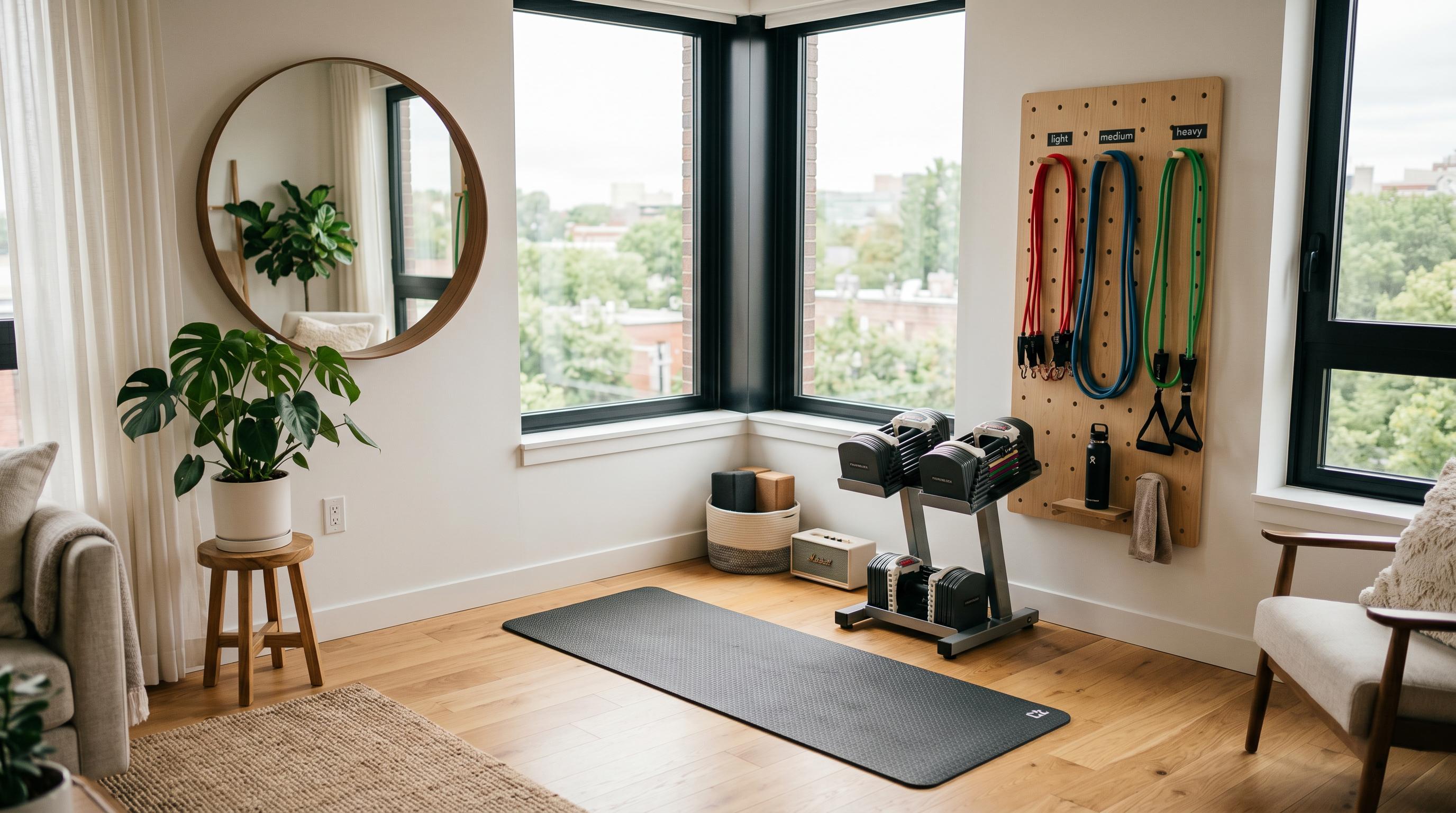
A comprehensive guide to insurance considerations for home gym equipment including renter's insurance riders, homeowner's policy coverage, equipment-specific riders, liability coverage, documentation for claims, high-value item scheduling, and claims process.
FTC Disclosure: This article contains affiliate links. If you purchase through these links, we may earn a commission at no extra cost to you. This supports our independent research and testing.
A well-equipped home gym represents a significant financial investment. A basic setup with a power rack, barbell, weights, bench, and dumbbells can easily exceed $3,000. Add cardio equipment, cable machines, flooring, and accessories, and a comprehensive home gym can reach $10,000 to $20,000 or more. Beyond the equipment value, home gym owners face liability exposure if others are injured while using their facilities.
Despite these substantial values and risks, most home gym owners have never considered whether their insurance coverage adequately protects their investment. Standard homeowner's and renter's policies contain significant gaps when it comes to home gym equipment and liability. This guide explores those gaps and provides actionable strategies to ensure you are fully protected.
Before exploring specialized coverage, understand what your existing policies may already provide—and where they fall short.
Standard homeowner's insurance policies typically cover personal property on a named-perils basis. This means your gym equipment is covered against risks specifically listed in the policy—usually fire, theft, vandalism, and certain types of water damage.
What's typically covered:
What's typically NOT covered:
Coverage limits: Standard policies cap personal property coverage at 50-70% of your dwelling coverage. However, this is a total for ALL personal property—not just gym equipment. If you have $300,000 in dwelling coverage and 50% personal property coverage, you have $150,000 total for everything you own. Gym equipment competes with furniture, electronics, clothing, and jewelry for this pool.
Deductibles: Standard deductibles range from $500 to $2,500. A $2,000 claim on a $3,000 rack doesn't make financial sense if your deductible is $1,000.
Renter's insurance works similarly to homeowner's personal property coverage:
For apartment and rental home gym owners, the lower limits of renter's policies are particularly concerning. A $30,000 gym in an apartment with $25,000 in total personal property coverage is underinsured by definition.
This is the most critical gap for many home gym owners. If you:
Your standard homeowner's or renter's policy likely excludes coverage entirely. Personal insurance policies are for personal use. Any commercial activity requires business insurance or a specific endorsement.
To address the gaps in standard coverage, insurance companies offer riders and endorsements that provide enhanced protection for specific categories of valuable property.
Also known as an "equipment rider" or "valuable items endorsement," this adds specific, listed items to your policy with their own coverage terms.
How it works:
Advantages:
Best for: Gyms with individual items worth $1,000+ (commercial treadmills, premium racks, complete plate sets)
Instead of scheduling individual items, blanket coverage provides a specific amount of coverage for a category of property—"fitness equipment" or "home gym contents."
Advantages:
Disadvantages:
Best for: Gyms with many items under $1,000 each that collectively exceed base policy limits
When insuring equipment, demand replacement cost coverage rather than actual cash value (ACV):
A 5-year-old treadmill that cost $2,000 new might have an ACV of $800 but cost $2,500 to replace. Replacement cost coverage eliminates this gap.
Check price at Amazon
This is where home gym insurance becomes critically important. If someone is injured in your home gym, you face significant liability exposure.
Standard homeowner's and renter's policies include personal liability coverage, typically $100,000 to $500,000. This covers legal liability if someone is injured on your property and you are found negligent.
However, liability coverage for injuries related to "hazardous activities" or "athletic activities" may be:
Consider these scenarios:
In each case, you could face medical expense claims, lost income claims, and pain and suffering damages that quickly exceed standard liability limits.
Umbrella policy: The most cost-effective way to increase liability protection. An umbrella policy provides additional liability coverage (typically $1-5 million) that sits on top of your homeowner's/renter's liability coverage.
Liability considerations for training partners:
If you regularly train with partners:
Liability for coaching/training clients:
If you train paying clients, standard liability coverage almost certainly does not apply:
Consult an insurance professional who specializes in fitness or small business coverage.
Insurance claims require documentation. The time to prepare is before a loss occurs.
For each piece of equipment, document:
HOME GYM EQUIPMENT INVENTORY
Date Created: ___________

Item 1: Rogue RML-390F Power Rack
- Model: RML-390F Flat Foot Monster Lite
- Serial Number: [Photo attached]
- Date Purchased: MM/DD/YYYY
- Purchased From: Rogue Fitness
- Purchase Price: $795 + $150 shipping = $945
- Current Replacement Cost: $1,095
- Condition: Excellent
- Photos: [File references]
- Receipt: [File reference]

Item 2: [Continue for all equipment...]

TOTAL REPLACEMENT VALUE: $_________
Check price at Amazon
For individual items or collections with significant value, consider scheduling them separately on your policy.
Schedule items when:
| Item | Typical Value | Scheduling Recommended? |
|---|---|---|
| Treadmill (quality) | $1,500-$4,000 | Yes |
| Commercial power rack | $800-$3,000 | Yes |
| Complete plate set | $500-$3,000 | If exceeds $1,500 |
| Premium barbell collection | $300-$2,000 | If individual bars exceed $500 |
| Dumbbell set (5-100 lb) | $500-$2,500 | If exceeds $1,500 |
| Cable machine/functional trainer | $1,500-$5,000 | Yes |
| Rowing machine | $900-$2,500 | Yes |
| Flooring (rubber, full room) | $500-$2,000 | As part of dwelling improvements |
Expect to pay 1-3% of the insured value annually for scheduled coverage. A $5,000 scheduled equipment collection would cost approximately $50-150 per year in additional premium.
Understanding where standard policies fall short helps you make informed decisions about additional coverage.
| Gap | Standard Policy | Solution |
|---|---|---|
| Accidental damage | Not covered | Schedule equipment with accidental damage rider |
| Equipment in detached garage/structure | Lower limits (10% of dwelling) | Increase detached structure coverage or schedule items |
| Flood damage | Excluded | Separate flood insurance policy |
| Earthquake damage | Excluded | Separate earthquake endorsement |
| Business use | Excluded | Commercial or in-home business policy |
| Wear and tear | Excluded | Not insurable—maintain equipment instead |
| Power surge damage | May be excluded or limited | Surge protectors; electronics rider |
| Mysterious disappearance | Not covered | Scheduled items with broader coverage |
Many policies have sub-limits that apply to specific categories:
Read your policy declarations page carefully to identify sub-limits that might affect your gym equipment.
If you suffer a loss, understanding the claims process helps you navigate it successfully.
Beyond standard homeowner's/renter's policies with riders, several specialized options exist:
Originally designed for goods in transit, inland marine policies now cover movable property anywhere. A gym equipment inland marine policy:
Best for: Competitive athletes who travel with equipment; those with extremely valuable collections
Some insurers offer policies specifically designed for sports equipment:
If your home gym has evolved into a commercial training facility:
Consult a commercial insurance broker who understands the fitness industry.
Insurance costs money, and every policyholder must decide what level of protection is appropriate.
For most home gym owners, this approach balances protection and cost:
For a gym with $8,000 in scheduled equipment, the additional annual cost is approximately $80-240—roughly the cost of a single premium barbell to protect an entire gym.
Check price at Amazon
Insurance for your home gym is not exciting, but it is essential. The combination of significant equipment values, liability exposure, and gaps in standard coverage creates risks that are inexpensive to mitigate with proper planning.
Schedule your high-value items, maintain an umbrella policy for liability, document your equipment thoroughly, and review your coverage annually. The peace of mind that comes from knowing your investment is protected allows you to focus entirely on what matters: your training.
As an Amazon Associate, we earn from qualifying purchases. Learn more