How to Fix a Wobbly Adjustable Bench: A Complete Troubleshooting Guide
A comprehensive troubleshooting guide for fixing wobbly adjustable weight benches. Learn to diagnose causes, level floor...
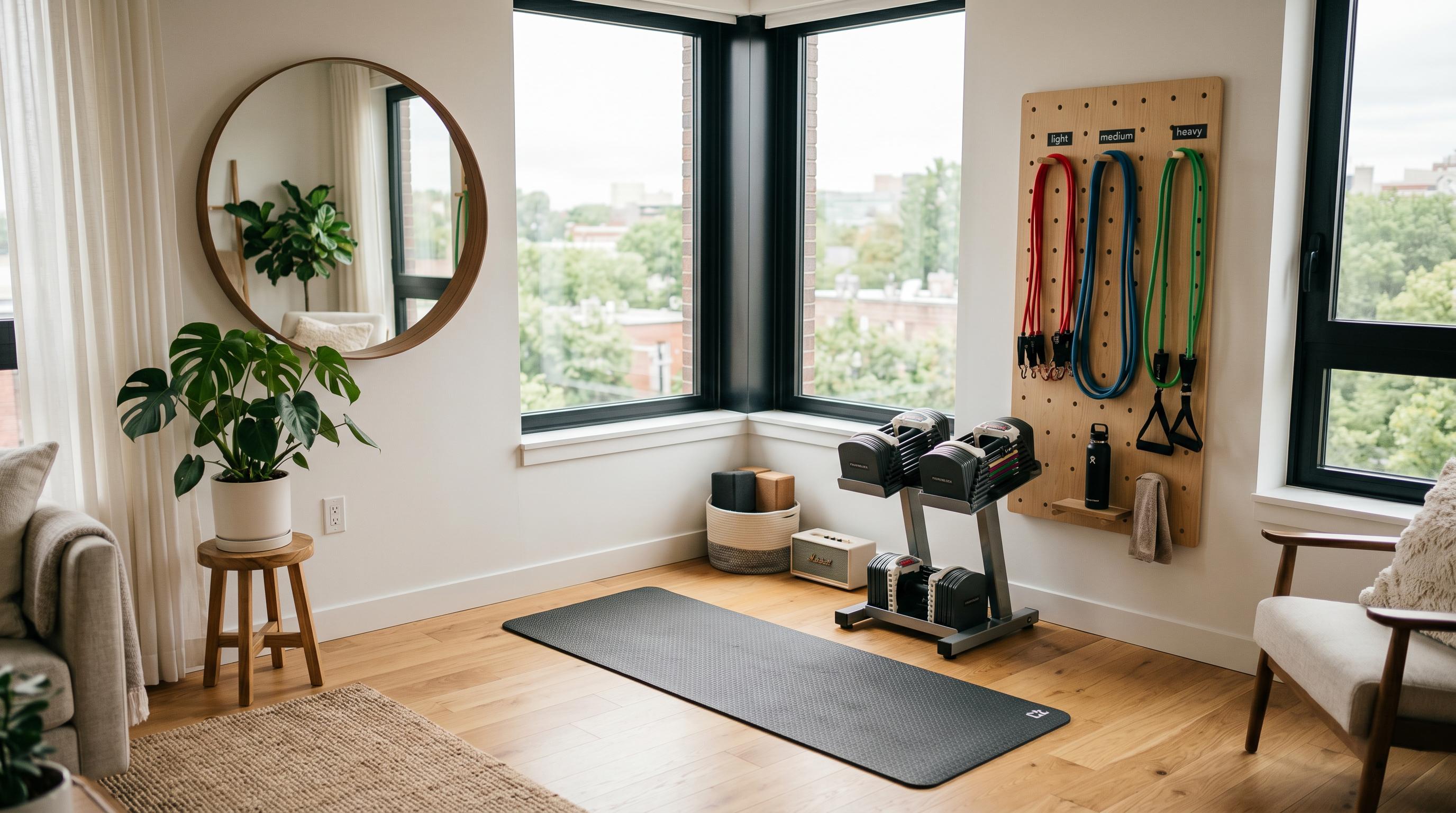
Research-backed analysis from SnugGym about Home Gym Humidity Control.
In This Article:
Humidity control is one of the most overlooked yet critically important aspects of home gym maintenance. Unlike commercial facilities with professionally engineered HVAC systems, most home gyms occupy spaces never intended for high-exertion activities — garages, basements, spare rooms, and converted sheds. These spaces often lack adequate ventilation, climate control, and moisture management, creating environments where excessive humidity can cause equipment damage, health hazards, and an unpleasant training atmosphere.
High humidity accelerates rust and corrosion on barbells, weight plates, and steel rack components. It degrades rubber flooring, causes wooden platforms to warp, and promotes electrical component failure in cardio machines. Beyond equipment concerns, excessive moisture creates ideal conditions for mold and mildew growth on walls, ceilings, and flooring — introducing serious health risks including respiratory irritation, allergic reactions, and in the case of black mold (Stachybotrys chartarum), potentially toxic exposure. For anyone spending hours each week breathing heavily in an enclosed space, air quality is not a cosmetic concern — it is a health imperative.
Conversely, humidity that is too low causes its own problems. Excessively dry air (below 30% relative humidity) irritates respiratory passages, increases static electricity that can damage electronics, and causes wooden equipment and flooring to crack or splinter. The goal is finding and maintaining the optimal humidity window that protects equipment, supports health, and creates a comfortable training environment year-round.
The Environmental Protection Agency (EPA) recommends maintaining indoor relative humidity between 30% and 50% for optimal health and building preservation. Within this range:
For home gyms specifically, we recommend targeting 35–45% relative humidity as the ideal operating range. This slightly narrower window accounts for the additional moisture load generated by training activities while maintaining a safety margin below mold-promoting levels.
Relative humidity (RH) vs. absolute humidity: Your humidity meter displays relative humidity — the amount of moisture in the air relative to the maximum amount the air can hold at that temperature. Warm air holds more moisture than cold air, meaning the same absolute moisture content produces different RH readings at different temperatures. This is why basements feel damp (cool air at 60% RH contains less actual moisture than warm air at 60% RH, but the relative reading triggers our comfort sensors) and why condensation forms on cold surfaces (air contacting the cold surface cools, raising its RH to 100% at the surface).
Accurate measurement is the foundation of effective humidity control. Several options exist across price points:
Digital hygrometers ($8–$25) — Small battery-powered devices that display current temperature and relative humidity. Place the hygrometer in your main training area at roughly chest height, away from direct airflow from vents, dehumidifiers, or windows. Allow 24 hours for readings to stabilize after placement. AcuRite, ThermoPro, and Govee make reliable budget options.
Smart humidity sensors ($20–$50) — WiFi-enabled sensors like the Govee WiFi Thermometer Hygrometer or SensorPush provide continuous monitoring with smartphone alerts when humidity exceeds set thresholds. These are valuable for gym spaces you do not visit daily (garage gyms, basement gyms) where humidity problems can develop unnoticed.
Hygrometer calibration — Cheap hygrometers can drift significantly from accurate readings. The salt test method provides simple calibration: seal your hygrometer in a bag with a cup of salt moistened to the consistency of wet sand. After 8–12 hours, the humidity inside the bag will be exactly 75%. Compare your hygrometer's reading and note the offset for future reference.
Placement matters — Position your humidity sensor in the center of your training space at a height where you actually train. Wall-mounted sensors near exterior walls may read differently than conditions in the room center. Avoid placing sensors directly above dehumidifier exhaust vents, near windows, or in corners where airflow is stagnant.
A dehumidifier is the most effective tool for controlling humidity in most home gym environments. Proper sizing is critical — an undersized unit runs constantly without achieving target humidity, while an oversized unit cycles too frequently, reducing efficiency and lifespan.
Dehumidifier capacity is rated in pints of moisture removed per 24 hours (ppd). Manufacturers also specify the square footage each model can effectively serve under "moderately damp" conditions. For gym applications, size up one category from the manufacturer's recommendation because training generates additional moisture beyond typical ambient conditions.
Sizing guide:
| Gym Space Size | Recommended Capacity | Example Models |
|---|---|---|
| Up to 300 sq ft | 20–30 ppd | hOmeLabs 1,500 sq ft (22 pint), Vremi 1,500 sq ft |
| 300–700 sq ft | 30–50 ppd | hOmeLabs 2,500 sq ft (34 pint), Frigidaire 35 pint |
| 700–1,200 sq ft | 50–70 ppd | hOmeLabs 3,000 sq ft (50 pint), Keystone 50 pint |
| 1,200+ sq ft | 70+ ppd or multiple units | AlorAir 70 pint, Aprilaire whole-house E080 |
Key features to prioritize:
Continuous drain option — A drain hose port allows the dehumidifier to empty directly into a floor drain or sink, eliminating the need to empty a collection bucket. For garage and basement gyms with floor drains, this feature transforms dehumidifier operation from high-maintenance to set-and-forget.
Humidistat control — Built-in humidity sensors that cycle the unit on and off to maintain your target RH. Look for adjustable humidistats that let you set specific targets rather than vague "low/medium/high" controls.
Auto-defrost — Essential for basement and garage gyms where temperatures may drop below 65°F. Frost buildup on the evaporator coils reduces efficiency and can damage the unit. Auto-defrost cycles prevent this.
Energy Star certification — Dehumidifiers run for hundreds of hours annually. Energy Star models use 15–30% less electricity than standard units, saving $30–$60 per year in operating costs.
Operating temperature range — Most residential dehumidifiers specify minimum operating temperatures of 41°F–65°F. If your gym space regularly drops below the manufacturer's minimum, the unit will frost up and shut down. Specialized low-temperature models are available for cold garages and unheated basements.
Dehumidifiers manage moisture after it enters your gym air, but ventilation addresses moisture at its sources and brings in fresh outdoor air. Effective ventilation strategies include:
Exhaust fans — Install a through-wall or window exhaust fan rated for continuous operation. The fan should move 50–100 cubic feet per minute (CFM) for typical home gym spaces. Run the fan during training and for 30–60 minutes afterward to purge humid air. Panasonic and Broan make reliable, quiet exhaust fans suitable for this application.
Cross-ventilation — When weather permits, opening windows or doors on opposite sides of your gym space creates airflow that carries moisture out. Even 15 minutes of cross-ventilation after training significantly reduces humidity buildup. Position a box fan in one opening to enhance airflow.
Ceiling fans — While fans do not remove moisture, they circulate air to prevent stagnant pockets where humidity concentrates and to improve evaporative cooling of sweat from skin and surfaces. Air movement also helps dehumidifiers work more efficiently by distributing dry air throughout the space.
HVAC integration — If your gym space is served by central heating and air conditioning, ensure the HVAC vent is open and unobstructed. Running the air conditioner naturally dehumidifies — cooling air reduces its capacity to hold moisture, causing condensation on the evaporator coil that drains away. However, standard air conditioning cycles based on temperature, not humidity, so it may not reduce RH to optimal levels without supplemental dehumidification.
Whole-house ventilation systems — Energy recovery ventilators (ERVs) and heat recovery ventilators (HRVs) provide controlled fresh air exchange while minimizing energy loss. These are typically professionally installed and cost $1,500–$3,500, but they represent the gold standard for indoor air quality management in dedicated home gym spaces.
Understanding where moisture originates helps target control efforts:
Human respiration and perspiration — The primary moisture source in any gym. A single person performing moderate exercise generates 0.5–1.5 liters of perspiration per hour and exhales moisture-saturated air. A 60-minute training session for two people can add 2–4 liters of water vapor to the room air — roughly equivalent to leaving a large pot of water simmering uncovered for an hour.
Infiltration from outdoors — Outdoor air entering through cracks, gaps around doors, and foundation penetrations carries moisture. In humid climates, this is a continuous moisture load. In wet weather, the load increases dramatically.
Ground moisture — Basements and slab-on-grade garages wick moisture from the soil through concrete. A bare concrete floor can emit significant moisture vapor, especially after rain. Vapor barriers beneath slabs reduce but do not eliminate this source.
Wet equipment and clothing — Sweat-soaked towels, clothing, and equipment surfaces evaporate moisture into the air. Towels left draped over racks, wet shoes on the floor, and dampened bench pads all contribute.
Plumbing and fixtures — If your gym space includes a bathroom, sink, or water fountain, these add ambient moisture through normal use and potential leaks.
New construction moisture — Recently constructed or renovated spaces release moisture from curing concrete, drywall mud, and paint for 6–12 months. New garage slabs can emit substantial vapor during their first year.
Mold prevention in home gyms requires a multi-layered approach:
Maintain 30–50% RH — This is your primary defense. At humidity levels below 60%, mold cannot colonize building materials. Your dehumidifier and ventilation systems are your first line of protection.
Address condensation points — Cold water pipes, exterior walls, and single-pane windows create surface temperatures below the dew point, causing condensation that wets surrounding materials. Insulate cold pipes with foam insulation sleeves. Improve wall insulation where possible. Use a squeegee or towel on window condensation.
Clean regularly — Mold requires organic material for food. Dust, skin cells, and organic debris on surfaces provide this food source. Regular cleaning with mild detergent removes potential mold nutrients. Pay special attention to corners, behind equipment, and under rubber flooring where dust accumulates.
Dry wet surfaces promptly — Wipe down equipment, flooring, and any surfaces where sweat or condensation collects. Do not leave damp towels or clothing in the gym space.
Inspect hidden areas monthly — Check behind equipment, under platforms, and in corners for early mold signs: musty odors, discoloration, or fuzzy growth. Early detection allows simple cleaning; delayed discovery may require professional remediation.
Use mold-resistant materials — When finishing or refinishing your gym space, choose mold-resistant drywall (green board or cement board), moisture-resistant paint with mold inhibitors, and non-organic flooring materials.
If you find mold: Small areas (less than 10 square feet) can typically be cleaned by the homeowner wearing N-95 respirator, gloves, and eye protection using a solution of 1 cup bleach per gallon of water or commercial mold remover. Larger infestations, HVAC system mold, or suspected black mold require professional remediation. When in doubt, consult a professional — improper mold disturbance releases spores and can make the problem worse.
Protecting your investment in steel gym equipment requires proactive rust prevention:
Climate control — Maintaining 35–45% RH is the single most effective rust prevention strategy. Steel does not rust at humidity levels below 50% in the absence of direct water contact.
Protective coatings — Quality gym equipment features powder coating or chrome plating that resists corrosion. Inspect coatings regularly for chips or scratches that expose bare steel. Touch up damage with automotive touch-up paint, nail polish, or specialized equipment touch-up paint (Rogue and other manufacturers sell color-matched touch-up paint).
Barbell maintenance — Barbells require special attention:
Weight plate care — Iron plates are most vulnerable:
Machine and rack maintenance:
Vapor barriers under equipment — For garage gyms with bare concrete floors, place a vapor barrier mat (3/8"+ rubber gym flooring) under all equipment. This prevents capillary moisture wicking from the concrete to equipment feet and framing.
Humidity management requires different strategies across seasons:
Spring/Summer (high humidity season):
Fall/Winter (low humidity/heating season):
Transition periods — Spring and fall bring rapidly changing conditions that require vigilant monitoring. A week of warm rain can spike humidity in a previously dry space. Check your hygrometer daily during weather transitions and adjust dehumidifier settings accordingly.
Regional considerations:
Based on extensive research and user feedback, here are our top recommendations across key categories:
Best overall dehumidifier for home gyms: hOmeLabs 2,500 Sq. Ft. Energy Star Dehumidifier (34 pint) — $200–$250. Excellent value with continuous drain option, adjustable humidistat, auto-defrost, and quiet 48 dBA operation. Suitable for most garage and basement gyms up to 700 square feet.
Best for large gym spaces: Frigidaire High Humidity 50 Pint Dehumidifier — $300–$350. Built-in pump for upward drainage (useful when floor drain is unavailable), washable filter, and robust construction for continuous operation.
Best for cold garages: AlorAir Sentinel HDi90 (90 pint) — $700–$800. Specifically designed for low-temperature operation down to 33°F with hot gas defrost cycle. Overkill for most home gyms but essential for large, unheated garage gyms in cold climates.
Best smart humidity monitor: Govee WiFi Thermometer Hygrometer H5075 — $15–$20. Provides smartphone alerts, data logging, and calibration capability at a budget-friendly price. Multiple units can monitor different gym zones.
Best exhaust fan: Panasonic WhisperWall FV-08WQ1 — $150–$200. Ultra-quiet (0.8 sone), through-wall installation, continuous-duty motor. Moves 70 CFM — adequate for most home gym spaces.
For budget-conscious gym owners or those seeking supplemental moisture control:
Desiccant containers — Commercial moisture absorbers like DampRid ($5–$10 per container) use calcium chloride to pull moisture from the air. Effective for small spaces (under 200 sq ft) or as supplemental control in problem areas. Replace monthly in humid conditions.
DIY calcium chloride bucket — Create your own high-capacity desiccant: fill a 5-gallon bucket with calcium chloride pellets (ice melt, $15–$20 for 50 lbs), suspend a colander or screen above the pellets, and place the bucket in your gym. The calcium chloride absorbs moisture, which drips through the colander and collects in the bucket bottom. Empty the collected water weekly. One bucket can extract 1–2 gallons per week in humid conditions.
Charcoal briquettes — Plain, unscented charcoal briquettes absorb moisture and odors. Place in perforated containers around your gym. Effective for mild humidity issues and odor control. Replace every 2–3 months.
kitty litter trays — Plain clay kitty litter in shallow trays placed strategically around the gym absorbs moderate moisture. Inexpensive but requires frequent replacement and provides no humidity control precision.
Improving existing ventilation — If your gym has a bathroom exhaust fan, upgrade to a continuous-rated model with humidity-sensing activation. Cost: $100–$200 plus installation. This provides automatic moisture removal whenever humidity rises above the setpoint.
Air circulation improvement — A simple box fan running during and after training sessions dramatically improves air circulation, helping moisture evaporate from surfaces and distributing dehumidified air throughout the space. Cost: $15–$30.
Humidity control is not optional equipment maintenance — it is an essential component of home gym management that protects your health, your equipment investment, and your training environment. The target range of 35–45% relative humidity provides the optimal balance: low enough to prevent mold, rust, and dust mites, yet high enough to maintain respiratory comfort and material stability.
For most home gym owners, the solution centers on three components: a properly sized dehumidifier with continuous drain capability, basic ventilation (exhaust fan and/or cross-ventilation), and regular monitoring with a digital hygrometer. This combination, costing $250–$500 total, protects equipment worth thousands while creating a healthier training environment.
The consequences of uncontrolled humidity — rusted barbells, mold remediation, equipment electrical failures, and respiratory health impacts — far exceed the modest investment in proper moisture management. Take humidity control seriously from day one, and your home gym will remain a safe, healthy, and well-maintained training space for years to come.
FTC Disclosure: This article contains affiliate links. If you purchase through these links, we may earn a commission at no additional cost to you. Our recommendations are based on independent research and editorial judgment.
Evidence Mode: Research-Backed
Written by the SnugGym Editorial Team