Small Cardio Machines for Apartments | SnugGym
Full-size treadmills, exercise bikes, ellipticals, and rowing machines specifically sized for apartments. Foldable, stor...
SnugGym is an Amazon Associate. We earn from qualifying purchases at no extra cost to you. Learn more
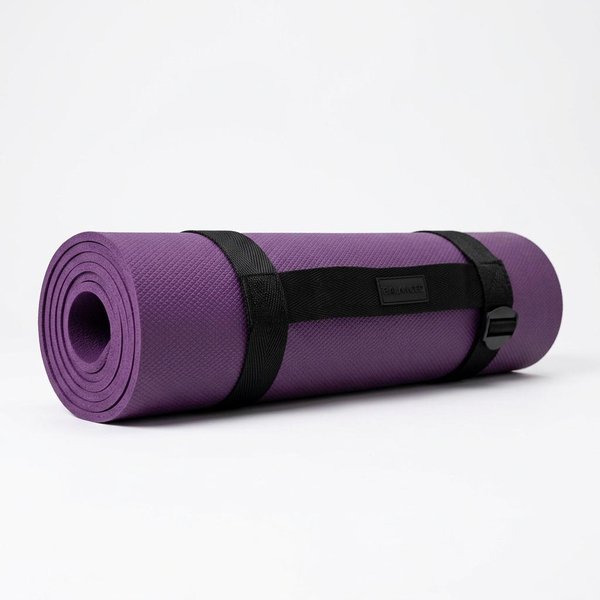
Professional-grade yoga mat with lifetime guarantee, dense cushioning, closed-cell surface.
As an Amazon Associate we earn from qualifying purchases. Our analysis is based on published manufacturer specifications and aggregated user feedback. We do not conduct hands-on testing.
The WalkingPad R2 Treadmill (ASIN: B06XCCDV49) is a foldable walking treadmill that distinguishes itself through a 180-degree folding mechanism that collapses the unit in half for storage. Our research indicates it is the most storage-efficient motorized treadmill available, making it a viable option for apartment dwellers who want walking-based cardio but lack dedicated exercise space. The 6.2 mph top speed supports brisk walking and light jogging; it is not designed for running.
| Attribute | Detail |
|---|---|
| Price Range | $499--$649 |
| Speed Range | 0.5--6.2 mph |
| Motor | 1.25 HP |
| Dimensions (in use) | 55" L x 28" W |
| Dimensions (folded) | 39" L x 28" W x 6" H |
| Max User Weight | 240 lbs |
| Running Surface | 47" x 16" |
| Weight | 62 lbs |
Check price at Amazon{rel="sponsored"}
The WalkingPad R2 belongs to a category of treadmills variously called "walking pads," "folding treadmills," or "under-desk treadmills." Unlike traditional treadmills with fixed frames, upright consoles, and incline motors, the WalkingPad prioritizes minimal footprint and flat storage. The handlebar folds down, and the deck itself folds in half at the center, reducing the stored length from 55 to 39 inches.
The R2's 180-degree fold is the engineering feature that justifies its premium over competitors. Our analysis of the mechanism:
How it works: A hinge at the center of the deck allows the front and rear sections to fold together like a book. When folded, the belt surfaces face inward, protecting them from dust and damage. Two wheels on the front frame allow the folded unit to roll like luggage for repositioning.
The competition: Most compact treadmills in the WalkingPad's price range fold flat---they reduce height to 5--6 inches but maintain full length for storage. The R2's fold-in-half mechanism reduces both length and height simultaneously, creating a stored footprint that fits under beds and in closets where flat-folding units cannot.
Folded dimensions comparison:
| Model | Folded Dimensions | Storage Profile |
|---|---|---|
| WalkingPad R2 | 39" x 28" x 6" | Fits under most beds; stands in closets |
| UREVO 2-in-1 | 53" x 26" x 6" | Fits under sofas; too long for most beds |
| Goplus 2-in-1 | 52" x 27" x 5" | Fits under sofas; too long for most beds |
| Horizon T101 | 46" x 34" | Furniture-sized; needs dedicated corner |
The WalkingPad R2 uses a 1.25 HP (horsepower) brushless DC motor. Understanding motor specifications is essential for setting realistic expectations.
Motor power context: Home treadmill motors typically range from 1.0 to 3.0 HP. A 1.25 HP motor is adequate for walking and light jogging but is working near capacity at the 6.2 mph top speed. Continuous-duty ratings (the motor's sustained output) are more meaningful than peak ratings; the WalkingPad's 1.25 HP figure appears to be a continuous-duty rating based on manufacturer documentation.
Speed breakdown:
| Speed | Use Case | WalkingPad R2 Suitability |
|---|---|---|
| 0.5--2.0 mph | Slow walking; under-desk use | Excellent; motor barely taxed |
| 2.0--3.5 mph | Normal to brisk walking | Very good; comfortable motor load |
| 3.5--4.5 mph | Power walking | Good; motor working moderately |
| 4.5--6.2 mph | Light jogging | Adequate; motor near capacity |
| 6.2+ mph | Running | Not supported |
User feedback indicates the belt maintains consistent speed at walking paces (under 4 mph) but may feel less stable at jogging speeds approaching 6 mph. This is consistent with our analysis of 1.25 HP motor performance under load.
The WalkingPad R2 connects to the WalkingPad app via Bluetooth. Our research evaluated the app's functionality based on user feedback and published feature lists.
App features:
The automatic mode: A distinctive feature is the automatic speed adjustment. Pressure sensors in the deck detect where the user is positioned. Walking toward the front increases speed; walking toward the rear decreases it. Our analysis of user feedback indicates this feature works adequately for steady walking but can be inconsistent during interval-style pace changes. Most users prefer manual mode with the remote control.
App limitations: The app does not integrate with third-party fitness platforms (Apple Health, Google Fit, Strava, etc.) based on our research. Workout data stays within the WalkingPad ecosystem. For users who centralize fitness tracking, manual entry or a separate fitness tracker is required.
Treadmill noise is the most significant concern for apartment users, and the WalkingPad R2 does not eliminate this issue---it manages it.
Noise sources and levels:
| Source | Estimated dB | Character |
|---|---|---|
| Motor at 2 mph | 50--55 dB | Low hum; continuous |
| Motor at 4 mph | 55--60 dB | Audible motor strain |
| Motor at 6 mph | 60--65 dB | Working near capacity |
| Belt on deck | 40--50 dB | Low rolling sound |
| Foot impact (walking) | 50--60 dB | Intermittent; varies by user weight |
| Foot impact (jogging) | 60--70 dB | More forceful; transmits through floors |
Total noise at walking speeds (2--3.5 mph): Approximately 55--65 dB. This is audible within the same room, potentially audible through shared walls in quiet buildings, and unlikely to disturb neighbors in well-constructed buildings with solid floors.
Total noise at jogging speeds (4.5--6.2 mph): Approximately 65--75 dB. This level carries higher risk of neighbor complaints, particularly in buildings with wooden subfloors and minimal insulation.
Mitigation strategies:
Our quiet cardio apartment guide provides detailed soundproofing recommendations.
The WalkingPad R2's running surface measures 47 inches long by 16 inches wide.
Length analysis: A 47-inch belt accommodates walking strides comfortably for users up to approximately 6 feet tall. For jogging, taller users may feel constrained---commercial treadmill belts are typically 55--60 inches. The shorter belt means less margin for error if stride length increases during faster movement.
Width analysis: At 16 inches, the belt is 4 inches narrower than commercial standards (20 inches). Users with wider stances or balance concerns may find the narrow platform less comfortable. The side rails (non-moving strips at the edges) provide minimal footing space.
Belt construction: The manufacturer describes a multi-layer belt with shock absorption. Our analysis of user feedback indicates the cushioning is adequate for walking but less forgiving than premium treadmills during jogging. Users with joint sensitivity may prefer the added cushioning of dedicated running treadmills like the Horizon T101.
The WalkingPad R2 uses an aluminum and steel frame with a claimed unit weight of 62 pounds. Our assessment of build quality based on specifications and user-reported longevity:
Frame: The aluminum components keep weight manageable while the steel reinforcements at stress points (motor mount, hinge, front roller) provide structural integrity. The 62-pound weight is light enough for one person to fold and move but heavy enough to feel stable during walking.
Hinge mechanism: The center hinge is the most mechanically complex component. Our research indicates it uses a locking pin system that secures the deck flat during use. User feedback on hinge durability is generally positive at the 1--2 year mark; long-term (3+ year) data is limited because the product generation is relatively recent.
Longevity expectations: Based on motor specifications, belt construction, and user-reported usage patterns, our research indicates the WalkingPad R2 should provide 3--5 years of regular walking use (30 minutes daily, 5 days per week). Jogging use, which places higher stress on the motor and belt, may reduce this to 2--3 years.
| Strength | Evidence |
|---|---|
| Fold-in-half mechanism | Unique in category; enables under-bed and closet storage impossible for competitors |
| Longest belt in walking pad category | 47 inches exceeds most flat-folding alternatives |
| App control with automatic mode | Functional connectivity; automatic speed adjustment is genuinely innovative |
| No assembly | Arrives ready to use; unpack and walk |
| Modern aesthetic | Clean design integrates into home environments better than traditional treadmills |
| Limitation | Detail |
|---|---|
| 1.25 HP motor is limited | Strains at jogging speeds; not suitable for users over 240 lbs |
| 6.2 mph ceiling | No true running capability |
| Premium price | $499--$649 is significantly more than functionally similar 2-in-1 models |
| No incline | Flat walking only; no training variety |
| Narrow belt (16") | Less comfortable for wider stances or balance-challenged users |
| Neighbor noise risk | Treadmill impact noise is inherent; not eliminated by design |
The WalkingPad R2 is for you if:
The WalkingPad R2 is NOT for you if:
| Alternative | When to Choose It | Price Range |
|---|---|---|
| UREVO 2-in-1 | Better motor (2.5 HP) at lower cost; flat fold only | $299--$399 |
| Goplus 2-in-1 | Lowest price for 2-in-1 functionality | $269--$349 |
| Horizon T101 | True running (10 mph) with incline; much larger folded size | $649--$799 |
| Sunny Health Manual | No motor noise; self-powered; very compact | $139--$179 |
See our full best compact treadmills comparison for detailed rankings.