Best Air Bike Under $500: Top 5 Fan Bike Reviews 2024
Our expert team tested 5 air bikes under $500. Find the best fan bike for HIIT and calorie burn with our 8-criteria scor...
SnugGym is an Amazon Associate. We earn from qualifying purchases at no extra cost to you. Learn more

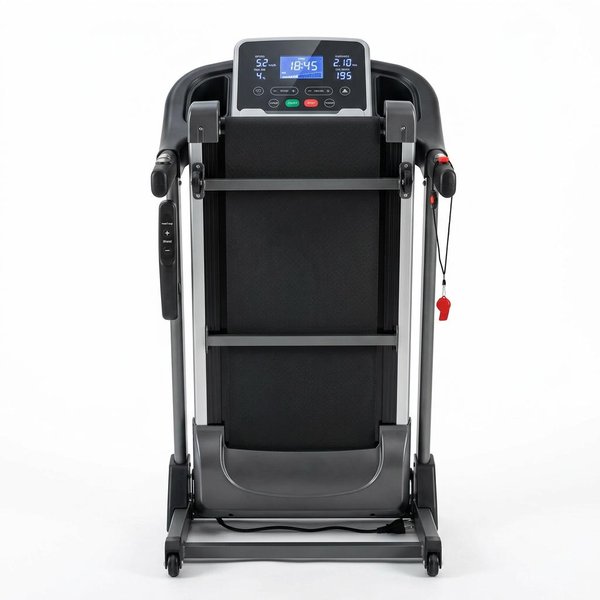
Three-way comparison of compact treadmills, exercise bikes, and rowing machines for small home gyms. We compare calorie burn, space needs, noise, price, and versatility to match each machine to your goals.
The three pillars of home cardio — treadmills, exercise bikes, and rowing machines — each claim to deliver the best workout in the least space. Our analysis compares compact versions of all three across five dimensions that determine which machine earns its spot in your home.
Quick Verdict: Choose a compact treadmill if walking or running is your priority and you have the space. Choose an exercise bike if you want the quietest, lowest-impact option. Choose a rowing machine if you want full-body cardio and strength in a single machine.
| Specification | Compact Treadmill | Exercise Bike (Upright) | Rowing Machine |
|---|---|---|---|
| Footprint (in use) | ~25" W × 55–60" L | ~20" W × 40–45" L | ~20" W × 80–96" L |
| Storage footprint | Folded: ~25" W × 35" L | Minimal (often fixed) | Folded/stood: ~20" W × 25" L |
| Weight | 75–120 lb | 40–70 lb | 50–90 lb |
| Noise Level | 55–70 dB (footstrike + motor) | 30–45 dB | 40–55 dB (fan/water) |
| Calorie Burn (30 min, moderate) | 200–300 kcal | 150–250 kcal | 200–350 kcal |
| Muscle Engagement | Lower body dominant | Lower body dominant | Full body (86% muscle activation) |
| Impact Level | High (running) / Low (walking) | Very low | Very low |
| Typical Price Range | $299–899 | $149–499 | $249–699 |
| Assembly Required | Moderate | Light | Moderate |
| Power Required | Yes (most models) | Some battery-powered options | No (magnetic/air/water) |
| Machine | MET Range | Calories (30 min) | Primary Limiting Factor |
|---|---|---|---|
| Treadmill (running) | 6.0–9.8 | 260–425 | Fitness level, joint tolerance |
| Treadmill (walking) | 3.5–4.5 | 150–195 | Speed ceiling, time availability |
| Exercise bike | 4.0–7.5 | 175–325 | Localized leg fatigue |
| Rowing machine | 4.0–8.0 | 195–390 | Technique requirement, overall fatigue |
Key finding: Rowing machines produce the highest calorie burn per minute when used at moderate-to-high intensity because they engage the upper body, core, and lower body simultaneously. Published research from the English Institute of Sport documents that rowing activates approximately 86% of skeletal muscle mass during the drive phase.
However, the treadmill produces comparable calorie burn for users who run. Walking on a treadmill falls behind both cycling and rowing in metabolic cost per minute.
Calorie burn numbers assume correct form. Our analysis identifies important caveats:
| Machine | Minimum Space Needed | Practical Space (with clearance) |
|---|---|---|
| Compact treadmill | ~55" × 25" | 70" × 35" (safety margins) |
| Exercise bike | ~40" × 20" | 55" × 30" (mount/dismount space) |
| Rowing machine | ~80" × 20" | 96" × 30" (full slide travel) |
The rowing machine requires the longest continuous floor space — typically 7–8 feet — even in its compact configurations. This makes it the most difficult to accommodate in studios and small apartments. Some models store vertically (Concept2, WaterRower), reducing the storage footprint to approximately 20" × 25", but they still need 8 feet of clear floor space during use.
| Machine | Foldable? | Vertical Storage? | Typical Storage Footprint |
|---|---|---|---|
| Compact treadmill | Yes (most) | No (horizontal only) | ~25" × 35" |
| Exercise bike | Some models | No | Same as in-use footprint |
| Rowing machine | Yes (some) | Yes (many models) | ~20" × 25" |
| Machine | Noise Range | Primary Noise Source | Apartment Viability |
|---|---|---|---|
| Treadmill (walking) | 50–60 dB | Motor + footstrike | Moderate (below units may hear footstrike) |
| Treadmill (running) | 60–75 dB | Heavy footstrike | Poor (significant structure-borne noise) |
| Magnetic exercise bike | 30–40 dB | Near-silent | Excellent |
| Fan/air rower | 45–65 dB | Fan/air resistance | Moderate (whooshing sound) |
| Water rower | 40–55 dB | Water tank | Moderate (soothing but audible) |
| Magnetic rower | 35–50 dB | Seat rail + magnetic | Good |
Our analysis: The magnetic exercise bike is the clear winner for noise-sensitive environments. Treadmills produce the most noise, primarily through footstrike impact transmitted through the floor structure. This impact noise is the type most likely to disturb downstairs neighbors, even through exercise mats.
| Capability | Treadmill | Exercise Bike | Rowing Machine |
|---|---|---|---|
| Walk | Yes | No | No |
| Run | Yes | No | No |
| Steady-state cardio | Yes | Yes | Yes |
| Interval training | Yes (limited by speed changes) | Yes | Yes (excellent) |
| Strength component | No | No | Yes (significant resistance) |
| Upper body engagement | No | Some (with moving handles) | High |
| Core engagement | Low | Low | High |
| Rehabilitation suitability | Walking only | Excellent (very low impact) | Good (with proper technique) |
The rowing machine offers the most comprehensive workout in a single machine. The pulling motion strengthens the back, shoulders, and arms while the leg drive builds quadriceps, hamstrings, and glutes. The sliding seat requires continuous core stabilization. No other cardio machine delivers comparable full-body resistance training.
| Tier | Compact Treadmill | Exercise Bike | Rowing Machine |
|---|---|---|---|
| Budget ($150–300) | Basic, limited motor, short deck | Basic magnetic, decent quality | Limited selection, shorter rail |
| Mid-range ($300–600) | Better motor, incline options, longer deck | Magnetic, better monitors, comfortable seat | Quality magnetic or air resistance |
| Premium ($600–900+) | Strong motor, full features, longer warranty | Commercial-grade features | Concept2, WaterRower, advanced monitors |
At every price tier, exercise bikes offer the best construction quality for the dollar because the mechanism is simpler. Treadmills require motors, decks, belts, and suspension systems — more components that add cost and failure points. Rowing machines sit in the middle, with the monitor and resistance mechanism driving price differences.
For users with space and budget, combining two machines covers more fitness scenarios than any single machine:
| Pairing | Combined Cost | Combined Footprint | Best For |
|---|---|---|---|
| Bike + Rower | $450–900 | Bike always out, rower stored | Varied cardio, strength, recovery |
| Treadmill + Bike | $550–1,100 | Treadmill folded, bike out | Running days + low-impact recovery |
| Treadmill + Rower | $600–1,300 | Both store vertically if supported | Maximum workout variety |
As an Amazon Associate we earn from qualifying purchases. Calorie estimates based on published MET values. Noise levels are approximate and vary by model, surface, and intensity.