Best Air Bike Under $500: Top 5 Fan Bike Reviews 2024
Our expert team tested 5 air bikes under $500. Find the best fan bike for HIIT and calorie burn with our 8-criteria scor...
SnugGym is an Amazon Associate. We earn from qualifying purchases at no extra cost to you. Learn more

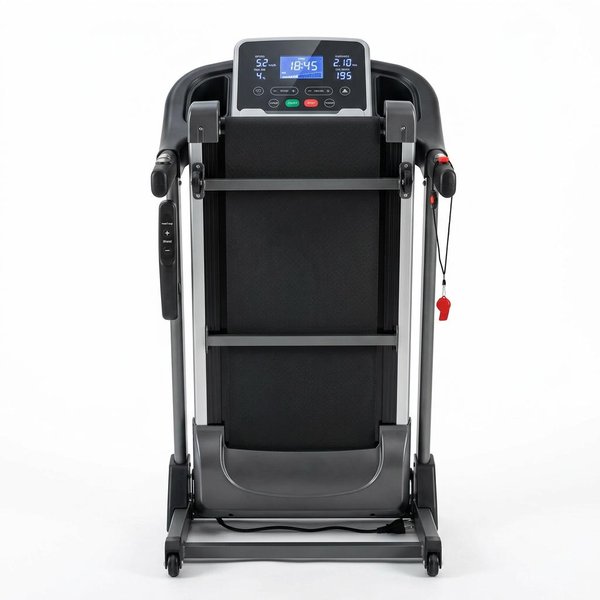
Comprehensive comparison of manual and motorized treadmills including curved, slat-belt, and folding designs. Space, cost, biomechanics, and apartment suitability.
Treadmills are the most requested and most misunderstood category of home cardio equipment. The market splits broadly into two categories: motorized treadmills (the standard gym model with an electric motor driving the belt) and manual treadmills (human-powered belt movement). Within each category, subtypes have proliferated—folding, curved, slat-belt, under-desk, and hybrid designs.
This guide compares all major treadmill types on objective criteria: biomechanics, space requirements, cost, noise, maintenance, and suitability for compact home gyms.
| Feature | Motorized Treadmill | Manual Treadmill |
|---|---|---|
| Belt drive | Electric motor (1.5–4.0 HP) | User's foot strike and body weight |
| Speed control | Motor sets constant belt speed | User determines speed by effort |
| Incline | Motorized (most models) or manual | Typically manual adjustment |
| Power requirement | Standard wall outlet | None |
| Belt movement when stopped | Stationary (motor off) or moves at set speed | Stationary until user steps on |
| Safety dynamic | Belt moves independently; must match pace | Belt stops when user stops; inherently self-pacing |
| Cost range | $300–3,000+ | $100–5,000+ |
Mechanism: An electric motor drives the belt at a user-selected speed. The entire deck folds upward against a hydraulic strut for storage. Unfolds for use.
Published specifications (typical compact model):
What works well:
Consistent pacing enables walking, jogging, or running at precise speeds. This matters for structured training (tempo runs, intervals at specific paces) and for users who prefer steady-state cardio without speed variation.
Programmable workouts adjust speed and incline automatically. Hill simulations, interval programs, and heart-rate-controlled workouts run without user intervention.
Folding designs reclaim floor space. A folded treadmill against a wall consumes roughly 40% of the unfolded footprint. For apartments where the treadmill shares space with a living area, this is essential.
Limitations:
Noise is substantial. The motor produces continuous hum (40–50 dB). Footstrikes on the deck add impact noise (60–80 dB combined). At running speeds, total noise reaches 75–85 dB—enough to disturb neighbors in wood-frame buildings and to make TV listening difficult without headphones.
Maintenance is ongoing. Belt lubrication every 3–6 months (or 150 miles, per most manufacturers). Belt tension adjustment as the belt stretches. Motor brush inspection/replacement on some models. Deck surface wear over 3–5 years of regular use.
Power dependency. No outlet nearby means no treadmill. This constrains placement in some apartment layouts.
Safety considerations. The belt moves at a fixed speed regardless of user fatigue. Missteps can result in falls, particularly at higher speeds. Emergency stop clips are essential and should be used.
Mechanism: A stripped-down motorized treadmill with no upright console. Typically 0.5–4 mph maximum speed. Designed for walking while working at a standing desk.
Published specifications:
What works well: Walking while working adds low-intensity activity to otherwise sedentary hours. For remote workers, this is meaningful caloric expenditure accumulated across a workday.
Limitations: Not suitable for jogging or running. Belt width is often narrow, requiring attention to foot placement. Build quality varies enormously in the sub-$300 segment.
Mechanism: A continuous loop belt on a slight incline (typically 6–10 degrees fixed). User walks or runs, pushing the belt backward with their feet. No motor. Often uses rollers and a flywheel for modest smoothness.
Published specifications:
What works well: Extremely low cost. No electricity required. Light and relatively portable.
Limitations: The fixed incline makes flat walking impossible—every step is uphill. Belt movement is often jerky and inconsistent, particularly at slower speeds. The short, narrow belt constrains stride length and foot placement. Build quality at this price point is generally poor. Deck cushioning is minimal or absent, increasing joint impact.
Our assessment: Budget flat-belt manual treadmills sacrifice too much in biomechanics and durability to recommend for regular use. Suitable only for occasional light walking in spaces where no other option exists.
Mechanism: A curved running surface (higher at front and back, lower in the middle) with a slat belt made of individual horizontal plates connected by bearings. The user's footstrike on the front curve pulls the belt down and back. The curve geometry and slat bearing system create a smooth, responsive running experience impossible on flat-belt manual designs.
Published specifications (Woodway Curve or similar):
What works well:
Biomechanics are superior. Independent studies published in sports science journals indicate that curved non-motorized treadmills promote a more forefoot/midfoot strike pattern, increase cadence by 5–8%, and reduce ground contact time compared to motorized treadmills. These characteristics may reduce overstride and associated injury risk.
Speed is entirely self-determined. Slow down by running slower. Stop by stopping. There is no risk of being thrown off by a moving belt. This safety dynamic enables maximal-effort sprinting without the hazard of motor-driven belt speed.
No electricity, minimal maintenance. Slat belts last 150,000+ miles per published manufacturer data. No motor, no electronics, no belt lubrication. Periodic bearing inspection and belt tension adjustment are the only maintenance needs.
Caloric expenditure is higher. Research indicates 20–30% greater oxygen consumption at equivalent perceived effort compared to motorized treadmills. The self-propelled nature demands more muscular engagement, particularly from the posterior chain (hamstrings, glutes).
Limitations:
Cost is prohibitive for most home users. Quality curved treadmills start around $1,500 and extend well above $5,000. Budget curved treadmills ($400–800) exist but use lower-quality slat systems that produce a less smooth ride and may have durability concerns.
Weight and bulk. At 250–450 lbs, these machines don't move easily. The footprint is typically larger than compact folding motorized treadmills. Not suitable for apartments with weight-restricted floors.
Learning curve. The curved surface and self-paced nature require 2–3 sessions to adapt. Walking feels different. Running feels different. Some users never adapt comfortably.
No decline option. All curved treadmills effectively have a slight built-in incline. You cannot simulate downhill running.
A small number of treadmills combine motorized and manual modes. The Technogym Skillrun (commercial) and a few home models allow switching between motor-driven and self-powered operation. These aim to capture benefits of both systems at premium price points.
| Feature | Folding Motorized | Curved Manual (Performance) |
|---|---|---|
| Biomechanics | Good (some overstride tendency) | Excellent (promotes natural gait) |
| Speed control | Precise, programmable | Entirely effort-based |
| Max speed | 10–12 mph (home models) | Unlimited (human-limited) |
| Incline range | 0–15% typical | Fixed slight effective incline |
| Noise | High (motor + footstrike) | Moderate (slat contact only, no motor) |
| Power needed | Yes (110V outlet) | No |
| Storage | Folds vertically | Does not fold; fixed footprint |
| Weight | 100–200 lbs | 250–450 lbs |
| Maintenance | Moderate (belt, motor, deck) | Low (bearings, belt tension) |
| Cost (quality home model) | $500–1,500 | $1,500–4,000 |
| Walking suitability | Excellent | Good (requires adaptation) |
| Running suitability | Good | Excellent |
| Sprint/HIIT suitability | Moderate (lag in speed changes) | Excellent (instant response) |
| Programming | Extensive | Minimal or none |
| Apartment suitability | Moderate (folding helps, noise doesn't) | Poor (weight, footprint) |
| Treadmill Type | Walking dB | Running dB | Primary Noise Source |
|---|---|---|---|
| Folding motorized | 55–65 dB | 75–85 dB | Motor + footstrike impact |
| Under-desk/walking pad | 50–60 dB | N/A (not designed for running) | Motor + light footstrike |
| Flat-belt manual | 50–60 dB | 65–75 dB | Belt friction + footstrike |
| Curved slat manual | 55–65 dB | 65–75 dB | Slat contact (no motor hum) |
Key distinction: Motorized treadmills produce continuous motor noise that persists even between footstrikes. Manual treadmills produce noise only when the user is in contact with the belt. The character of manual treadmill noise (intermittent slat contact) is generally less annoying to neighbors than continuous motor hum.
For detailed noise data across all equipment types, see our equipment noise levels chart.
| Treadmill Type | Unfolded Footprint | Folded/Stored | Minimum Room Size |
|---|---|---|---|
| Compact folding motorized | 60" × 30" | 30" × 30" (vertical) | 7' × 4' |
| Standard folding motorized | 70" × 34" | 35" × 34" (vertical) | 8' × 5' |
| Under-desk walking pad | 50" × 22" | Some fold to ~25" × 22" | 6' × 3' (desk + pad) |
| Flat-belt manual | 45" × 24" | May fold (varies) | 7' × 4' |
| Curved manual (home) | 65" × 32" | Does not fold | 8' × 5' (fixed) |
Critical clearance: The manufacturer recommends 6 feet of open space behind any treadmill for safety. In a compact apartment, this is often impractical. Position the treadmill against a wall with the minimum safe clearance you can tolerate, and never run at high speeds with reduced clearance.
Motorized folding treadmills remain the practical default for home gyms because they fold, they're programmable, and they're familiar. But for runners who prioritize biomechanics and have the budget and floor space, curved manual treadmills offer a superior training stimulus with lower long-term maintenance.
The under-desk walking pad serves a narrow but growing niche of remote workers. Budget flat-belt manual treadmills satisfy almost no one and should be avoided.
Your selection should be driven by your primary activity (walking vs. running), your noise constraints, your storage situation, and your budget—in approximately that order.
As an Amazon Associate we earn from qualifying purchases.
Last updated: 2025-07-21