Best Air Bike Under $500: Top 5 Fan Bike Reviews 2024
Our expert team tested 5 air bikes under $500. Find the best fan bike for HIIT and calorie burn with our 8-criteria scor...
SnugGym is an Amazon Associate. We earn from qualifying purchases at no extra cost to you. Learn more

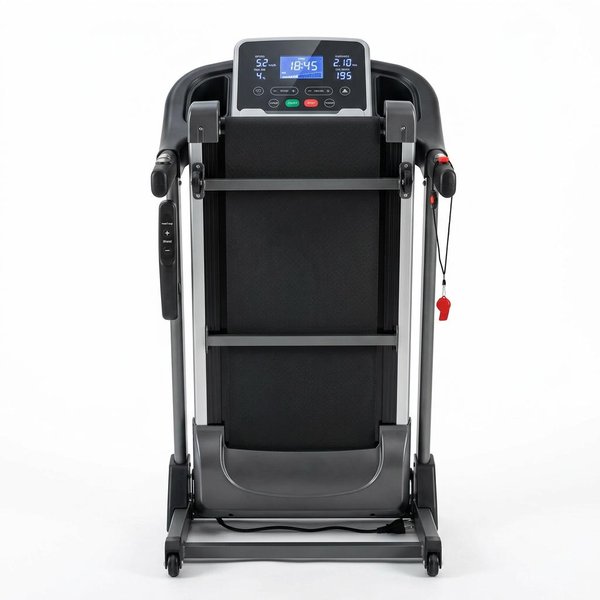
Compare incline trainers and standard treadmills for apartment gyms. We analyze calorie burn, joint impact, space needs, noise, and which matches your fitness goals.
Treadmills are the default home cardio machine, but a specialized subcategory—the incline trainer—has gained substantial popularity since the 12-3-30 workout went viral. Incline trainers are essentially treadmills engineered for extreme grades, typically reaching 15–40% incline compared to a standard treadmill's 10–15% maximum.
In short: Standard treadmills support both walking and running across flat to moderate inclines. Incline trainers optimize steep walking and typically cost more. If you never run and prefer walking workouts, an incline trainer may deliver better value. If you want the option to run, a standard treadmill is the more versatile choice.
| Factor | Incline Trainer | Standard Treadmill |
|---|---|---|
| Max incline | 15–40% | 10–15% |
| Max speed | 10–12 mph | 12+ mph |
| Best use case | Steep walking, glute/hamstring focus | Walking, jogging, running |
| Calorie burn (walking) | Very high at incline | Moderate |
| Running suitability | Limited (narrower deck, lower max speed) | Full running capability |
| Deck cushioning | Good | Varies widely |
| Typical price | $1,200–$3,000 | $400–$2,500 |
| Space needs | Similar (both large) | Similar |
| Noise level | Moderate (motor working harder) | Moderate |
An incline trainer is a treadmill designed with a steeper maximum grade and typically a slightly shorter deck. The motor and frame are engineered to sustain continuous operation at high incline percentages where the belt faces increased gravitational resistance.
Key structural differences from standard treadmills:
The most recognized model, the NordicTrack X22i, offers a -6% decline to 40% incline range. The manufacturer states that this range simulates everything from downhill hiking to steep mountain climbing.
A standard home treadmill supports walking, jogging, and running at speeds from 0.5 to 12+ mph with incline typically ranging from 0–10% or 0–15%. Deck lengths of 55–60" accommodate full running strides.
Subcategories include:
The 12-3-30 protocol—12% incline, 3 mph, for 30 minutes—popularized incline-based walking as a serious cardio modality. Our analysis of why it works:
A standard treadmill with 12–15% maximum incline can execute 12-3-30. An incline trainer extends the range significantly beyond this baseline.
Calorie expenditure depends on body weight, speed, incline, and duration. Based on published metabolic equations:
| Activity | 155 lb Person, 30 Minutes (estimated) |
|---|---|
| Flat walking, 3.5 mph | ~140 calories |
| 12% incline walking, 3 mph | ~250 calories |
| 15% incline walking, 3 mph | ~290 calories |
| 20% incline walking, 2.5 mph | ~320 calories |
| Jogging, 5 mph (flat) | ~300 calories |
| Running, 6 mph (flat) | ~370 calories |
| Running, 8 mph (flat) | ~460 calories |
Our analysis: Incline walking narrows the calorie gap with running without the joint impact. A 20% incline walk at moderate pace can match or exceed the calorie burn of jogging on flat ground.
Published biomechanics research indicates that running produces ground reaction forces of 2.5–3× body weight per footstrike. For a 180 lb runner, each step loads 450–540 lb through the ankles, knees, and hips. Over thousands of strides per session, this cumulative load drives many overuse injuries.
Walking generates roughly 1.0–1.5× body weight per step. At 180 lb, that's 180–270 lb per footfall—approximately half the load of running.
Our research indicates that steep incline walking may slightly increase impact forces compared to flat walking due to the forward lean and push-off mechanics. However, the absolute load remains well below running. The reduced speed (2.5–3.5 mph vs. 5–8 mph) further decreases cumulative impact.
Bottom line: For joint-sensitive users, incline walking offers a middle ground—higher calorie burn than flat walking with substantially lower impact than running.
Primary movers: quadriceps, calves, hip flexors. Glute and hamstring engagement is moderate, especially at slower speeds.
Primary movers shift substantially: gluteus maximus, hamstrings, and calves become dominant. The quadriceps still work but are less emphasized. Published EMG studies show significantly higher glute activation at grades above 15% compared to flat walking.
Practical implication: Incline trainers are the better choice if posterior-chain development (glutes and hamstrings) is a training priority. Standard treadmills are better for overall cardiovascular conditioning and sport-specific running training.
Both machines require substantial floor space—this is the primary constraint for apartment buyers.
| Specification | Incline Trainer | Standard Treadmill |
|---|---|---|
| Typical dimensions (L × W × H) | 70" × 39" × 72" | 70" × 34" × 60" |
| Required floor space (with clearance) | 80" × 60" | 80" × 55" |
| Folded footprint | Rarely fold | 40" × 34" (folding models) |
| Weight | 300–400 lb | 200–300 lb |
| Ceiling height needed | 10–12 ft at max incline | 8–9 ft |
Critical ceiling height note: At 40% incline, the user stands significantly elevated. A 5'9" person on a machine with 15" deck height at 40% incline places their head at approximately 9–10 ft. Standard 8 ft ceilings are insufficient. The manufacturer states minimum ceiling requirements for each model—measure before purchasing.
Both machine types produce motor noise, footfall impact, and belt movement sound. Our analysis of noise sources:
| Noise Source | Incline Trainer | Standard Treadmill |
|---|---|---|
| Motor under incline load | Higher (working against gravity) | Moderate |
| Footfall/belt impact | Moderate (walking speed) | Higher (running speed) |
| Deck vibration | Moderate | Higher when running |
| Overall dB estimate | 60–70 dB | 60–75 dB |
Both require a noise-dampening mat beneath the machine. Running on a treadmill in an apartment above occupied units is generally not feasible without structural noise issues. Incline walking at moderate speed is the quieter of the two primary use cases.
| Category | Incline Trainer | Standard Treadmill |
|---|---|---|
| Budget ($400–$800) | Not available | Folding models with basic cushioning |
| Mid-range ($800–$1,500) | Entry incline trainers | Quality folding/non-folding with good cushioning |
| Premium ($1,500–$3,000) | NordicTrack X-series, Bowflex TreadClimber | Commercial-grade home treadmills |
Incline trainers command a premium because the reinforced frame, steeper incline motor, and associated engineering add manufacturing cost. There are no true budget incline trainers; the category starts at approximately $1,000.
Q: Can I run on an incline trainer?
Most incline trainers support speeds up to 10–12 mph, which accommodates jogging and moderate running. However, the deck is often slightly shorter than premium running treadmills, and the frame geometry is optimized for incline walking. Serious runners should choose a dedicated running treadmill.
Q: Is 12-3-30 actually effective?
For general cardiovascular fitness and weight management, yes. It elevates heart rate into the moderate-intensity zone for 30 continuous minutes. It is not, however, a complete fitness program—strength training and movement variety remain important.
Q: Will a treadmill fit in my apartment?
Measure your available floor space (length × width) and ceiling height before ordering. Most treadmills require at least 80" × 55" of floor space and 8.5+ ft ceilings. Folding models reduce the footprint when not in use but are still large objects.
Q: Do I need a mat under my treadmill?
Yes. A ¼"–⅜" rubber equipment mat protects flooring, reduces vibration transmission, and catches debris. It is essential for apartment use.
| Your Situation | Best Choice |
|---|---|
| Only walk, never run | Incline trainer (if ceiling height allows) |
| Mix of walking and running | Standard treadmill |
| Ceiling under 9 ft | Standard treadmill (non-incline) |
| Budget under $1,000 | Standard treadmill (folding) |
| Focus on glute development | Incline trainer |
| Training for a race | Standard treadmill with 60" deck |
| Downstairs neighbors | Incline trainer (walking only) or alternative cardio |
| Limited space, must fold | Standard folding treadmill |
As an Amazon Associate we earn from qualifying purchases.