Best Air Bike Under $500: Top 5 Fan Bike Reviews 2024
Our expert team tested 5 air bikes under $500. Find the best fan bike for HIIT and calorie burn with our 8-criteria scor...
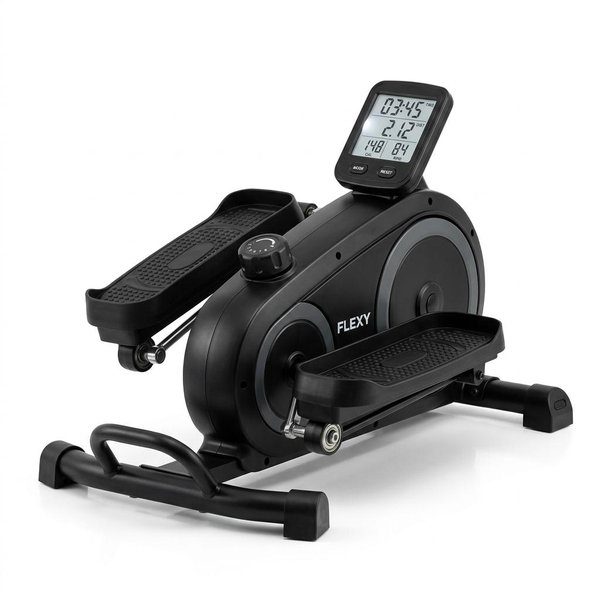
A comprehensive research-backed guide to choosing cardio machines for small spaces. Compare resistance types, footprints, noise levels, and long-term costs to make the right investment.
Selecting cardio equipment for a small home gym is fundamentally different from equipping a commercial facility. Space constraints, noise sensitivity, flooring limitations, and electrical access create a decision matrix where the "best" machine on paper may be the wrong machine for your specific environment. This guide synthesizes exercise science research, acoustic engineering data, and real-world apartment-dwelling experience into a decision framework that prevents expensive mistakes.
Before evaluating specific machines, quantify your actual constraints. Most purchasing errors stem from optimistic assumptions about space, noise tolerance, and usage patterns.
Measure twice, buy once: Record these dimensions:
Standard footprints by category:
| Machine type | In-use footprint (typical) | Storage option | Stored footprint |
|---|---|---|---|
| Folding treadmill | 70" × 33" | Vertical fold | 35" × 33" × 70" |
| Walking pad | 55" × 25" | Under desk/fold | 30" × 25" × 6" |
| Air rower | 96" × 24" | Split/vertical | 48" × 24" (two halves) |
| Magnetic rower | 75" × 20" | Vertical fold | 30" × 20" × 65" |
| Compact elliptical | 55" × 24" | No fold/fixed | Same as in-use |
| Folding elliptical | 55" × 24" | Vertical fold | 30" × 24" × 65" |
| Mini stepper | 18" × 16" | Closet shelf | Same footprint |
| Under-desk bike | 24" × 18" | Under desk | Same footprint |
| Fan bike (AirBike) | 48" × 24" | No fold | Same as in-use |
Cardio machine noise has two components: airborne sound (what you hear) and structure-borne vibration (what your downstairs neighbors hear). Both matter.
Typical noise levels by resistance type:
| Resistance type | Decibel range* | Primary noise character |
|---|---|---|
| Magnetic (cardio) | 48–55 dB | Low hum, barely noticeable |
| Magnetic (strength) | 52–58 dB | Moderate whir |
| Water | 58–65 dB | Rhythmic slosh (often pleasant) |
| Air (cardio pace) | 62–70 dB | Continuous whoosh |
| Air (sprint) | 72–82 dB | Significant wind noise |
| Motor-driven treadmill | 60–68 dB | Motor whine + belt + footfall |
| Hydraulic stepper | 50–58 dB | Piston compression hiss |
*Measured at 24" distance, moderate intensity. Add 3–5 dB for structure-borne transmission through hard floors.
Research on exercise noise and neighbor complaints: While specific academic studies are limited, housing dispute data and property management surveys consistently identify treadmill footfall and air rower whoosh as the most common cardio-related noise complaints in multi-unit dwellings. Magnetic resistance machines generate the fewest formal complaints.
Mitigation strategies:
Many cardio machines require power for consoles, incline motors, and magnetic resistance systems. Verify:
Non-motorized options (air bikes, water rowers, most air rowers, hydraulic steppers) eliminate electrical constraints entirely.
Exercise modality selection should follow from physiological objectives, not marketing appeal.
For fat loss, total energy expenditure is the primary variable. Research in the Journal of Obesity confirms that exercise modality selection has minimal impact on weight loss outcomes when total calorie burn is matched. Practical implications:
| Priority | Best options | Rationale |
|---|---|---|
| Maximum calorie burn per minute | Air bike, rowing (vigorous), running treadmill | Full-body engagement increases VO₂ and caloric demand |
| Maximum calorie burn per session duration | Rowing, elliptical | Lower perceived exertion at matched heart rate enables longer sessions |
| Sustainable daily adherence | Walking pad, mini stepper | Lowest friction to daily habit formation |
| Post-exercise elevation (EPOC) | HIIT on any machine | High-intensity intervals produce modestly elevated post-workout metabolism for 12–24 hours |
The adherence variable dominates: a machine you use daily at moderate intensity outperforms a superior machine used sporadically at high intensity. This is among the most robust findings in exercise psychology research.
The American Heart Association recommends 150 minutes of moderate-intensity or 75 minutes of vigorous-intensity aerobic activity weekly. All cardio modalities on this list satisfy this prescription. Differentiation emerges for specific cardiac populations:
| Concern | Recommended | Avoid | Evidence basis |
|---|---|---|---|
| Knee osteoarthritis | Elliptical, recumbent bike, rowing | Treadmill running, stair climbing | Reduced peak joint loading |
| Low back pain | Recumbent bike, walking (treadmill) | Rowing (if form unproven), fan bike | Spinal loading and flexion patterns |
| Hip pathology | Swimming (non-machine), elliptical, bike | Deep steppers, high-incline treadmill | Hip flexion angle and impingement risk |
| Ankle/foot issues | Rowing, bike, elliptical | Treadmill (impact), steppers | Elimination of ground reaction forces |
Research from Arthritis & Rheumatology demonstrates that low-impact cardio equipment enables meaningful fitness improvements in osteoarthritis patients without accelerating joint degeneration—a critical finding that supports home equipment investment for this population.
For competitive athletes or serious fitness enthusiasts, specificity of training and data precision matter:
Understanding resistance mechanisms enables informed quality assessment beyond brand names.
How it works: A conductive flywheel spins through a magnetic field. Eddy currents induced in the flywheel create drag (resistance). Adjusting magnet proximity changes field strength and resistance level.
Advantages: Near-silent operation. Smooth, consistent resistance. Low maintenance. Fine granularity (20–32 levels typical).
Disadvantages: Resistance feel can be "flat"—lacks the dynamic response of air or water. High-end magnetic systems are expensive. Cheap magnetic systems have uneven resistance curves.
Quality indicators: Heavier flywheels (15+ lb) provide smoother momentum. More resistance levels suggest finer control but don't guarantee quality. Belt-drive magnetic systems are quieter than chain-drive.
How it works: A fan flywheel displaces air. Resistance increases with the square of velocity—pull/pedal faster, resistance increases exponentially.
Advantages: Self-scaling (appropriate for any fitness level). Natural dynamic feel. No upper resistance limit. Power measurement is straightforward and accurate.
Disadvantages: Loud. Resistance at low velocities is minimal—not ideal for very weak users starting rehabilitation.
Quality indicators: Fan blade aerodynamic design (affects noise and feel). Damper mechanism precision. Monitor calibration methodology. Chain vs. cord vs. belt drive.
How it works: A paddle wheel rotates through a water tank. Resistance increases with paddle speed and water volume. More water = higher baseline resistance.
Advantages: Quiet, pleasant sound. Dynamic feel approximating on-water rowing. Aesthetic appeal (furniture-grade construction common).
Disadvantages: Water requires maintenance (purification tablets). Resistance has practical upper limits. Heavier than air equivalents (water weight). Monitor systems typically less sophisticated.
Quality indicator: Tank seal integrity (leaks are catastrophic). Paddle design (multi-blade systems provide smoother feel). Monitor quality varies enormously—test before committing if data matters.
How it works: Oil is forced through an orifice via a piston. Adjustable orifice size changes resistance.
Advantages: Extremely compact. Very quiet. Inexpensive.
Disadvantages: Resistance decreases as oil heats (thermal fade). Cylinders wear and require replacement (1–3 year lifespan). Resistance curve is less natural than flywheel systems.
Quality indicator: Twin-cylinder designs (independent left/right) are more stable than single-cylinder. Cylinder replacement cost and availability.
The purchase price is not the total cost. A comprehensive 10-year cost model:
| Cost component | Typical range | Notes |
|---|---|---|
| Initial purchase | $200–$2,500 | Wide variance by category and brand |
| Delivery/assembly | $0–$300 | Many retailers include free delivery; assembly often DIY-able |
| Protective flooring | $30–$150 | Essential for floor protection and noise reduction |
| Maintenance (annual) | $0–$50 | Oil, lubricant, cleaning supplies |
| Major repairs (10-year) | $0–$400 | Drive belt, electronics, bearings |
| Subscription services | $0–$480/year | iFIT, Peloton, Echelon, etc. |
| Electricity | $10–$40/year | Motorized equipment only; minimal cost |
Subscription reality check: Connected fitness subscriptions ($29–$44/month) often exceed equipment depreciation over a 5-year horizon. A $1,000 treadmill with a 5-year lifespan costs $200/year in depreciation. Adding a $39/month subscription raises annual cost to $668—more than triple the equipment cost. Evaluate whether the content genuinely improves your adherence or merely adds expense.
Use this sequential filter:
Step 1: Eliminate by space. If your available operating footprint is under 40" × 20", only mini steppers, under-desk bikes, and the shortest walking pads qualify. Be honest about measurements.
Step 2: Eliminate by noise. If you share walls and cannot place equipment on a ground floor or basement, eliminate air rowers and motor treadmills. Prioritize magnetic resistance.
Step 3: Match modality to goals. Reference Part 2. Don't buy a rowing machine because it's trendy; buy it because rowing matches your physiological objectives, space, and joint tolerance.
Step 4: Set budget including subscriptions. If a connected experience is essential, include 3–5 years of subscription costs in your budget ceiling. Compare total cost, not equipment price alone.
Step 5: Verify warranty and support. Search specifically for "[brand] customer service" and "[model] repair" before purchasing. A great machine with unreachable support becomes a doorstop.
| Scenario | Recommended machine type | Budget target |
|---|---|---|
| Studio apartment, shared walls | Magnetic rower or mini stepper | $200–$600 |
| 1BR apartment, dedicated corner | Folding elliptical or magnetic rower | $400–$900 |
| Home office with standing desk | Walking pad | $300–$600 |
| Garage gym, noise unconstrained | Air bike + Concept2 rower | $1,200–$2,000 |
| Rehabilitation/older adult | Recumbent bike or magnetic rower | $400–$800 |
| Family with multiple users | Folding treadmill or quality elliptical | $800–$1,500 |
The correct cardio machine is the one that fits your space, respects your acoustic environment, matches your physiological needs, and arrives with sufficient build quality that it functions identically in year 5 as it did on day 1. Everything else—brand prestige, touchscreen size, class library depth—is secondary to these fundamentals.