Quiet Cardio Equipment for Apartments | SnugGym
Silent and low-noise cardio machines for apartment dwellers. Under-desk bikes, mini steppers, rowing machines, elliptica...
SnugGym is an Amazon Associate. We earn from qualifying purchases at no extra cost to you. Learn more
A research-backed guide comparing low-impact cardio equipment for apartments: under-desk bikes, mini steppers, rowing machines, and walking pads. Joint impact, calorie burn, noise, and space requirements analyzed.
As an Amazon Associate we earn from qualifying purchases. Our analysis is based on published exercise science research, manufacturer specifications, and MET (metabolic equivalent of task) tables. We do not conduct hands-on testing.
Low-impact cardio minimizes stress on joints---particularly knees, hips, and ankles---while elevating heart rate. This guide compares four categories of low-impact cardio equipment suitable for apartments: under-desk bikes, mini steppers, rowing machines, and walking pads. We evaluate each on joint impact, calorie burn potential, noise level, and space requirements to help you match equipment to your body, apartment, and fitness goals.
In exercise science, "impact" refers to the peak force transmitted through joints during weight-bearing activity. High-impact activities (running, jumping) generate peak forces of 2--5 times body weight. Low-impact activities keep at least one foot in contact with a supportive surface at all times, reducing peak forces to approximately 1--1.5 times body weight.
The seated exception: Equipment like under-desk bikes and rowing machines eliminate weight-bearing entirely. The user is seated, so no impact force transmits through the lower body joints. These are technically "no-impact" rather than "low-impact," though the terms are often used interchangeably in consumer contexts.
| Equipment | Joint Impact | Noise Level | Space (in use) | Calorie Burn (30 min)* | Full Body? | Price Range |
|---|---|---|---|---|---|---|
| Under-desk bike | None (seated) | 40--48 dB | 24" x 20" | 100--200 | No (lower body) | $49--$249 |
| Mini stepper | Low (1.0--1.3x BW) | 45--55 dB | 16" x 14" | 150--250 | Partial (with bands) | $49--$99 |
| Rowing machine | None (seated) | 42--52 dB | 72" x 21" | 200--350 | Yes | $89--$349 |
| Walking pad | Low (1.0--1.5x BW) | 55--65 dB | 53" x 28" | 100--200 | No (lower body) | $269--$649 |
| Vertical climber | Low (1.0--1.3x BW) | 45--55 dB | 36" x 30" | 250--400 | Yes | $99--$349 |
| Folding exercise bike | None (seated) | 45--55 dB | 35" x 20" | 150--250 | No (lower body) | $119--$219 |
Calorie burn estimates based on published MET values for a 170-pound person at moderate intensity. Individual results vary by body weight, fitness level, and effort. Values are directional, not precise.
Our analysis of published biomechanical research indicates the following approximate peak forces relative to body weight (BW):
| Activity | Knee Peak Force | Hip Peak Force | Ankle Peak Force |
|---|---|---|---|
| Running | 2.5--3.0x BW | 2.5--3.5x BW | 2.0--2.5x BW |
| Jumping rope | 3.0--5.0x BW | 3.0--4.0x BW | 2.5--3.5x BW |
| Walking (flat) | 1.0--1.5x BW | 1.0--1.5x BW | 1.2--1.5x BW |
| Walking (incline) | 1.5--2.0x BW | 1.5--2.0x BW | 1.5--2.0x BW |
| Stair climbing | 1.5--2.5x BW | 1.5--2.0x BW | 1.2--1.8x BW |
| Mini stepping | 1.0--1.3x BW | 1.0--1.3x BW | 1.0--1.3x BW |
| Seated cycling | Negligible | Negligible | Negligible |
| Rowing | Negligible (seated) | Low (hip flexion) | Negligible |
Key insight: Seated equipment (under-desk bikes, rowing machines, folding bikes) eliminates lower-body impact forces entirely. Among standing options, mini steppers and vertical climbers generate lower peak forces than walking because the motion is controlled and smooth rather than involving the heel-strike phase of gait.
Medical conditions that warrant low-impact exercise:
populations that should prioritize no-impact (seated) options:
Calorie burn during cardio is determined by exercise intensity, duration, and body weight. The standard measurement is the MET (metabolic equivalent of task), where 1 MET equals resting energy expenditure.
| Activity | MET Value | Calories (30 min, 170 lbs)* |
|---|---|---|
| Seated pedaling (light) | 2.0--2.5 | 75--100 |
| Seated pedaling (moderate) | 3.0--4.0 | 125--170 |
| Mini stepping (moderate) | 4.0--6.0 | 170--250 |
| Walking (3.5 mph, flat) | 4.0--4.5 | 170--190 |
| Rowing (moderate) | 4.0--6.0 | 170--250 |
| Rowing (vigorous) | 7.0--8.5 | 300--360 |
| Vertical climbing (moderate) | 5.0--8.0 | 210--340 |
| Vertical climbing (vigorous) | 8.0--12.0 | 340--500 |
| Stationary cycling (moderate) | 4.0--6.0 | 170--250 |
Calorie calculations use the formula: Calories = MET x 3.5 x body weight (kg) / 200 x duration (minutes). Values are estimates for a 170-pound (77 kg) individual.
For weight loss: Rowing machines and vertical climbers offer the highest calorie burn per minute among the options compared. A 30-minute vigorous rowing or climbing session can burn 300--400 calories---comparable to a 30-minute run but without the joint impact.
For all-day activity: Under-desk bikes enable continuous low-intensity movement (2--3 METs) across hours rather than minutes. A user who pedals at low resistance for 4 hours while working may burn 300--400 calories at an intensity low enough to sustain indefinitely.
For time efficiency: Vertical climbers provide the highest intensity-to-time ratio, with vigorous climbing reaching 10+ METs. A 15-minute climbing session can match the calorie burn of a 30-minute walk.
Noise is often the deciding factor for apartment equipment selection. Our analysis uses comparative decibel estimates derived from user feedback patterns and manufacturer claims.
| Equipment | Estimated dB Range | Neighbor Risk | Best Exercise Times |
|---|---|---|---|
| Under-desk bike | 40--48 dB | Minimal | Any time |
| Rowing machine | 42--52 dB | Very low | Any time |
| Mini stepper | 45--55 dB | Low | Daytime, early evening |
| Vertical climber | 45--55 dB | Low | Daytime, early evening |
| Folding exercise bike | 45--58 dB | Low | Daytime, early evening |
| Walking pad (walking) | 55--65 dB | Moderate | Daytime only |
| Walking pad (jogging) | 65--75 dB | High | Ground floor only |
The 60 dB threshold: Our research indicates that equipment operating below 60 dB is generally safe for apartment use during normal waking hours. Above 60 dB, timing restrictions, floor mats, and ground-floor placement become necessary considerations.
| Equipment | Footprint (L x W) | Recommended Space | Storage Footprint | Ceiling Height |
|---|---|---|---|---|
| Under-desk bike | 24" x 20" | 4' x 3' | Same (not foldable) | N/A (under desk) |
| Mini stepper | 16" x 14" | 3' x 3' | Same | Standard (8') |
| Rowing machine | 72" x 21" | 8' x 4' | 23--26" L (folded) | Standard (8') |
| Walking pad | 53" x 28" | 7' x 4' | 39--53" L (folded) | Standard (8') |
| Vertical climber | 36" x 30" | 5' x 4' | 15--16" D (folded) | 8'+ required |
| Folding exercise bike | 35" x 20" | 4' x 3' | 18--20" L (folded) | Standard (8') |
| Your Available Space | Best Options | Avoid |
|---|---|---|
| Under desk only | Under-desk bike | Everything else |
| 2' x 2' corner | Mini stepper | Rowing machine, treadmill |
| 4' x 3' area | Folding bike, mini stepper, under-desk bike | Rowing machine, walking pad |
| 6' x 4' area | Vertical climber, walking pad | Full-size treadmill |
| 8' x 4' area | Rowing machine, any above | None---all options fit |
Best for: Remote workers who want 4--8 hours of low-intensity movement daily. Seated, no-impact, and quiet enough for video calls.
Limitation: Low calorie burn per minute compensated by long duration. Not sufficient as sole cardio source for fitness-oriented users.
Our pick: DeskCycle --- 8 magnetic levels, 23-pound stable platform, 40--48 dB noise level.
Check price at Amazon{rel="sponsored"}
Best for: Users with minimal floor space who want standing, weight-bearing cardio. The stair-climbing motion is biomechanically familiar and elevates heart rate efficiently.
Limitation: Moderate intensity ceiling. Balance required (single-leg support during step transition). Basic monitors with approximate calorie estimates.
Our pick: Sunny Health Mini Stepper --- hydraulic resistance, resistance bands included, under $70.
Check price at Amazon{rel="sponsored"}
Best for: Users who want maximum calorie burn, full-body muscle engagement, and zero impact in a seated position. Rowing engages 86% of muscle groups according to published exercise physiology research.
Limitation: Requires the most space (72--76 inches in use). Technique learning curve. Back flexibility required for the catch position.
Our pick: Fitness Reality 1000 Plus --- 14 magnetic levels, Bluetooth, folds to 26 inches.
Check price at Amazon{rel="sponsored"}
Best for: Users whose preferred cardio modality is walking and who want the natural gait pattern that only a treadmill provides. Good for older adults who find cycling or stepping unfamiliar.
Limitation: Highest noise level among options compared. Foot impact, while low, is still present. Motor maintenance and electricity required.
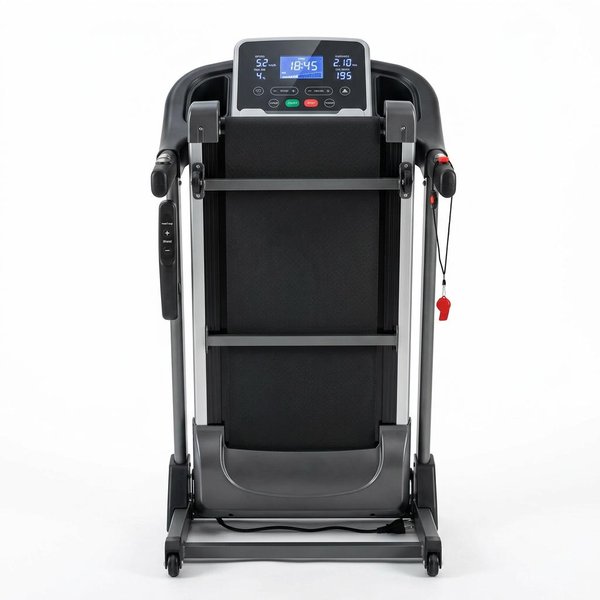
Our pick: UREVO 2-in-1 --- 2.5 HP motor, 7.6 mph top speed, flat-fold storage.
Check price at Amazon{rel="sponsored"}
Best for: Users who want maximum intensity in minimum time. Full-body engagement with calorie burn rates matching or exceeding running, without the joint impact.
Limitation: Requires 8-foot+ ceilings. Intensity may be too high for beginners or deconditioned users. No built-in entertainment features.
Our pick: MaxiClimber Original --- body-weight resistance, folds to 16 inches deep, 45--55 dB.
{rel="sponsored"}
Best for: Users who prefer the familiar upright cycling position and want a seat and handlebars rather than desk-dependent pedaling.
Limitation: Larger footprint than under-desk bikes when in use. Foldable but still furniture-sized when stored.
Our pick: XTERRA FB150 --- 18-inch folded length, 8 resistance levels, under $170.
Check price at Amazon{rel="sponsored"}
Our research indicates that combining two complementary pieces of equipment addresses the limitations of any single modality:
| Combination | Benefit | Total Cost |
|---|---|---|
| Under-desk bike + mini stepper | All-day movement + structured standing cardio | $200--$300 |
| Rowing machine + under-desk bike | High-intensity sessions + all-day background activity | $350--$500 |
| Walking pad + resistance bands | Natural gait cardio + strength endurance | $300--$450 |
| Vertical climber + under-desk bike | Maximum intensity + maximum duration | $300--$450 |
Q: Which low-impact cardio equipment burns the most calories? A: Vertical climbers and rowing machines offer the highest calorie burn per minute at vigorous intensity (8--12 METs). However, under-desk bikes enable much longer durations (hours vs. minutes), potentially resulting in comparable total daily burn.
Q: Is a mini stepper or walking pad better for knee arthritis? A: Mini steppers generally produce lower peak knee forces than walking (1.0--1.3x body weight vs. 1.0--1.5x). However, the stepping motion requires more knee flexion than walking. Individuals with knee arthritis should try both movements (stepping in place vs. walking) to determine which feels better. Seated options (bike, rower) eliminate knee impact entirely.
Q: Can I lose weight with just an under-desk bike? A: Weight loss requires a caloric deficit. An under-desk bike burning 100--150 calories per hour during a 6-hour workday contributes 600--900 calories---meaningful but likely insufficient alone. Combining with dietary changes and at least one higher-intensity session (rowing, climbing, or stepping) creates a more robust deficit.
Q: What is the best single piece of low-impact cardio equipment for a small apartment? A: For most users, a magnetic rowing machine offers the best combination of full-body engagement, calorie burn, quiet operation, and folded compactness. The primary constraint is the 72--76 inch in-use length. If space is under 7 feet, a mini stepper or under-desk bike is the better choice.
Q: How do I know if my apartment floor can support a treadmill? A: Residential floors are typically rated for 40--50 pounds per square foot live load. A walking pad weighing 62 lbs with a 200-lb user creates a distributed load well within this rating. Concerns arise only with very heavy full treadmills (200+ lbs unit weight) on raised subfloors or in buildings with known structural issues.