The 5 Best Ab Benches for Home Gyms in 2025: Decline & Adjustable Benches Tested
Research-backed guide to best ab benches home for small-space home gyms....
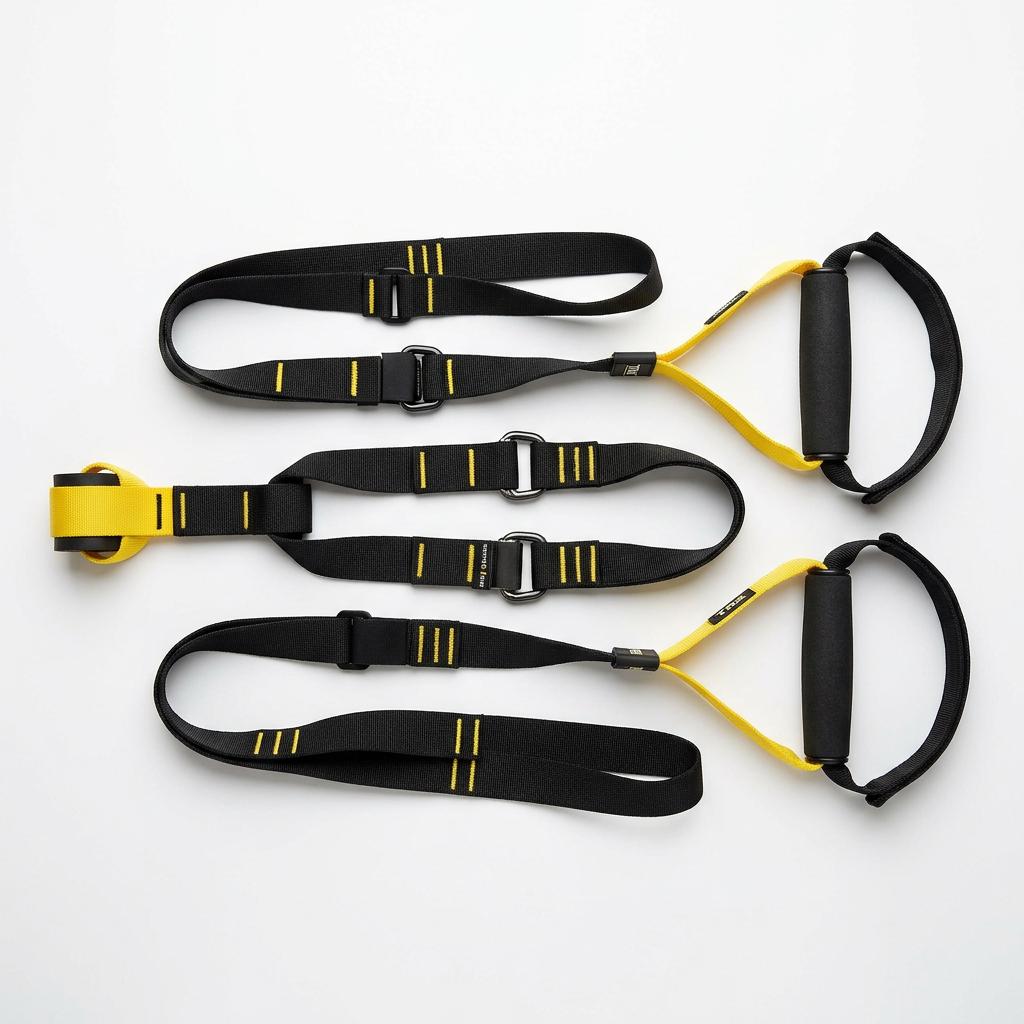
Learn suspension training from the ground up. Our beginner's guide covers TRX setup, 10 foundational exercises with progressions, and a full 3-day weekly workout plan based on exercise science principles.
Suspension training uses adjustable straps and your body weight to create scalable resistance for full-body strength work. A single anchor point and a set of straps replace rows of traditional gym equipment.
This guide is designed for beginners who have never used a suspension trainer. It covers equipment setup, movement fundamentals, 10 core exercises with progressions, and a complete 3-day-per-week workout plan.
A suspension trainer with door anchor and adjustable straps. Our suspension trainer comparison details the differences between leading models. For beginners, any system rated to 300+ pounds with a reliable door anchor is adequate.
Required space: A 6-by-8-foot area with a sturdy door that closes toward you. The door must have a functional latch that engages when closed.
Flat-soled shoes or bare feet. Running shoes with thick, compressible soles create instability during standing exercises. The soles should not mark flooring.
Safety rule: The door must close toward you. If the door opens toward you, the anchor will pull the door open under load. Use an alternate door or an overhead anchor point instead.
Most suspension trainers have marked strap positions:
| Position | Length | Used For |
|---|---|---|
| Fully short | Mid-chest | Standing presses, rows, standing exercises |
| Mid-length | Hip height | Planks, mountain climbers, knee tucks |
| Fully long | Near floor | Elevated exercises, hamstring curls, suspended planks |
Adjust both straps to equal lengths before each exercise. Uneven straps create uneven loading that can strain joints.
Suspension training uses gravity as resistance. Your body angle determines load:
Beginners should start at a 45-degree body angle for most exercises and adjust based on ability.
These 10 movements form the foundation of suspension training. Master these before progressing to advanced variations.
Muscles worked: Latissimus dorsi, rhomboids, rear deltoids, biceps
Setup: Short strap length. Face the anchor. Hold handles with palms facing each other.
Movement: Walk feet forward until body is at 45 degrees. Pull chest toward handles, squeezing shoulder blades together. Lower with control.
Form cues:
Progression: Walk feet farther forward (lower body angle) to increase load. Regression: walk feet back (more upright).
Sets/reps: 3 sets of 8–12
Muscles worked: Pectoralis major, anterior deltoids, triceps
Setup: Short strap length. Face away from anchor. Handles at chest height.
Movement: Walk feet back until body is at 45 degrees. Bend elbows to lower chest toward handles. Press back to start.
Form cues:
Progression: Lower body angle (feet farther back). Regression: more upright stance.
Sets/reps: 3 sets of 8–12
Muscles worked: Quadriceps, glutes, core, shoulders
Setup: Mid-length straps. Face the anchor. Hold handles overhead with arms extended.
Movement: Squat down, keeping arms extended overhead. Stand and squeeze glutes at the top.
Form cues:
Progression: Add a pause at the bottom. Regression: reduce depth.
Sets/reps: 3 sets of 10–15
Muscles worked: Quadriceps, glutes, hamstrings, calves
Setup: Short straps. Face away from anchor. One foot in both foot cradles.
Movement: Step forward with standing leg. Lower into lunge until back knee nearly touches floor. Push through front heel to stand.
Form cues:
Progression: Add a hop at the top (if noise is not a concern). Regression: shallower lunge depth.
Sets/reps: 3 sets of 8–10 per leg
Muscles worked: Rectus abdominis, transverse abdominis, obliques, shoulders
Setup: Mid-length straps. Feet in cradles, toes down. Hands on floor in push-up position.
Movement: Hold plank position with feet suspended. Maintain straight line from head to heels.
Form cues:
Progression: Perform a pike (pull feet toward hands, lifting hips). Regression: plank with feet on floor.
Sets/reps: 3 holds of 20–45 seconds
Muscles worked: Abdominals, shoulders, hip flexors
Setup: Mid-length straps. Feet in cradles. Start in plank position.
Movement: Pull feet toward hands, lifting hips toward ceiling. Return to plank with control.
Form cues:
Progression: Hold the pike position for 2 seconds at the top. Regression: smaller range of motion.
Sets/reps: 3 sets of 8–12
Muscles worked: Rear deltoids, rhomboids, external rotators
Setup: Short straps. Face the anchor. Palms facing down.
Movement: Pull handles toward face, separating hands as they approach. Elbows stay high and wide.
Form cues:
Progression: Step feet closer to anchor (lower angle). Regression: more upright stance.
Sets/reps: 3 sets of 12–15
Muscles worked: Triceps, core
Setup: Short straps. Face away from anchor. Elbows bent, hands near forehead.
Movement: Extend arms straight ahead, keeping elbows stationary. Return to start with control.
Form cues:
Progression: Lower body angle. Regression: more upright stance.
Sets/reps: 3 sets of 10–12
Muscles worked: Hamstrings, glutes, core
Setup: Long straps. Heels in cradles. Lie on back, arms at sides.
Movement: Lift hips off floor. Pull heels toward glutes by bending knees. Extend with control.
Form cues:
Progression: Single-leg curl. Regression: bridge hold (no curl motion).
Sets/reps: 3 sets of 10–12
Muscles worked: Core, hip flexors, shoulders
Setup: Mid-length straps. Feet in cradles. Plank position.
Movement: Alternate pulling one knee toward chest while the other leg extends.
Form cues:
Progression: Slow tempo with 2-second hold at each knee tuck. Regression: plank hold instead of movement.
Sets/reps: 3 sets of 10–16 total (5–8 per leg)
This program targets all major muscle groups across three weekly sessions. Rest at least one day between sessions.
| Exercise | Sets | Reps | Rest |
|---|---|---|---|
| Suspended Row | 3 | 8–12 | 60 sec |
| Face Pull | 3 | 12–15 | 45 sec |
| Hamstring Curl | 3 | 10–12 | 60 sec |
| Plank | 3 | 30–45 sec | 45 sec |
| Suspended Pike | 3 | 8–12 | 60 sec |
| Exercise | Sets | Reps | Rest |
|---|---|---|---|
| Chest Press | 3 | 8–12 | 60 sec |
| Triceps Press | 3 | 10–12 | 45 sec |
| Overhead Squat | 3 | 10–15 | 60 sec |
| Suspended Lunge | 3 | 8–10/leg | 60 sec |
| Mountain Climber | 3 | 10–16 | 45 sec |
| Exercise | Sets | Reps | Rest |
|---|---|---|---|
| Suspended Row | 3 | 10–12 | 45 sec |
| Chest Press | 3 | 10–12 | 45 sec |
| Overhead Squat | 3 | 12–15 | 45 sec |
| Hamstring Curl | 3 | 10–12 | 45 sec |
| Plank | 3 | 30–45 sec | 45 sec |
| Monday | Tuesday | Wednesday | Thursday | Friday | Saturday | Sunday |
|---|---|---|---|---|---|---|
| Day A | Rest | Day B | Rest | Day C | Rest | Rest |
Increase difficulty when you can complete all sets at the upper end of the rep range with good form. For example, when 3 sets of 12 rows becomes manageable, lower your body angle (step feet forward) to increase load.
Every 4–6 weeks, reduce volume by 40% (fewer sets or reps) for one week. This allows recovery and adaptation. Resume normal volume the following week, often at a higher difficulty level.
| Mistake | Correction |
|---|---|
| Sagging hips in plank/row/press | Consciously squeeze glutes and brace abs |
| Inconsistent strap length | Check and match strap markings before each set |
| Too steep a body angle | Start more upright; progress angle gradually |
| Shrugging shoulders | Depress shoulder blades — imagine tucking them into back pockets |
| Holding breath | Exhale on effort, inhale on return |
| Rushing reps | Use a 2-second up, 2-second down tempo |
30–40 minutes including warm-up and cool-down. The workout plan above takes most beginners 25–30 minutes of active work time.
Yes. Research published in the Journal of Strength and Conditioning Research indicates that suspension training produces muscle activation comparable to traditional resistance exercises when load is equated. Progressive overload — making exercises harder over time — is the key driver of muscle development, regardless of equipment type.
Suspension training uses body weight as resistance, which means load is limited by body mass. For lower-body exercises in particular, advanced trainees may find body weight insufficient for maximal loading. However, suspension training excels at core engagement, unilateral work, and joint-friendly movement patterns. Many users combine suspension training with dumbbells or other external load for complete programming.
Published research in Geriatric Nursing (2019) found suspension training safe and effective for adults over 65 when properly supervised. The scalable nature of body-angle adjustment allows precise load control. Individuals with shoulder, spinal, or balance concerns should consult a healthcare provider before beginning.
As an Amazon Associate we earn from qualifying purchases. Exercise recommendations are based on established strength training principles. Consult a healthcare provider before beginning any exercise program.