The 5 Best Ab Benches for Home Gyms in 2025: Decline & Adjustable Benches Tested
Research-backed guide to best ab benches home for small-space home gyms....
Master core training with our complete home gym guide. Core anatomy, anti-extension/anti-rotation exercises, equipment recommendations, sample routines, and common myths debunked.
FTC Disclosure: SnugGym earns from qualifying Amazon purchases. We test products independently and opinions are our own.
Evidence Mode: Research-Backed
The "core" is not just your abs. It is a complex muscular system that stabilizes your spine, transfers force between your upper and lower body, and enables virtually every athletic movement. Effective core training targets all of these muscles, not just the rectus abdominis that creates the six-pack appearance.
The "six-pack" muscle runs vertically from your sternum to your pubic bone. Its primary function is spinal flexion — curling your torso forward. However, it also works isometrically to prevent spinal extension (arching) during movements like planks and deadlifts.
Training focus: Flexion exercises (crunches, rollouts), anti-extension work (planks, ab wheel)
These diagonal muscles run along your sides. The external obliques angle downward; the internal obliques angle upward. They work together to produce rotation, lateral flexion (side bending), and resist rotation under load.
Training focus: Rotation exercises (Russian twists, cable chops), anti-rotation work (Pallof press, single-arm carries), lateral flexion (side bends, side planks)
Your deepest core muscle wraps around your torso like a corset. It contracts before limb movement to stabilize the spine. A weak TVA contributes to lower back pain and poor posture.
Training focus: Bracing exercises (dead bug, vacuum holds), stabilization work (planks, bird dogs)
These muscles run along your spine and extend (straighten) your back. They work isometrically to maintain neutral spine posture during flexion exercises and concentrically during back extensions.
Training focus: Extension exercises (back extensions, Superman holds), isometric holds (planks, good morning position)
While not technically "core" muscles, the hip flexors work heavily in leg raise variations and contribute to lower abdominal appearance and function.
Training focus: Leg raises, knee tucks, hanging work
Deep stabilizers that fine-tune spinal positioning and prevent shear forces. These muscles are best trained through balance challenges and instability work.
Training focus: Unstable surface work (suspension trainers, stability balls), single-leg exercises
Modern core training organizes exercises by function rather than muscle. This approach ensures balanced development and practical strength that transfers to athletic performance and daily life.
Anti-extension exercises train your core to resist arching of the lower back. This is the most important category for spinal health and athletic performance.
The Plank The foundational anti-extension exercise. Hold a rigid body line on your forearms and toes.
Ab Wheel Rollout The most demanding anti-extension exercise. Only appropriate after mastering planks and stability ball rollouts.
Stability Ball Rollout The bridge between planks and ab wheel rollouts. The ball provides some assistance while still challenging anti-extension strength.
Anti-rotation exercises develop the ability to resist twisting forces — essential for throwing, kicking, and preventing back injury during asymmetric loads.
Pallof Press The definitive anti-rotation exercise. Uses a resistance band or cable machine.
Single-Arm Farmer's Carry Walk while holding a heavy weight in one hand. Your core must resist the lateral flexion and rotation that the uneven load creates.
Bird Dog A fundamental anti-rotation and stabilization exercise suitable for all levels.
Traditional spinal flexion exercises target the rectus abdominis directly. While overemphasized in popular fitness, they have a legitimate place in a balanced program.
Reverse Crunch Superior to traditional crunches because it engages the lower fibers of the rectus abdominis and reduces neck strain.
Cable or Band Crunch Allows progressive loading of the crunch movement — something bodyweight crunches cannot provide as strength develops.
Hanging Knee Raise Combines hip flexion with abdominal stabilization. Requires a pull-up bar.
Extension exercises target the erector spinae and glutes, preventing the muscle imbalances that contribute to lower back pain.
Back Extension (Roman Chair) The classic posterior chain exercise. Use a roman chair or hyperextension bench.
Superman Hold A floor-based extension exercise requiring no equipment.
Glute Bridge While primarily a glute exercise, the glute bridge requires significant core stabilization to maintain neutral spine.
Pull-Up Bar Required for hanging leg raises, toes-to-bar, and L-sit progressions. The Iron Gym Total Upper Body installs in seconds without tools.
Ab Wheel The most effective portable core training tool. The Perfect Fitness Ab Carver Pro features internal spring resistance that assists beginners while challenging advanced users.
Resistance Bands Enable Pallof presses, band crunches, anti-rotation work, and assisted rollouts. A complete set from light to heavy covers all needs.
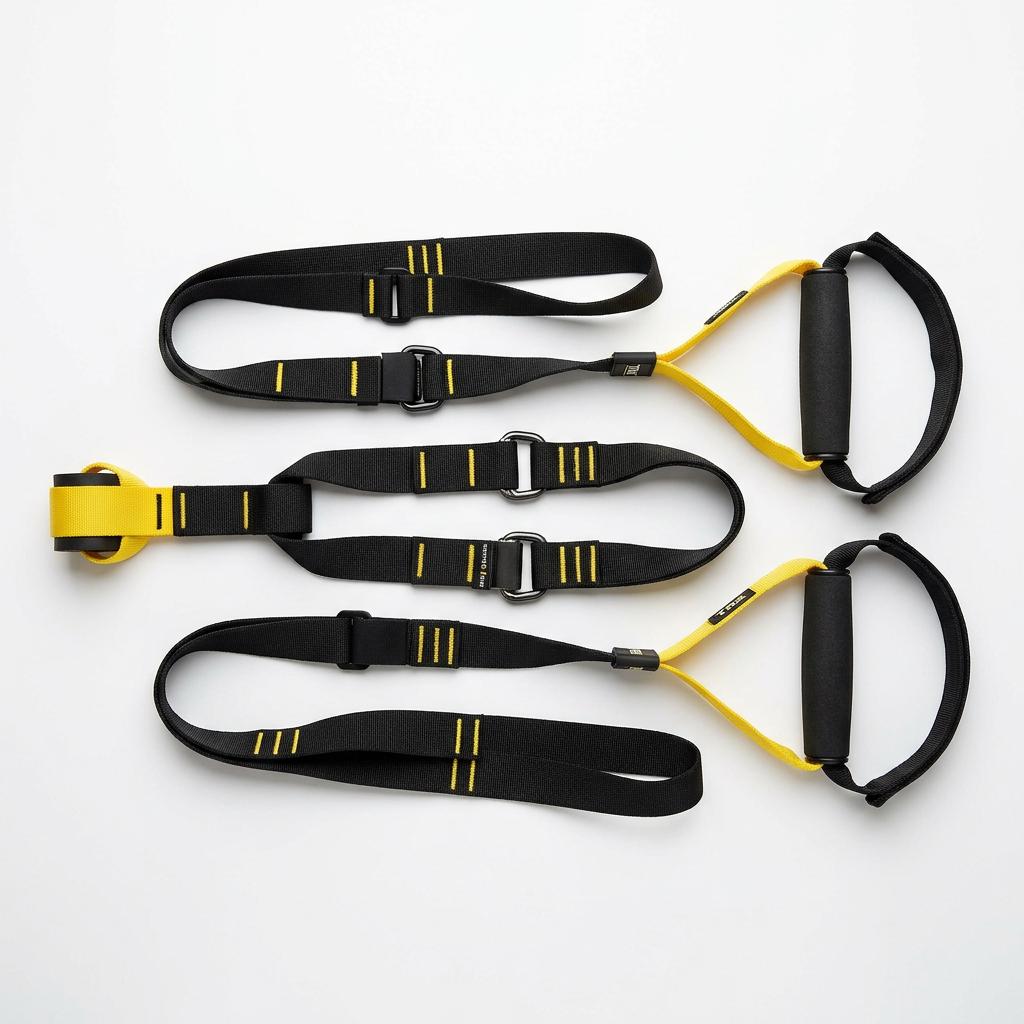
Suspension Trainer Suspension knee tucks, pikes, and plank variations add instability that challenges core stabilizers intensely. The TRX All-in-One is the benchmark.
Stability Ball Rollouts, pikes, crunches, and plank variations on an unstable surface develop the multifidus and TVA. Choose a ball sized to your height: 55cm for under 5'7", 65cm for 5'7"-6'1", 75cm for over 6'1".
Roman Chair For dedicated posterior chain training. The CAP Strength Roman Chair offers excellent value with its split hip pad design.
Frequency: 3x per week, 15-20 minutes
| Exercise | Sets | Reps/Duration | Rest |
|---|---|---|---|
| Plank | 3 | 30 seconds | 30s |
| Dead Bug | 3 | 10/side | 30s |
| Reverse Crunch | 3 | 12 | 30s |
| Bird Dog | 3 | 8/side | 30s |
| Glute Bridge | 3 | 15 | 30s |
| Side Plank | 2 | 20 seconds/side | 30s |
Frequency: 3-4x per week, 20-25 minutes
| Exercise | Sets | Reps/Duration | Rest |
|---|---|---|---|
| Ab Wheel Rollout (kneeling) | 3 | 10 | 60s |
| Pallof Press | 3 | 12/side | 45s |
| Hanging Knee Raise | 3 | 12 | 60s |
| Single-Arm Farmer's Carry | 3 | 30m/side | 45s |
| Back Extension | 3 | 15 | 45s |
| Side Plank with Leg Raise | 2 | 30s/side | 30s |
Frequency: 4x per week, 25-30 minutes
| Exercise | Sets | Reps/Duration | Rest |
|---|---|---|---|
| Standing Ab Wheel Rollout | 3 | 8 | 60s |
| Hanging Straight Leg Raise | 3 | 12 | 60s |
| Suspension Pike | 3 | 10 | 60s |
| Weighted Pallof Press | 3 | 10/side | 45s |
| Single-Leg Glute Bridge | 3 | 12/leg | 45s |
| L-Sit Hold | 4 | 15 seconds | 60s |
| Cable/Band Crunch | 3 | 12 | 45s |
Myth 1: Crunches are the best ab exercise Reality: Crunches primarily work spinal flexion and neglect anti-extension, anti-rotation, and posterior chain functions. Planks, rollouts, and Pallof presses develop more functional, complete core strength.
Myth 2: You need to train abs every day Reality: Abs are muscles like any other. They require 48 hours to recover and adapt. Training them daily produces worse results than 3-4 focused sessions per week.
Myth 3: Ab exercises burn belly fat Reality: Spot reduction is a myth. Ab exercises build abdominal muscle. Visible abs require reducing overall body fat through caloric deficit and consistent training.
Myth 4: Sit-ups are safe and effective Reality: Full sit-ups place enormous compressive force on the lumbar spine — estimated at 3,300 Newtons in research by Dr. Stuart McGill. Crunches, reverse crunches, and plank variations are safer and equally effective.
Myth 5: A strong core means visible abs Reality: Core strength and abdominal visibility are independent. Many strong powerlifters and weightlifters have powerful cores hidden under body fat. Visibility is a function of body composition, not strength.
Myth 6: You need expensive equipment for effective core training Reality: The most effective core exercises — planks, dead bugs, bird dogs, reverse crunches, and glute bridges — require zero equipment. Equipment expands options but is not required.
Train All Categories Include at least one exercise from each category (anti-extension, anti-rotation, flexion, extension) in your weekly training for balanced development.
Progressive Overload Applies Increase difficulty over time: longer holds, more reps, added weight, harder variations. Your abs adapt to stress like any other muscle group.
Quality Over Quantity A 20-minute focused core session with proper form outperforms an hour of sloppy crunches. Control the eccentric phase. Feel the target muscle working.
Breathe Properly Do not hold your breath during core work (the Valsalva maneuver). Breathe normally or exhale during the exertion phase. Proper breathing maintains blood pressure and enables longer holds.
Integrate, Not Isolate The core's real job is to stabilize during compound movements. Squats, deadlifts, overhead presses, and pull-ups all train the core functionally. Isolated core work should supplement, not replace, these compound lifts.
Last updated: January 2025. Always consult a physician before beginning any exercise program.