The 5 Best Ab Benches for Home Gyms in 2025: Decline & Adjustable Benches Tested
Research-backed guide to best ab benches home for small-space home gyms....
Build strength with bodyweight training in limited space. Our guide covers exercise progressions from beginner to advanced, recommended equipment for apartment use, and a weekly program template based on progressive overload principles.
Calisthenics — training with body weight as resistance — is the most space-efficient form of strength training. No rack, no bench, no heavy weights. Just your body, a floor, and (optionally) a few pieces of compact equipment.
This guide covers how to build a progressive calisthenics practice in an apartment: exercise progressions, equipment that expands your options without expanding your footprint, and a weekly program template.
Three attributes make calisthenics uniquely suited to small spaces:
Our analysis indicates that calisthenics produces strength and muscle gains comparable to traditional resistance training when volume and intensity are matched. A 2017 meta-analysis in Sports Medicine found no significant difference in strength outcomes between bodyweight training and external-load training in recreational trainees.
A complete calisthenics program targets six patterns. For each pattern, we provide a progression from beginner to advanced.
The horizontal push targets the chest, shoulders, and triceps. Progress from wall to floor to unilateral variations.
| Level | Exercise | Reps Target | Key Cue |
|---|---|---|---|
| Beginner | Wall push-up | 3 x 15 | Body straight, chest to wall |
| Beginner | Incline push-up (hands elevated) | 3 x 12 | Hands on counter or sturdy table |
| Intermediate | Standard push-up | 3 x 10–15 | Chest to fist-height above floor |
| Intermediate | Diamond push-up | 3 x 8–12 | Hands close, triceps emphasis |
| Intermediate | Wide push-up | 3 x 10–12 | Hands 1.5x shoulder width |
| Advanced | Archer push-up | 3 x 6–8/side | One arm extends, loaded arm bends deeply |
| Advanced | One-arm push-up | 3 x 3–5/side | Feet spread wide for balance |
Form standard: Chest descends to at least fist-height above the floor at the bottom. Body remains straight — no hip sag or pike. Full elbow extension at the top.
Horizontal pulling targets the upper back, rear deltoids, and biceps. Without a bar, this pattern requires equipment — a suspension trainer or resistance band.
| Level | Exercise | Reps Target | Equipment |
|---|---|---|---|
| Beginner | Band row (seated or standing) | 3 x 12–15 | Resistance band |
| Beginner | Suspension row (upright) | 3 x 12–15 | Suspension trainer |
| Intermediate | Suspension row (45° angle) | 3 x 10–12 | Suspension trainer |
| Intermediate | Suspension row (low angle) | 3 x 8–10 | Suspension trainer |
| Advanced | Single-arm suspension row | 3 x 6–8/arm | Suspension trainer |
| Advanced | Front lever row progression | 3 x 3–5 | Pull-up bar |
Form standard: Shoulder blades retract before elbows bend. Full range: chest approaches hands at the top. Body remains straight throughout.
Vertical pushing targets the shoulders and triceps. Pike push-ups and handstand progressions replace overhead pressing.
| Level | Exercise | Reps Target | Key Cue |
|---|---|---|---|
| Beginner | Downward dog push-up | 3 x 10 | Hips high, head toward floor |
| Intermediate | Pike push-up (feet on floor) | 3 x 8–12 | Body in inverted V, head to floor |
| Intermediate | Pike push-up (feet elevated) | 3 x 6–10 | Feet on chair or couch |
| Advanced | Wall handstand hold | 3 x 20–45 sec | Chest to wall, body straight |
| Advanced | Wall handstand push-up | 3 x 3–8 | Full range: head to floor |
Form standard: Head travels forward of hands at the bottom, not straight down. Elbows track at approximately 45 degrees from the body.
Vertical pulling is the most equipment-dependent pattern. A doorway pull-up bar is the minimum requirement.
| Level | Exercise | Reps Target | Equipment |
|---|---|---|---|
| Beginner | Dead hang | 3 x 20–30 sec | Pull-up bar |
| Beginner | Scapular pull-up | 3 x 8–10 | Pull-up bar — just shoulder blade movement |
| Intermediate | Assisted pull-up (band or chair) | 3 x 6–10 | Pull-up bar + band or chair |
| Intermediate | Standard pull-up | 3 x 5–10 | Pull-up bar |
| Advanced | Chest-to-bar pull-up | 3 x 5–8 | Pull-up bar |
| Advanced | Archer pull-up | 3 x 3–5/side | Pull-up bar |
Form standard: Full dead hang at the bottom (shoulders elevated). Chin clears the bar at minimum. Chest approaches bar for advanced variations.
Squat patterns target the quadriceps and glutes. Bodyweight squats are accessible to almost everyone and progress through single-leg variations.
| Level | Exercise | Reps Target | Key Cue |
|---|---|---|---|
| Beginner | Box squat (to chair) | 3 x 15 | Controlled sit, stand without momentum |
| Beginner | Bodyweight squat | 3 x 15–20 | Thighs to at least parallel |
| Intermediate | Split squat | 3 x 10–12/leg | Rear knee gently touches floor |
| Intermediate | Bulgarian split squat | 3 x 8–10/leg | Rear foot elevated on chair |
| Advanced | Pistol squat (to box) | 3 x 5–8/leg | One leg, controlled descent to surface |
| Advanced | Pistol squat (full) | 3 x 3–5/leg | Full range, no assistance |
Form standard: Working knee tracks over toes — does not cave inward. Torso remains as upright as mobility allows. Full hip extension at the top.
Hinge patterns target the posterior chain — hamstrings, glutes, and lower back. These are critical for balanced development and injury prevention.
| Level | Exercise | Reps Target | Key Cue |
|---|---|---|---|
| Beginner | Glute bridge | 3 x 15–20 | Squeeze glutes hard at top |
| Beginner | Single-leg glute bridge | 3 x 10–12/leg | Keep hips level |
| Intermediate | Hip thrust (feet elevated) | 3 x 12–15 | Shoulders on couch or sturdy surface |
| Intermediate | Single-leg Romanian deadlift | 3 x 8–10/leg | Slight knee bend, hinge at hips |
| Advanced | Nordic curl (eccentric only) | 3 x 3–5 | Lower slowly, use hands to push up |
| Advanced | Nordic curl (full) | 3 x 3–5 | Hamstring curl from kneeling |
Form standard: Movement originates at the hips, not the lower back. Spine remains neutral throughout. Full hip extension at the top.
Calisthenics requires no equipment, but these additions significantly expand exercise selection:
| Equipment | Cost Range | Adds These Patterns | Storage |
|---|---|---|---|
| Doorway pull-up bar | $25–60 | Vertical pull, hanging core | In doorway or closet |
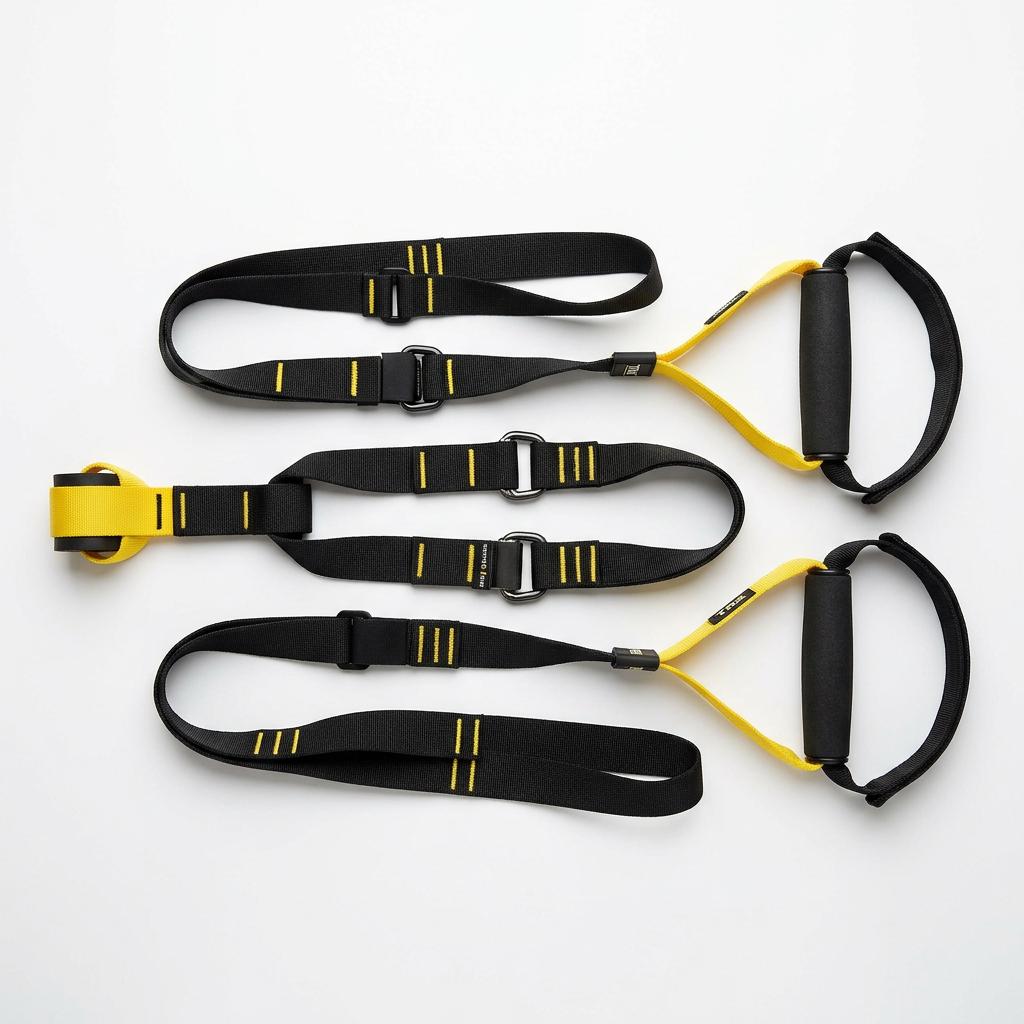
| Suspension trainer | $40–150 | Horizontal pull, hamstring curl, advanced core | Drawer or small bag |
| Parallettes | $30–50 | L-sit, handstand practice, dip progression | Under bed, in closet |
| Dip station | $60–120 | Full dips, L-sit, inverted rows | Folds flat, under bed |
| Resistance bands (set) | $15–30 | Assisted pull-ups, rows, warm-up | Drawer |
Minimum viable setup: Pull-up bar + suspension trainer. This combination enables all six movement patterns with multiple progression paths.
This 4-day program balances push and pull, upper and lower body. Sessions require 30–45 minutes including warm-up.
| Exercise | Sets | Reps |
|---|---|---|
| Push-up (appropriate variation) | 4 | 8–15 |
| Pike push-up (appropriate variation) | 3 | 6–12 |
| Diamond push-up or triceps dip | 3 | 8–12 |
| Plank | 3 | 30–60 sec |
| Exercise | Sets | Reps |
|---|---|---|
| Pull-up or row (appropriate variation) | 4 | 5–12 |
| Face pull or band pull-apart | 3 | 12–15 |
| Hip hinge (appropriate variation) | 3 | 10–15 |
| Hanging leg raise or knee tuck | 3 | 8–12 |
Light walking, stretching, or mobility work. No intense training.
| Exercise | Sets | Reps |
|---|---|---|
| Squat (appropriate variation) | 4 | 10–20 |
| Single-leg squat variation | 3 | 8–12/leg |
| Hip hinge variation | 3 | 10–15 |
| Calf raise (single-leg) | 3 | 12–15/leg |
| Exercise | Sets | Reps |
|---|---|---|
| Push-up variation | 3 | 8–12 |
| Row or pull-up variation | 3 | 6–10 |
| Squat or lunge variation | 3 | 10–12 |
| Pike push-up or overhead work | 3 | 6–10 |
| Core (plank or hanging work) | 3 | 30–45 sec |
Progressive overload — the gradual increase of training stress — drives strength and muscle gains. In calisthenics, you cannot simply add weight to a bar. Instead, use these methods:
| Method | How to Apply |
|---|---|
| More difficult variation | Progress from standard to diamond to archer push-ups |
| More reps | Increase within your target range, then advance the variation |
| More sets | Add a set once you hit the top of your rep range |
| Slower tempo | Use a 3-second lowering phase to increase time under tension |
| Reduced rest | Shorten rest periods by 15 seconds per week |
| Added load | Wear a backpack with books, or hold a dumbbell |
Yes, particularly as a beginner or intermediate trainee. The key is progressive overload — consistently making exercises harder over time. Advanced trainees may find lower-body exercises limited by body weight and may benefit from adding external load (weighted vests, dumbbells) for squats and hinges.
A 6-by-6-foot clear floor area is sufficient for all floor-based exercises. A doorway with a pull-up bar adds vertical pulling. A ceiling height of 7 feet is adequate for pike push-ups and standing exercises. Handstand work requires 8+ feet for safety.
Most calisthenics exercises are low-noise. Controlled push-ups, squats, and rows produce minimal vibration. Impact noises come primarily from: dropping from a pull-up bar (use controlled descents), jumps (skip plyometrics or use a yoga mat for damping), and handstand practice against a wall (pad the wall with a pillow).
Published research indicates noticeable strength gains in 4–6 weeks of consistent training (2–4 sessions per week) in beginners. Visible physique changes typically require 8–12 weeks combined with appropriate nutrition. Individual results vary based on training history, consistency, and recovery.
As an Amazon Associate we earn from qualifying purchases. Exercise recommendations are based on established strength training principles. Consult a healthcare provider before beginning any exercise program.