Home Gym Pest Control & Prevention Guide (2026) – Keep Pests Out
Learn how to prevent insects, rodents, and pests from infesting your home gym. Evidence-based strategies for cleaning, f...
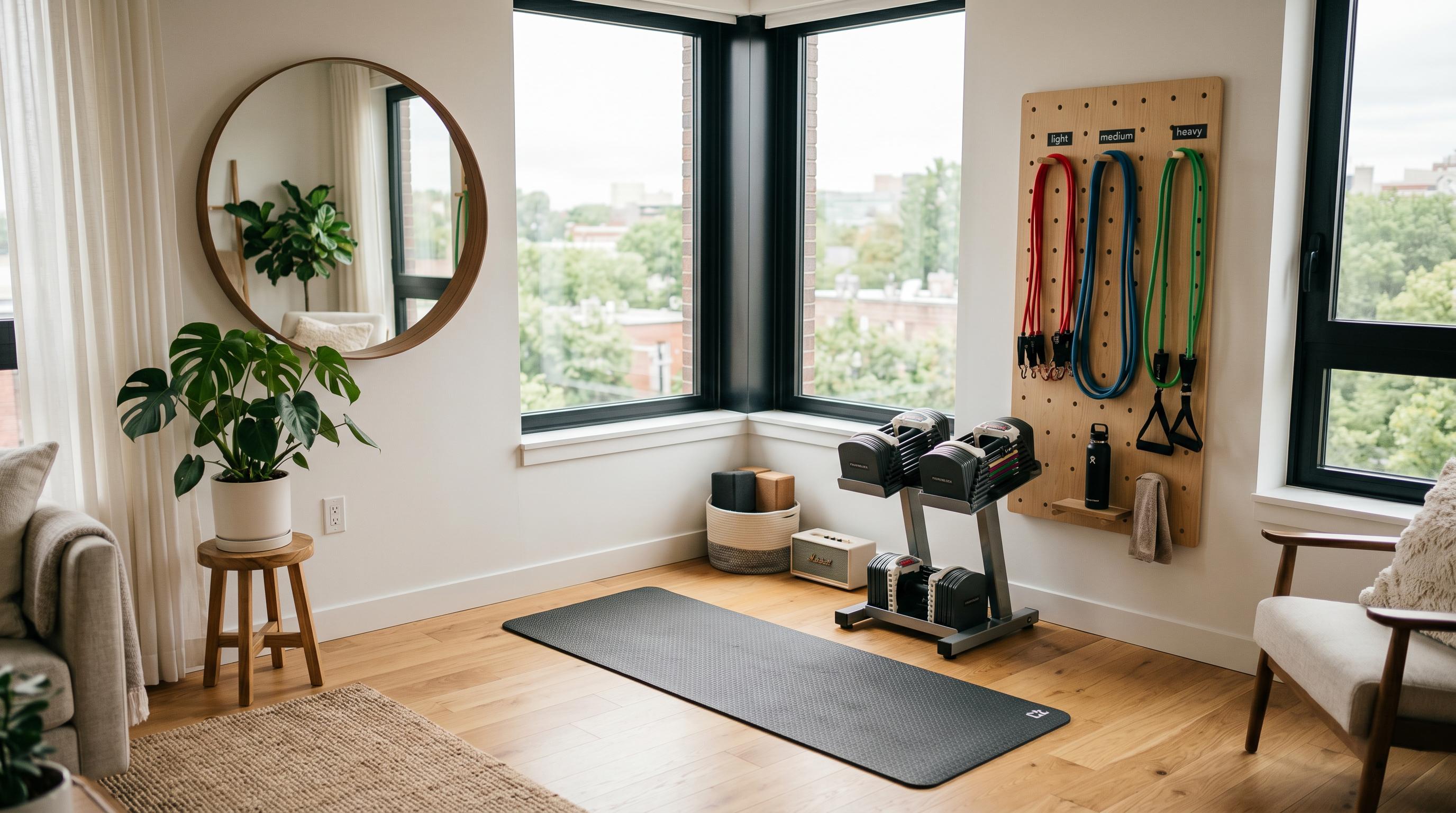
Learn how to calculate power needs, plan outlet placement, install GFCI protection, and set up safe electrical for your home gym. Covers renter-friendly solutions and when to hire an electrician.
Last updated: January 18, 2026
FTC Disclosure: SnugGym earns from qualifying Amazon purchases made through links on this page. Our editorial team independently selects and tests all products—commissions never influence our recommendations.
The electrical demands of a modern home gym go far beyond a single outlet for a treadmill. Today's connected fitness ecosystem includes motorized cardio machines pulling 10–20 amps, strength equipment with integrated electronics, tablets and phones requiring constant charging, smart lighting systems, fans for ventilation, dehumidifiers for climate control, Bluetooth speakers, and the growing category of smart gym equipment that needs always-on connectivity. A single 15-amp circuit—the standard in most residential rooms—can trip repeatedly under this load, interrupting workouts and potentially creating fire hazards if circuits are overloaded chronically.
For renters, electrical limitations often define what's possible in a home gym. You can't install new circuits, upgrade panels, or make permanent modifications. But within these constraints, there are safe, code-compliant strategies for maximizing available power. For homeowners, understanding your electrical infrastructure enables informed decisions about upgrades that improve safety, capacity, and convenience.
This guide covers everything from basic power calculations to advanced installations: calculating your gym's electrical load, optimal outlet placement, dedicated circuit requirements, GFCI protection, surge protection, extension cord safety, smart outlet installation, renter-friendly solutions, and clear guidance on when professional electrician involvement is non-negotiable.
Important safety note: This guide provides educational information. Electrical work carries risk of serious injury, death, and property damage. Always consult a licensed electrician before modifying electrical systems. Local electrical codes vary—verify requirements with your authority having jurisdiction (AHJ).
Understanding your electrical load is the foundation of safe gym design. Every piece of equipment has an amperage rating that tells you how much current it draws from the circuit.
| Equipment | Typical Amperage | Notes |
|---|---|---|
| Treadmill | 12–20A | Highest draw in most gyms; surge up to 25A on startup |
| Elliptical | 4–8A | Lower than treadmills |
| Exercise bike | 2–6A | Spin bikes minimal; recumbent with motor higher |
| Rowing machine | 2–4A | Air rowers use minimal electricity |
| Cable machine | 0A | Purely mechanical unless motorized variant |
| Fan (box/standing) | 0.5–2A | Often overlooked in calculations |
| Dehumidifier | 5–8A | Continuous draw; significant load contributor |
| Space heater | 10–15A | Extreme hazard if on overloaded circuit |
| Bluetooth speaker | 0.5–1A | Charging draw |
| Phone/tablet charging | 0.5A combined | Minimal but included for completeness |
| Smart TV/monitor | 1–3A | Streaming workout content |
| LED lighting (per fixture) | 0.1–0.5A | Minimal; incandescent much higher |
Scenario A: Cardio-focused gym
Scenario B: Strength + light cardio
Scenario C: Full connected gym
A dedicated circuit serves only one outlet or device. The National Electrical Code (NEC) requires dedicated circuits for certain applications, and they're strongly recommended for home gym applications even when not strictly mandated.
| Circuit | Serves | Amperage |
|---|---|---|
| Circuit 1 | Treadmill only | 20A |
| Circuit 2 | Secondary cardio + TV/monitor | 15–20A |
| Circuit 3 | General use: fans, chargers, lighting | 15A |
| Circuit 4 | Climate control: dehumidifier, heater (if applicable) | 20A |
Ground Fault Circuit Interrupter (GFCI) protection is required by NEC code for home gym outlets in most jurisdictions. GFCIs detect current leakage that could cause electrocution and shut off power in milliseconds.
GFCI outlet replacement ($15–25 per outlet + labor): Replaces standard outlet with GFCI-protected version. Protects that outlet and any downstream outlets on the same circuit.
GFCI circuit breaker ($40–80 + labor): Replaces standard breaker in panel. Protects entire circuit. More expensive but comprehensive.
Portable GFCI adapters ($15–30): Plug into existing outlets; no installation required. Ideal for renters who can't modify wiring. The renter-friendly solution we recommend.
Test monthly using the TEST and RESET buttons on the device. If GFCI won't reset, the outlet or connected equipment may have a ground fault requiring investigation.
Home gym equipment contains sensitive electronics vulnerable to power surges. Treadmills, smart bikes, and connected devices can suffer $500–$3,000+ damage from a single surge event.
Tier 1: Whole-house surge protector ($200–500 installed at panel): Protects all circuits from external surges (grid switching, lightning). Recommended for all homes with valuable electronics.
Tier 2: Point-of-use surge protectors ($20–80): Power strips with surge protection for individual equipment. Minimum protection every gym should have.
Tier 3: Equipment with built-in protection: Some high-end treadmills and bikes include internal surge protection. Don't rely on this exclusively.
Extension cords are common in home gyms but frequently misused, creating fire and electrocution hazards.
| Equipment Draw | Cord Length | Minimum Gauge |
|---|---|---|
| Under 10A | Under 25 ft | 16 gauge |
| Under 10A | 25–50 ft | 14 gauge |
| 10–15A | Under 25 ft | 14 gauge |
| 10–15A | 25–50 ft | 12 gauge |
| Over 15A | Any length | Not recommended—install proper outlet |
Smart outlets add convenience and safety monitoring to your gym. They enable remote power control, scheduling, energy monitoring, and integration with smart home systems.
DIY smart outlet replacement ($15–40 per outlet): If you're comfortable with basic electrical work and local codes permit homeowner electrical work, replacing standard outlets with smart outlets is straightforward:
Professional installation ($75–150 per outlet): Required in some jurisdictions; recommended if you're not confident working with electrical systems.
Smart plugs ($10–25): Plug into existing outlets; no wiring required. The renter-friendly solution with zero installation.
Renters face significant electrical constraints. These solutions maximize safety and functionality without violating lease terms or electrical codes.
The most important safety upgrade available to renters. Plug a portable GFCI adapter into any existing outlet, then plug your equipment into the adapter. No installation required; provides life-saving ground fault protection for $15–30.
Replace basic power strips with smart surge-protected strips. Control via app, monitor energy use, and ensure outlets are off when not in use. No installation required.
Centralize device charging with a dedicated USB charging station. Reduces outlet clutter and provides fast charging without occupying standard outlets.
Battery-powered or plug-in motion-sensor lights eliminate the need to hardwire gym lighting. Modern LED options provide excellent illumination with minimal power draw.
For longer-term rentals, landlords may approve electrical improvements if:
Get approval in writing before any work begins.
Always hire a professional for:
Consider hiring a professional for:
| Service | Typical Cost Range |
|---|---|
| New outlet installation (same circuit) | $150–350 |
| Dedicated 20A circuit + outlet | $500–1,200 |
| GFCI outlet replacement | $100–250 |
| Whole-house surge protector | $300–800 |
| Panel inspection and labeling | $150–300 |
| Comprehensive gym electrical assessment | $200–500 |
Costs vary significantly by region, accessibility, and local code requirements.
Q: Why does my treadmill trip the breaker but nothing else does? Treadmills draw 12–20 amps with startup surges up to 25 amps. Standard 15A circuits trip at this load. The treadmill likely needs a dedicated 20A circuit.
Q: Can I use a power strip for my treadmill? Only if the power strip is rated for the treadmill's amperage (typically 15A minimum) and has built-in surge protection. Most consumer power strips are rated for 12–15A total across all outlets. Check strip rating before use.
Q: Is it safe to run extension cords under gym mats? No. Cords under mats can't dissipate heat, creating fire hazards. Route cords along walls, secured with cord covers if necessary.
Q: Do I need a permit to add an outlet to my garage gym? Requirements vary by jurisdiction. Many areas require permits for any new wiring. Check with your local building department. Unpermitted work can invalidate insurance coverage.
Q: Why does my equipment shock me slightly when I touch it? This indicates a ground fault or improper grounding—potentially dangerous. Stop using the equipment immediately. Check outlet grounding with a tester; if properly grounded, equipment may have internal electrical fault requiring repair.
Before every workout, verify:
Electrical infrastructure is the invisible foundation of your home gym. Get it right, and you'll enjoy years of uninterrupted, safe workouts. Get it wrong, and you risk equipment damage, workout interruptions from tripped breakers, or far worse outcomes. When in doubt, hire a professional—electrical work is not the place to save money through DIY experimentation.
Power your gym safely. Protect your equipment. Train without interruption.