Muscle-Building Home Gym Setup
Build a complete hypertrophy-focused home gym that fits in a spare corner. These six pieces of equipment provide everything you need for progressive overload muscle gain without dedicating an entire room.
Overview
Building muscle at home requires three fundamentals: enough resistance to challenge your muscles, enough variety to target all major muscle groups, and progressive overload to keep making gains. This six-piece setup delivers all three in under 50 square feet.
At a Glance
| Product | Category | Price | Key Spec | Rating |
|---|---|---|---|---|
| PowerBlock Elite EXP | Dumbbells | $350-400 | 5-50 lbs per hand (expandable to 90) | 4.6/5 |
| Fitness Reality 810XLT | Rack | $350-400 | 50.5" L x 46.5" W x 83.5" H | 4.5/5 |
| Fitness Reality 1000 Bench | Bench | $120-140 | 12-position adjustable (0-80 degrees) | 4.4/5 |
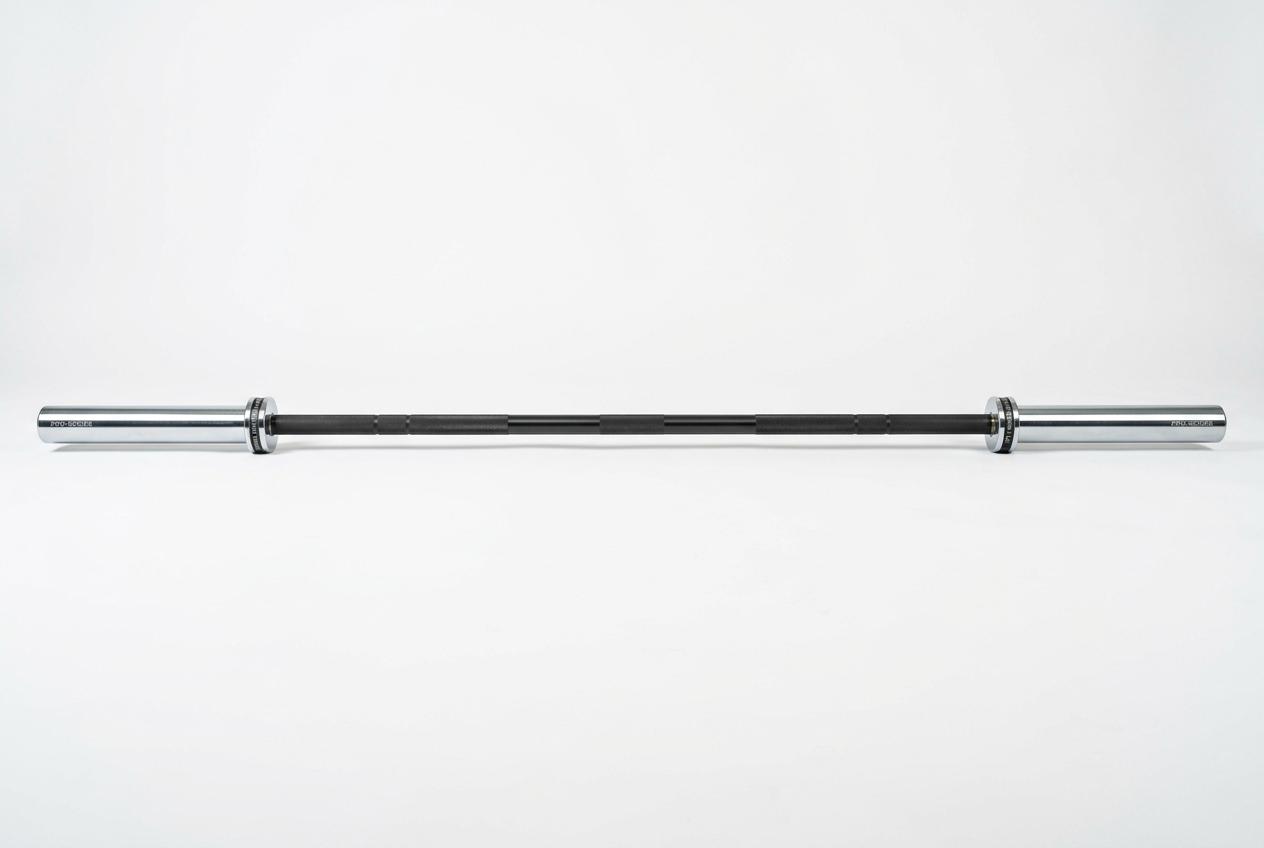
| Body-Solid OB86B | Barbell | $130-160 | 86 inches (7 ft) | 4.7/5 |
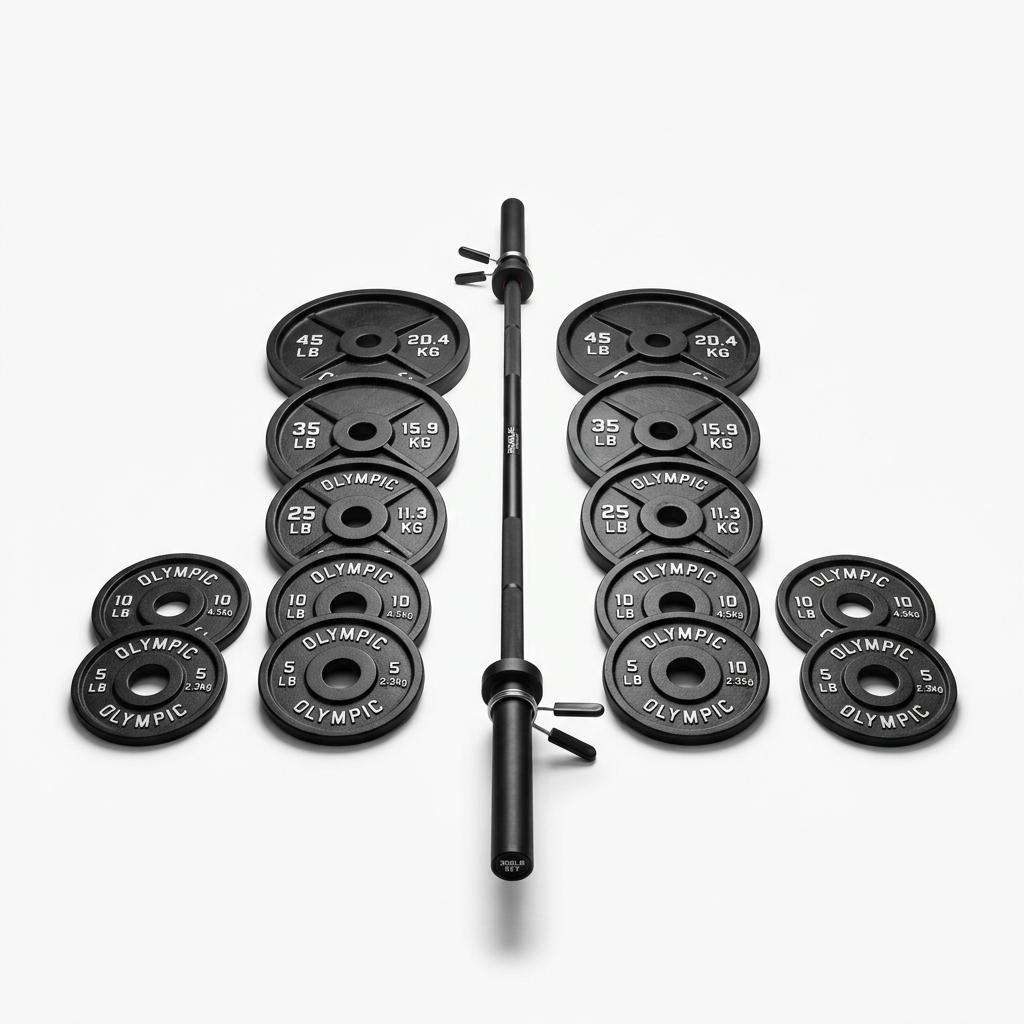
| CAP Barbell 300lb Set | Plates | $300-350 | 45lb, 35lb, 25lb, 10lb, 5lb, 2.5lb pairs | 4.3/5 |
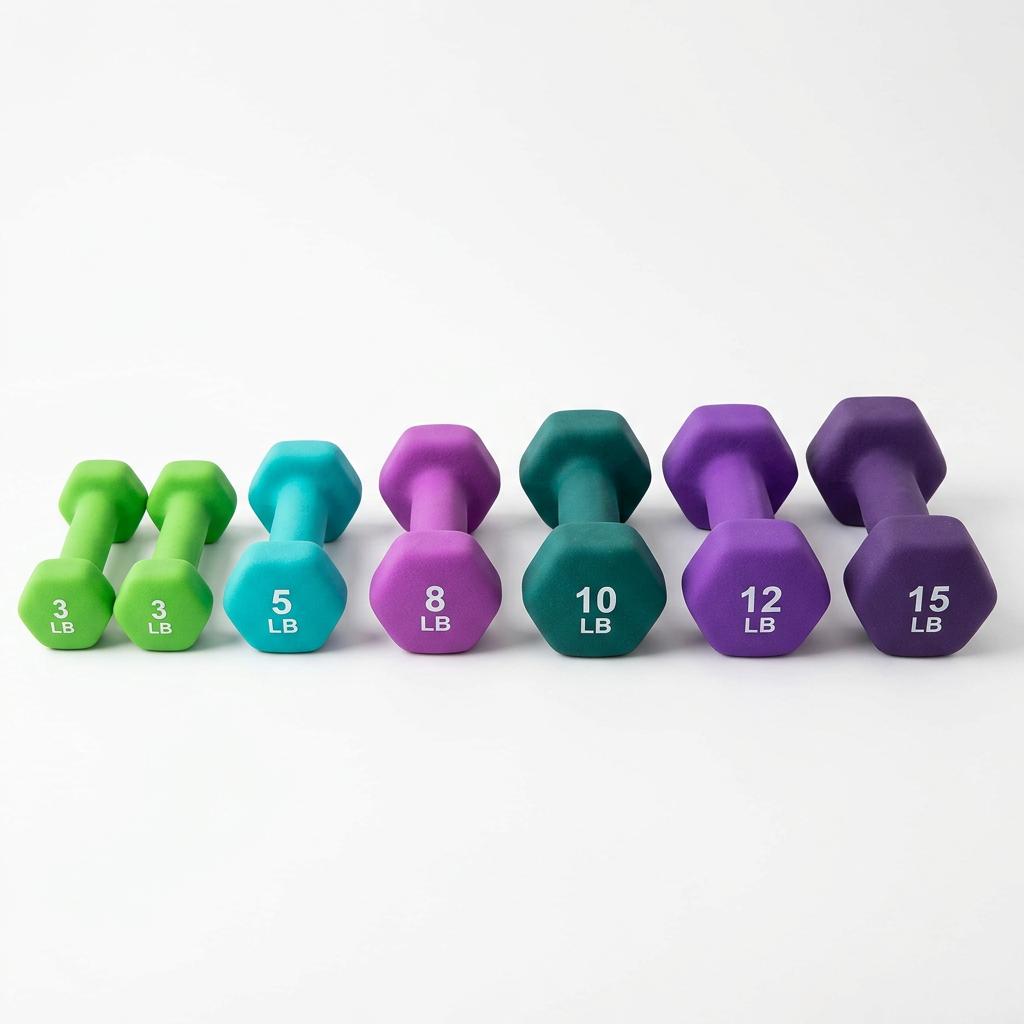
| Amazon Basics Neoprene | Accessories | $55-65 | 3, 5, 8, 10, 12, 15 lb pairs | 4.5/5 |
Our Picks
Quick summaries of each recommended product. Click any card to jump to the detailed review.
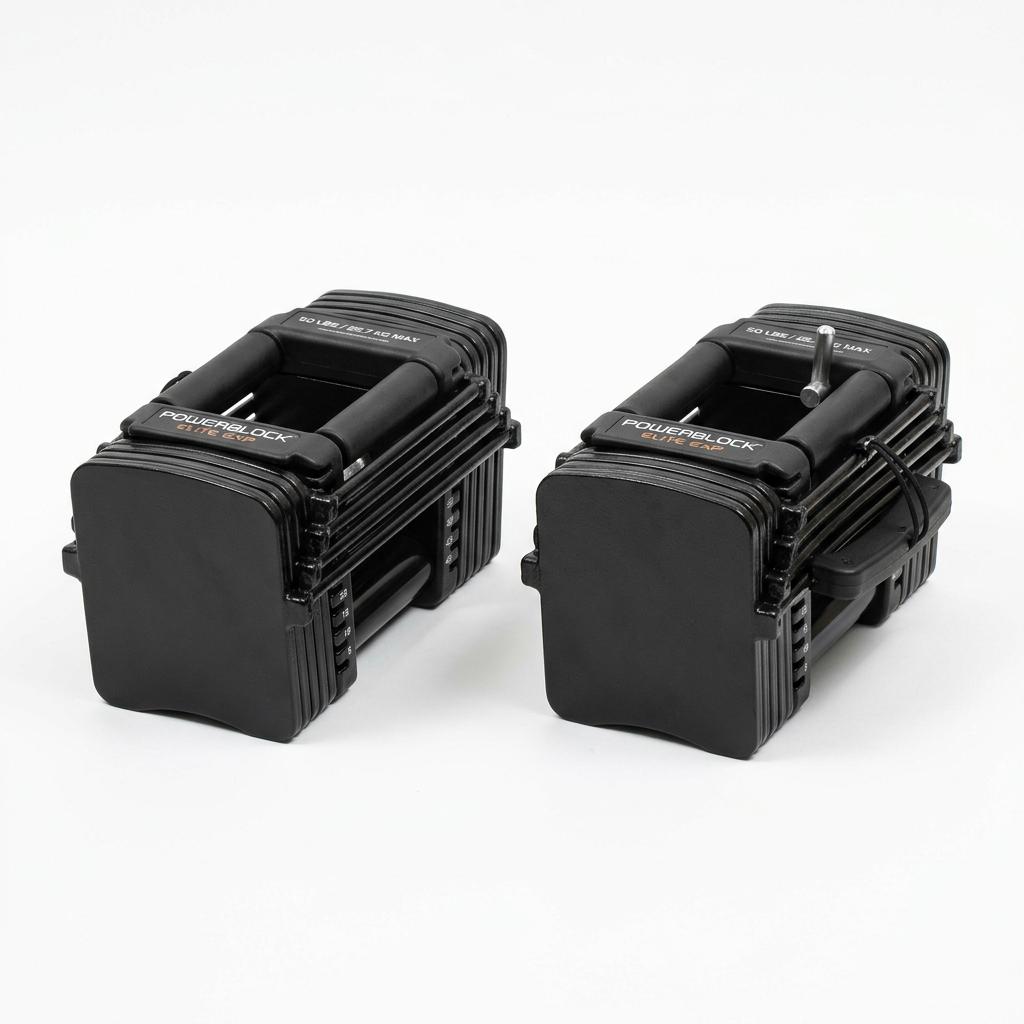
PowerBlock Elite EXP
The PowerBlock Elite EXP is the gold standard for home adjustable dumbbells. The 5-50 lb Stage 1 set replaces 16 pairs o...
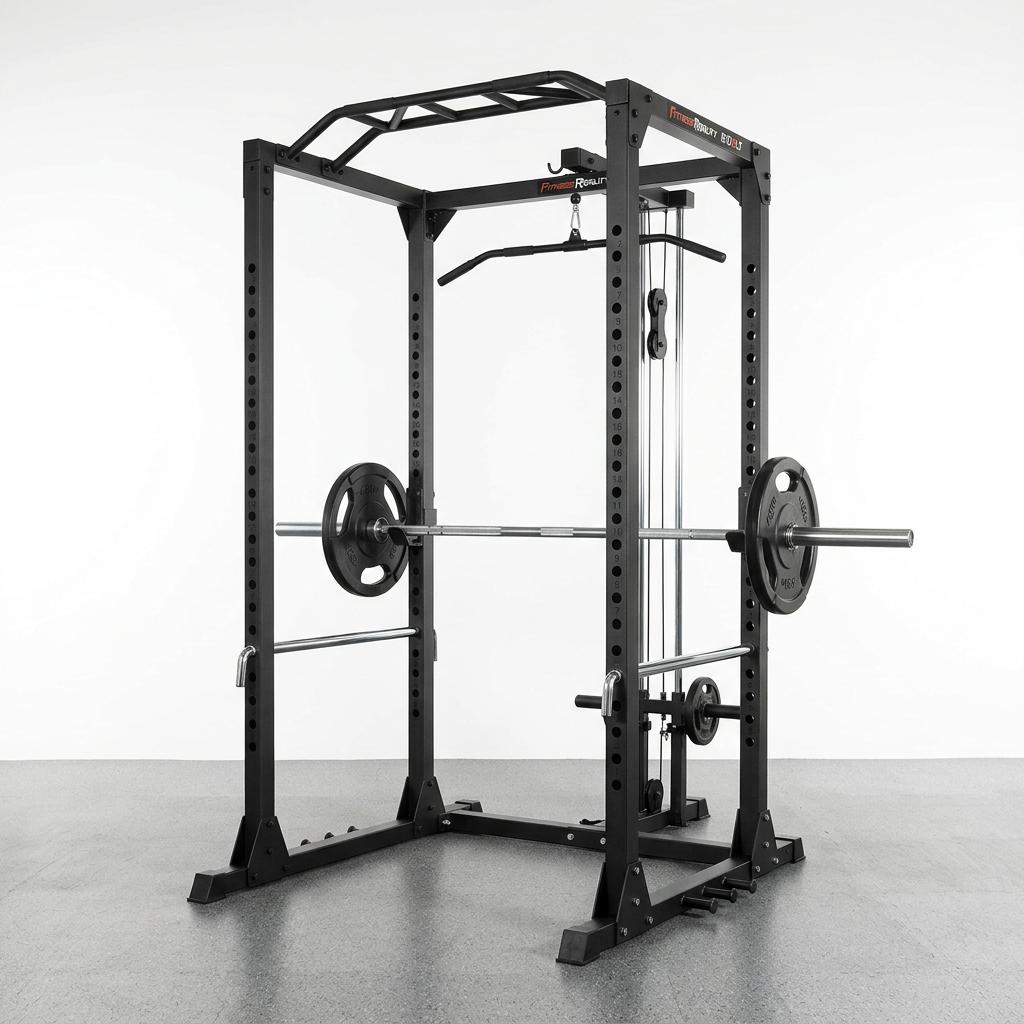
Fitness Reality 810XLT
The Fitness Reality 810XLT is the centerpiece of any serious home gym. This full power cage provides safety spotter bars...
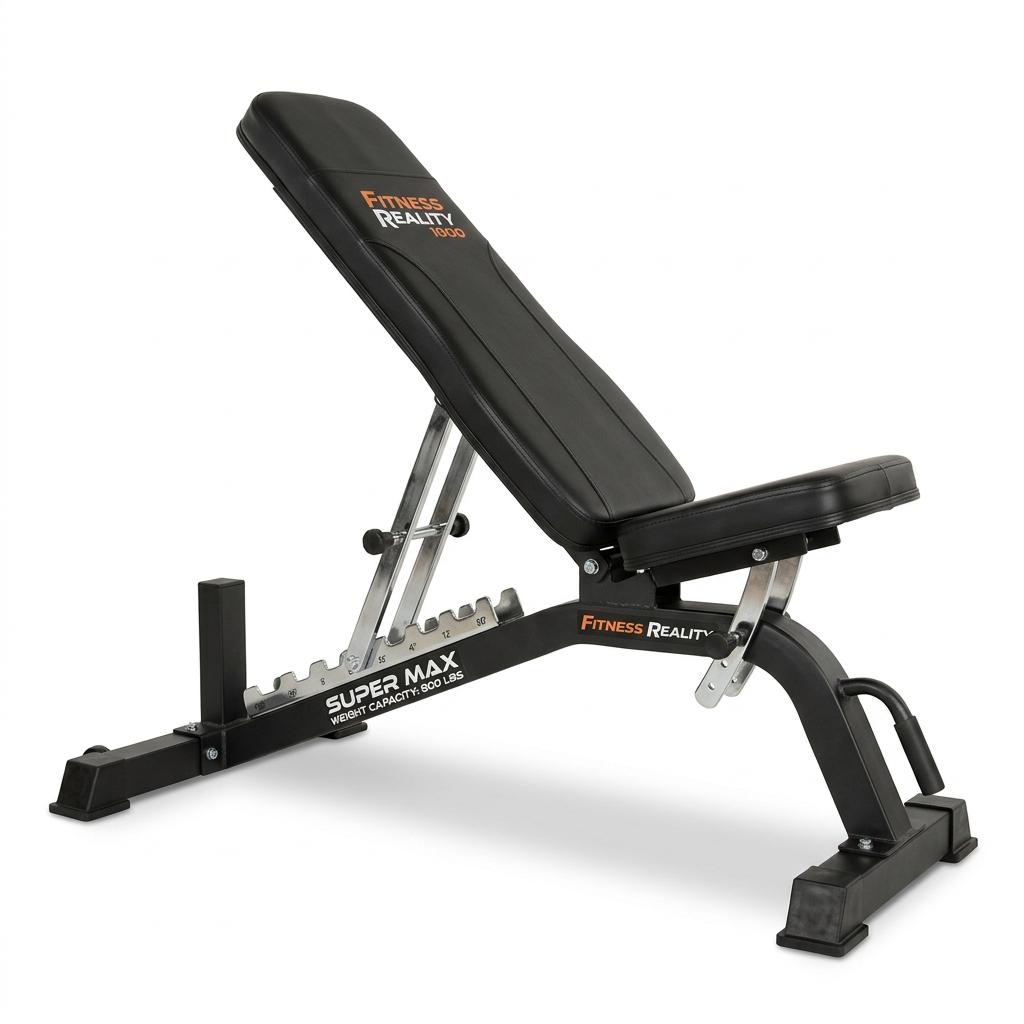
Fitness Reality 1000 Bench
An adjustable bench transforms what you can do with dumbbells and a rack. The Fitness Reality 1000 offers 12 backrest po...
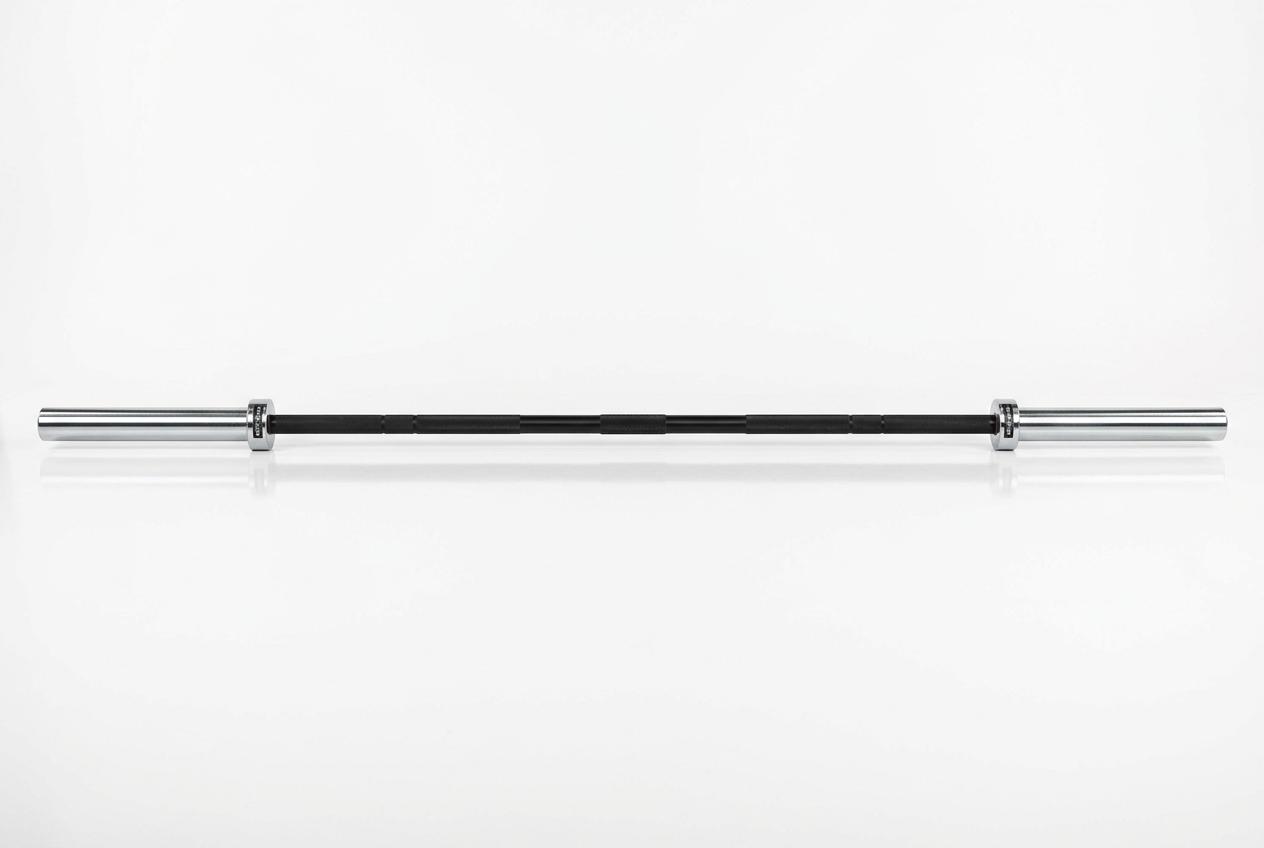
Body-Solid OB86B
A quality barbell is the foundation of heavy compound lifting. The Body-Solid OB86B offers aggressive knurling that lock...
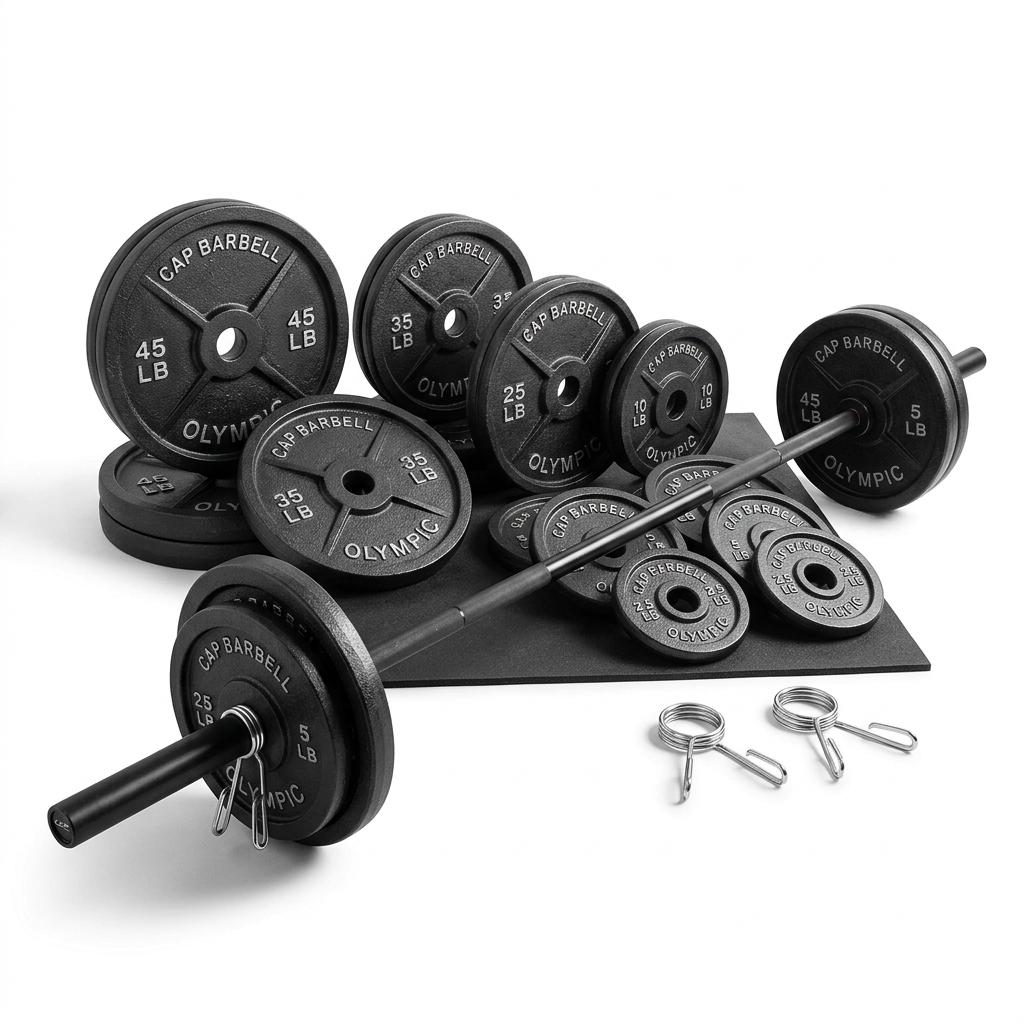
CAP Barbell 300lb Set
This complete 300-lb set includes a 7-foot Olympic bar and a full range of plate sizes. While the plates lack rubber coa...
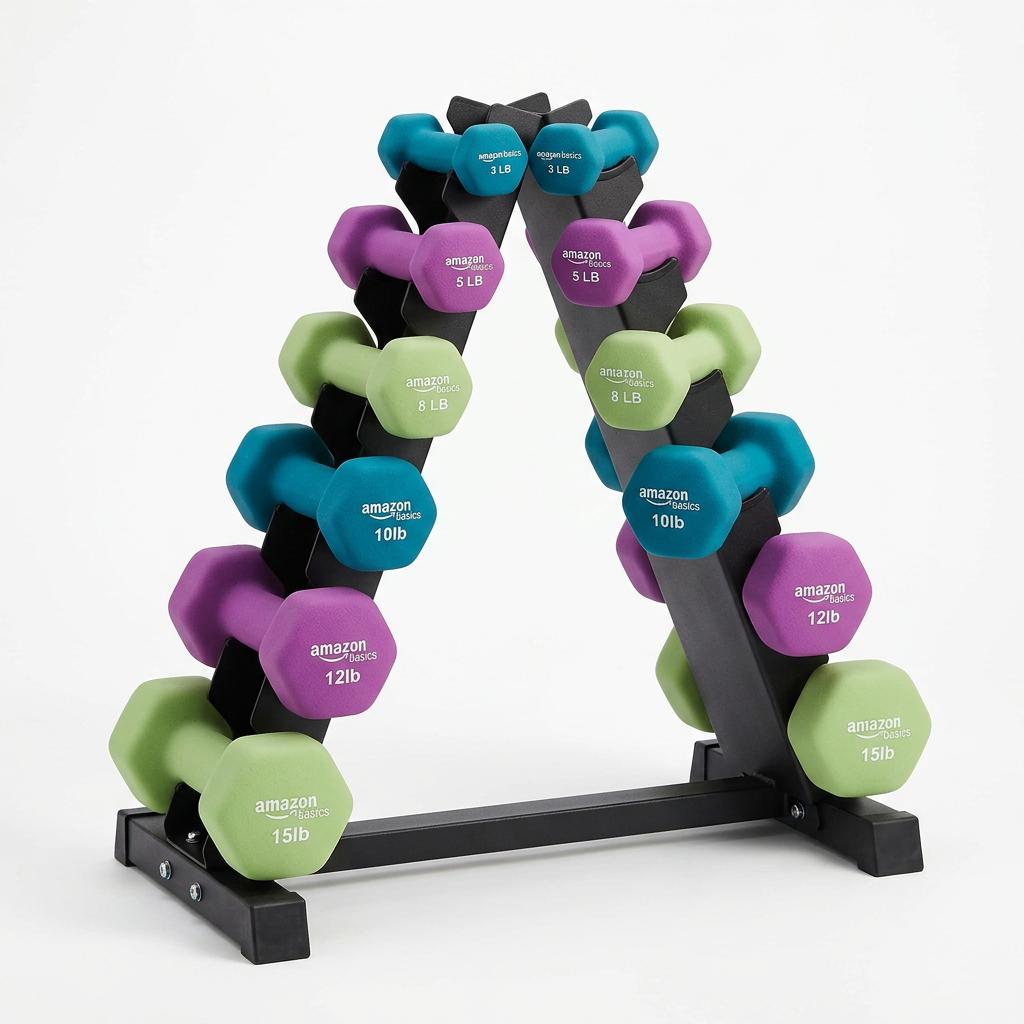
Amazon Basics Neoprene
Light dumbbells fill an important role in any muscle-building setup. Lateral raises, rear delt flyes, bicep curls, and t...
Detailed Reviews
PowerBlock Elite EXP 5-50lb
The PowerBlock Elite EXP is the gold standard for home adjustable dumbbells. The 5-50 lb Stage 1 set replaces 16 pairs of fixed dumbbells while occupying less than two square feet of floor space. The expandable design lets you add weight in stages as you grow stronger — Stage 2 takes you to 70 lbs, Stage 3 to 90 lbs per hand.
Pros
- Most compact adjustable dumbbell system
- Expandable to 70lb or 90lb per hand
- Durable welded steel construction
- Fast pin-selector weight changes
Cons
- Block shape takes adjustment
- No rubber coating
- Higher upfront cost
Fitness Reality 810XLT Power Cage
The Fitness Reality 810XLT is the centerpiece of any serious home gym. This full power cage provides safety spotter bars for solo training, a lat pulldown/low row attachment, and a multi-grip pull-up bar. The fold-flat design is a game-changer for small spaces — it tucks against a wall when not in use.
Pros
- Full power cage safety
- Lat pulldown attachment included
- Folds for compact storage
- 800lb weight capacity
Cons
- Requires ceiling height clearance
- Assembly takes 2-3 hours
- Footprint still large when unfolded
Fitness Reality 1000 Super Max Bench
An adjustable bench transforms what you can do with dumbbells and a rack. The Fitness Reality 1000 offers 12 backrest positions from flat to near-vertical, giving you proper support for everything from flat bench press to overhead shoulder work.
Pros
- 12 adjustment positions
- 800lb weight capacity
- Affordable price point
- Leg hold-down for decline
Cons
- Not FID (no decline below flat)
- 22-inch width may feel narrow
- Vinyl covering may wear over time
Body-Solid OB86B Olympic Barbell
A quality barbell is the foundation of heavy compound lifting. The Body-Solid OB86B offers aggressive knurling that locks into your hands during heavy pulls, a 600-lb capacity that supports years of progress, and a durable black oxide finish that resists rust in garage or basement gyms.
Pros
- Professional-grade knurling
- 600lb weight capacity
- Black oxide finish resists rust
- Center knurl for squats
Cons
- Bushing rotation (not bearing)
- No whip for Olympic lifts
- May need maintenance over time
CAP Barbell 300lb Olympic Weight Set
This complete 300-lb set includes a 7-foot Olympic bar and a full range of plate sizes. While the plates lack rubber coating, the price per pound is excellent for beginners building their first home gym. The included bar gets you started immediately.
Pros
- Complete starter set in one purchase
- Includes all common plate sizes
- Cast iron durability
- Good value per pound
Cons
- Plates are not rubber-coated
- Included bar is basic
- Takes up significant floor space
Amazon Basics Neoprene Dumbbells 3-15lb
Light dumbbells fill an important role in any muscle-building setup. Lateral raises, rear delt flyes, bicep curls, and tricep kickbacks all work better with lighter loads. This Amazon Basics set gives you six fixed-weight pairs from 3-15 lbs at a price lower than a single adjustable dumbbell.
Pros
- Great for isolation exercises
- Neoprene coating protects floors
- Hex shape prevents rolling
- Very affordable for 6 pairs
Cons
- Fixed weights (no adjustment)
- 15lb max may limit growth
- Takes up more storage space
Programming Your Muscle-Building Home Gym
With this six-piece setup, you have everything needed for a complete hypertrophy program. Use the power cage for heavy barbell compounds (squats, bench, rows), the adjustable bench for incline and seated work, the dumbbells for isolation exercises and unilateral training, and the light neoprene set for prehab/rehab and accessory work.
A sample 4-day upper/lower split: Day 1 (Upper A): Barbell bench press, overhead press, barbell rows, dumbbell curls, tricep extensions. Day 2 (Lower A): Squats, Romanian deadlifts, lunges, calf raises. Day 3 (Upper B): Incline dumbbell press, lat pulldowns (cage attachment), lateral raises, face pulls, hammer curls. Day 4 (Lower B): Deadlifts, Bulgarian split squats, leg press (cage), hamstring curls.
Space Requirements
This entire setup requires approximately 8 ft x 6 ft of floor space when in use, and the cage folds to just 8 inches deep against the wall for storage. Total equipment investment: approximately $1,300-1,600 — less than a year's gym membership in most cities.
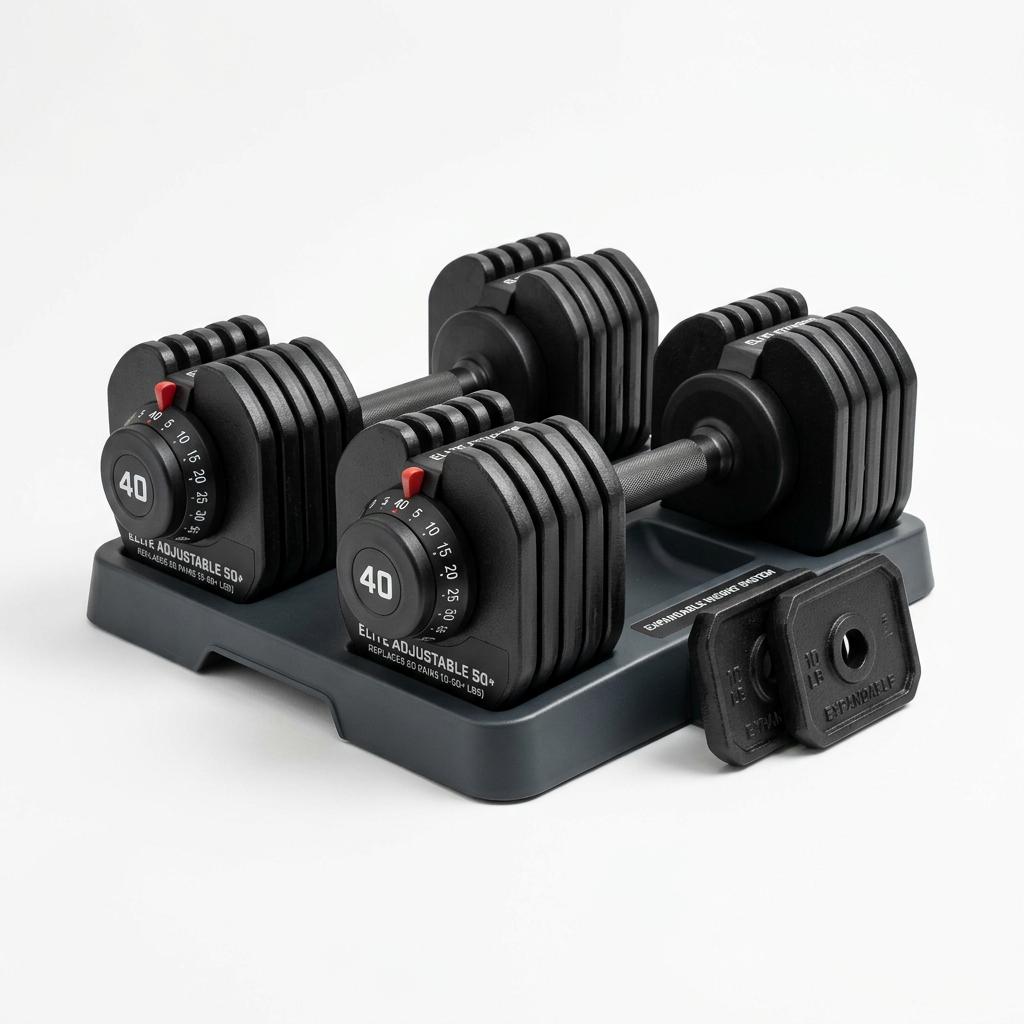 PowerBlock Elite EXP 5
 Fitness Reality 810XLT
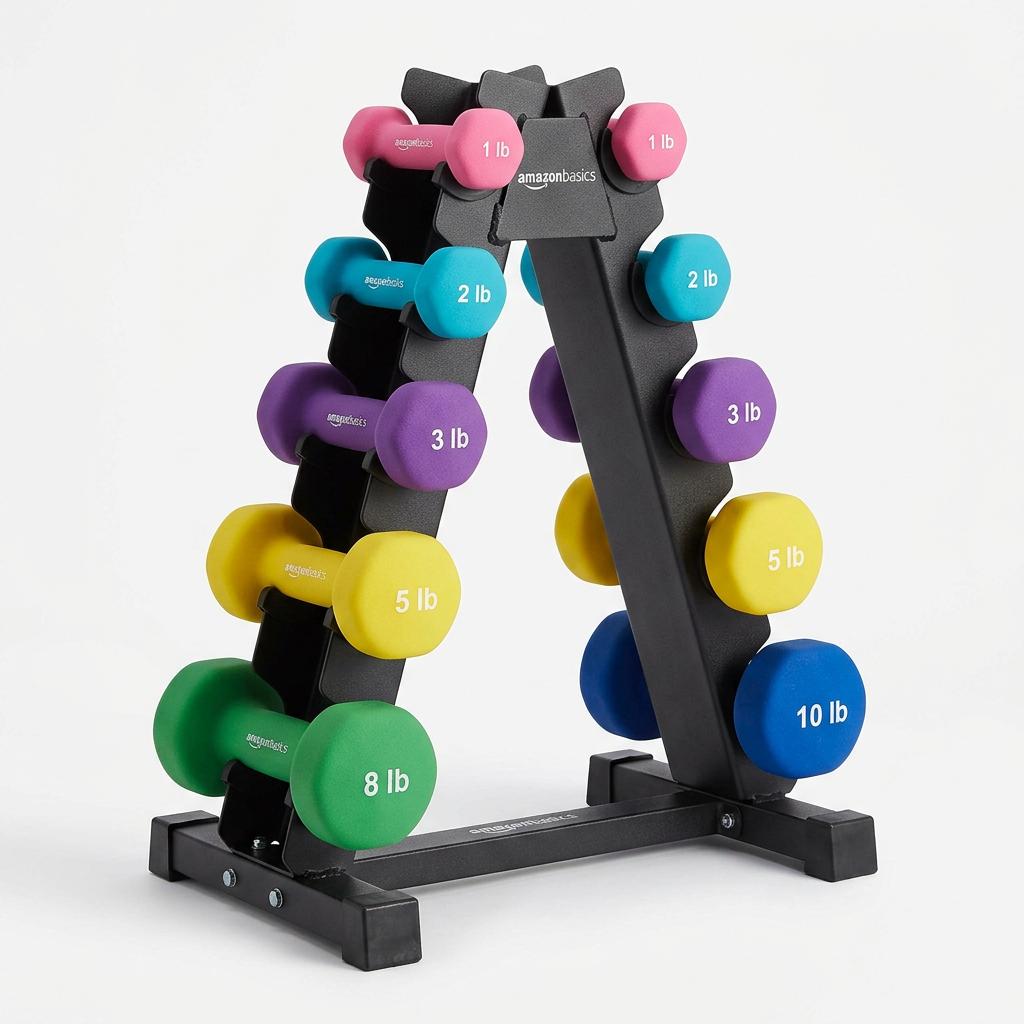 Fitness Reality 1000 S
 Body-Solid OB86B Olymp
 CAP Barbell 300lb Olym
 Amazon Basics Neoprene