Muscle Building in a Home Gym: Hypertrophy Principles & Progressive Overload

Evidence-based guide to building muscle in a compact home gym. Hypertrophy training principles, progressive overload strategies, and equipment requirements.

SnugGym Research Published

Muscle Building in a Home Gym: Hypertrophy Principles and Progressive Overload

Building muscle at home is not a compromise. The scientific principles of hypertrophy—mechanical tension, metabolic stress, and muscle damage—apply identically whether you train in a commercial gym or a 6×8 foot apartment corner. What changes are the tools you use and the creativity required to apply those principles consistently.

This guide covers the evidence-based fundamentals of hypertrophy training, how to implement them in a compact home gym, and the specific constraints and opportunities of limited-equipment environments.


The Three Mechanisms of Hypertrophy

Published research in exercise physiology identifies three primary drivers of muscle growth. Effective training programs manipulate all three.

1. Mechanical Tension

The force placed on a muscle fiber during contraction. Higher tension—produced by heavier loads and full-range-of-motion movements—signals the muscle to add contractile proteins (actin and myosin filaments).

Home gym implementation: Lift loads that bring you near failure at 6–12 reps. This rep range produces high mechanical tension per set. Use a weight where the final 2–3 reps require genuine effort to complete with proper form.

2. Metabolic Stress

The accumulation of metabolites (lactate, hydrogen ions, inorganic phosphate) during sustained muscle contraction under load. This creates the "burn" and muscle pump associated with higher-rep training. Metabolic stress triggers anabolic signaling pathways independent of mechanical tension.

Home gym implementation: Sets of 12–20+ reps, drop sets, supersets, and short rest periods (30–60 seconds) between sets maximize metabolic stress. Blood flow restriction training (using elastic bands at the proximal limb) is an advanced technique that produces high metabolic stress at very low loads.

3. Muscle Damage

Microscopic tears in muscle fibers that occur during eccentric (lengthening) contractions. Historically considered the primary driver of growth, current evidence suggests muscle damage is a consequence of training rather than a necessary stimulus. However, controlled eccentric loading remains valuable for strength development and connective tissue adaptation.

Home gym implementation: Emphasize the eccentric (lowering) phase of each rep with a 2–4 second tempo. Slow eccentrics increase time under tension and may enhance the hypertrophic response, though the independent role of muscle damage in growth is debated in current literature.


Progressive Overload: The Non-Negotiable Principle

Progressive overload is the gradual increase of stress placed on the musculoskeletal system over time. Without it, muscles have no stimulus to grow. This is the principle most home gym trainees violate—not through ignorance, but through failure to systematically track and increase load.

Methods of Progressive Overload (Ranked by Practicality)

Method Description Home Gym Feasibility
Increase load Add weight to the exercise Requires adjustable dumbbells or incrementable resistance
Increase reps Perform more reps at the same weight Always available; works until upper rep range limit
Increase sets Add sets per muscle group per week Always available; recovery-dependent
Decrease rest Shorten rest periods between sets Always available; may reduce performance
Increase ROM Expand range of motion (deficit push-ups, deep split squats) Always available; mobility-dependent
Increase tempo Slow the eccentric or add pauses Always available; increases time under tension
Increase frequency Train muscle groups more often per week Schedule-dependent; recovery-limited

The home gym advantage: Commercial gym users often default to method 1 (add weight) because plates are visible and available. Home gym users with limited weight increments learn to use methods 2–6 effectively—often producing better long-term results because they cycle through overload variables rather than relying solely on load.

Practical Progressive Overload Framework

Week-to-week progression for a home gym dumbbell program:

Week 1 (Intro): Establish baseline. Dumbbell bench press: 3 sets × 10 reps at 30 lb per hand. Form videoed for reference.

Week 2 (Volume): Same weight. 3 sets × 12 reps. Rep increase = progressive overload.

Week 3 (Load): Increase to 35 lb per hand. 3 sets × 8 reps. Load increase, volume maintained approximately.

Week 4 (Density): Return to 30 lb per hand. 4 sets × 10 reps. Same total load, increased volume density.

Week 5 (Deload): Reduce volume by 40%. 2 sets × 10 reps at 25 lb. Active recovery.

Week 6 (New Baseline): 3 sets × 10 reps at 35 lb per hand. Higher baseline than Week 1.

This 5-week mesocycle demonstrates how to progress without needing micro-weight plates or a full weight rack.


Equipment Requirements for Hypertrophy at Home

Minimum Viable Setup

Priority Equipment Cost Range What It Enables
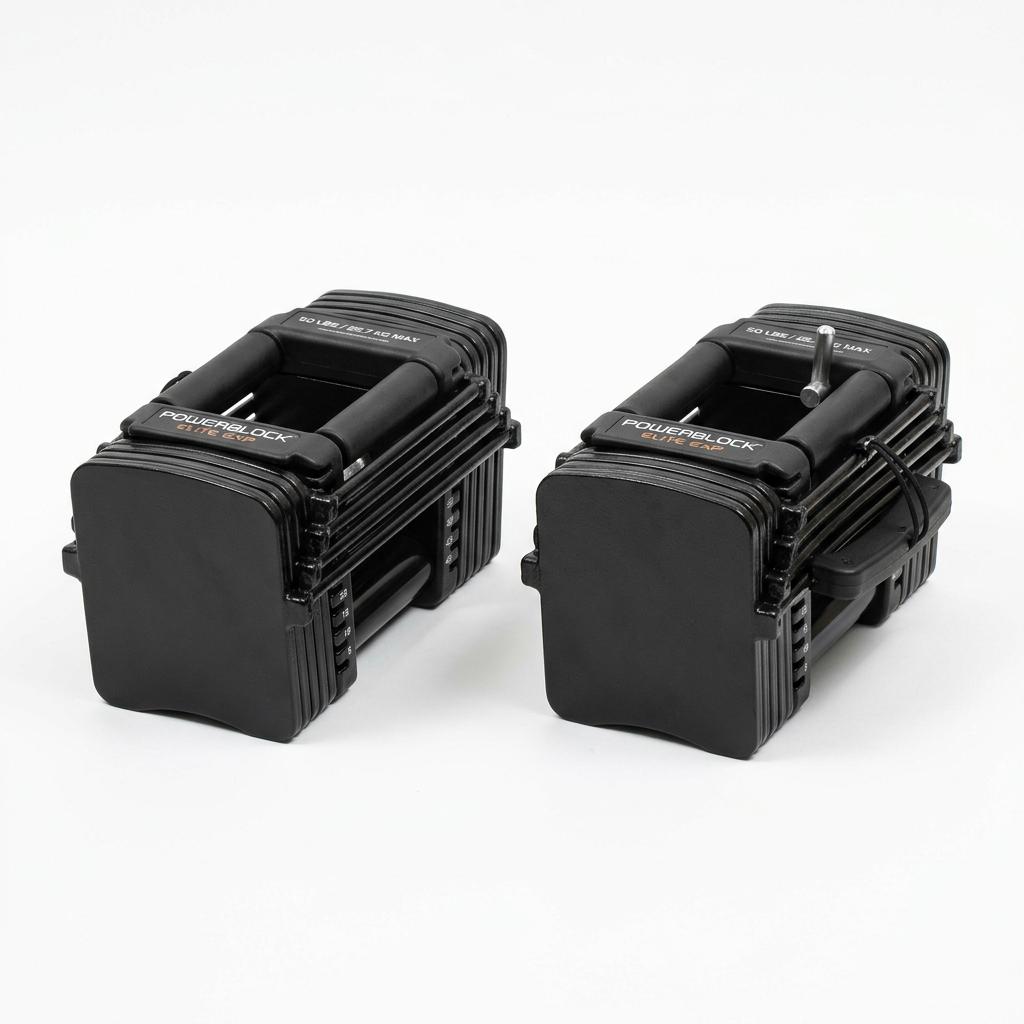
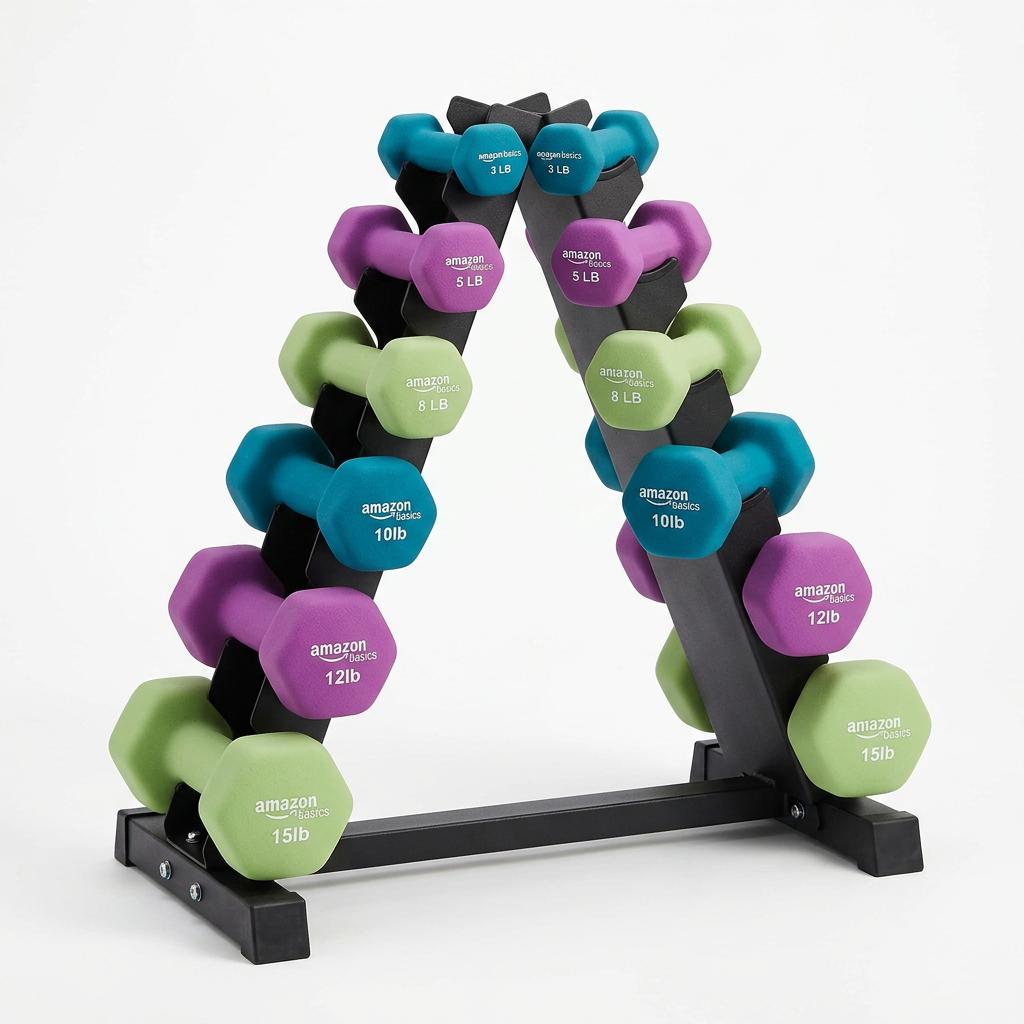
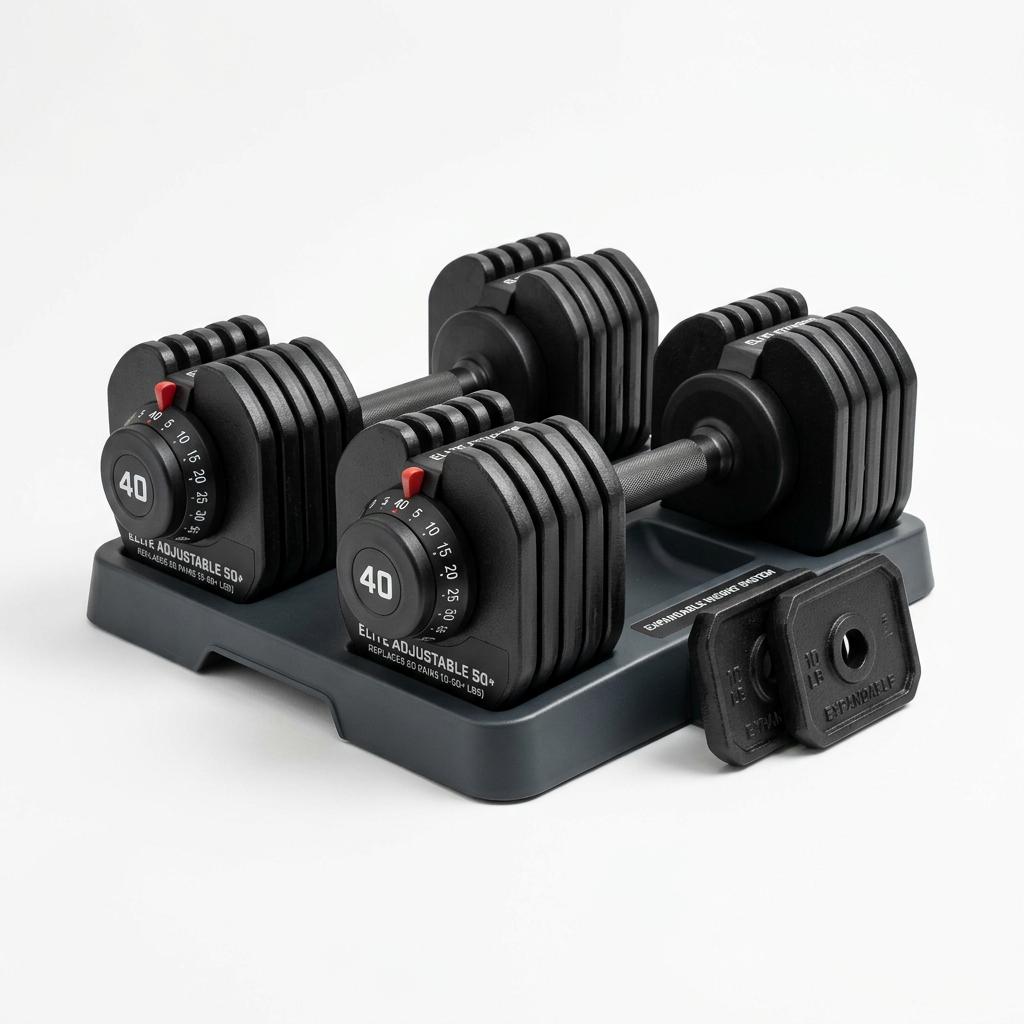
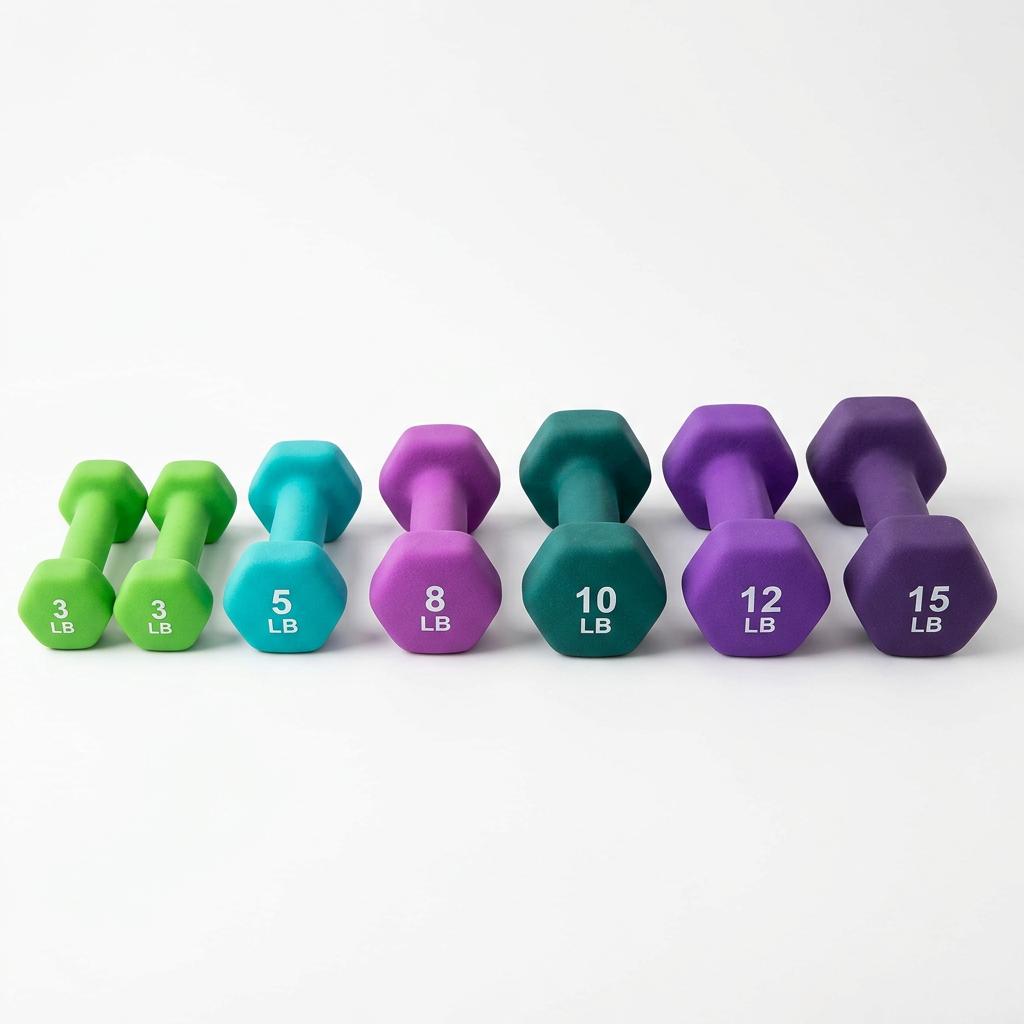
1 Adjustable dumbbells (5–50 lb) $150–350 All major pushing, pulling, leg exercises
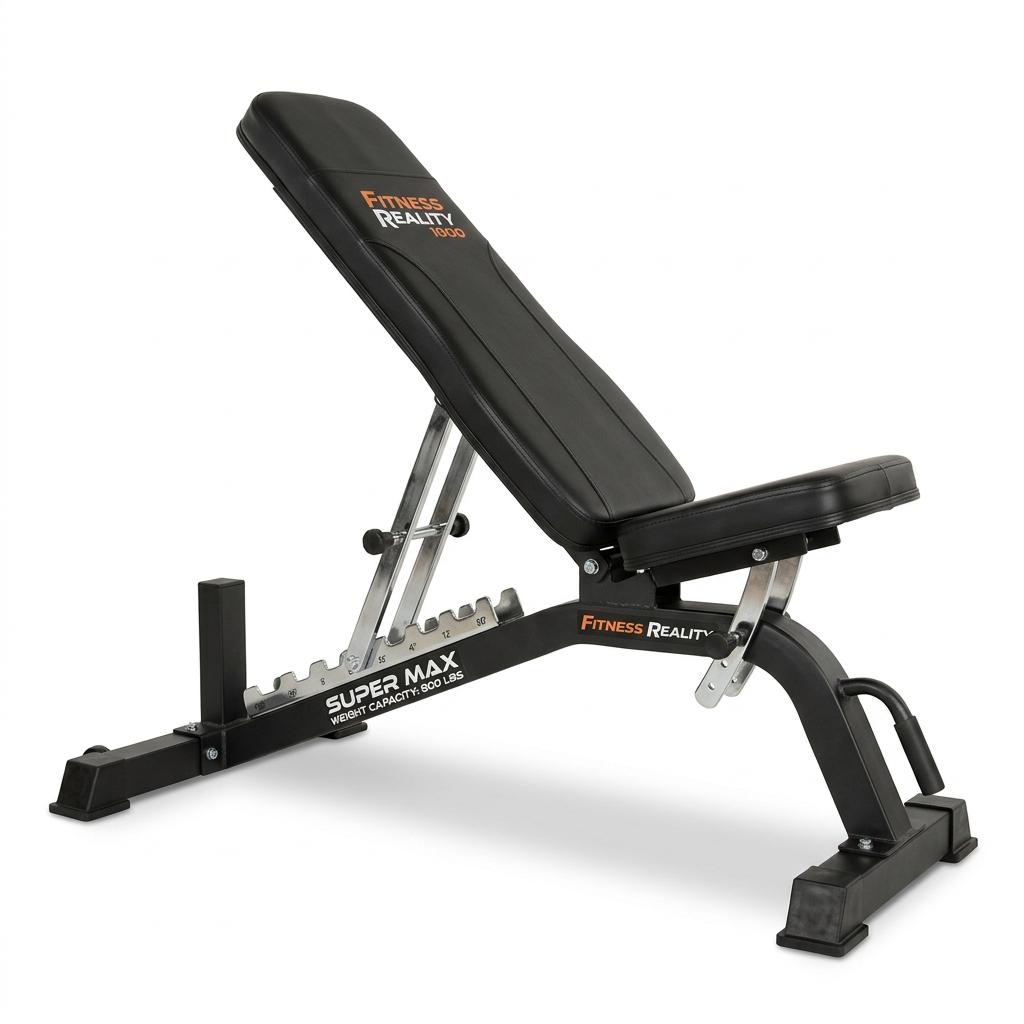
2 Adjustable bench (flat/incline) $100–250 Pressing angles, supported rows, step-ups
3 Pull-up bar or suspension trainer $30–100 Vertical pulling, bodyweight rows, core
4 Resistance band set $20–50 Face pulls, lateral raises, banded movements
Total $300–750 Complete hypertrophy program

The Weight Ceiling Problem

The primary constraint in home gym hypertrophy is maximum load. A commercial gym barbell loaded to 225 lb for squats or 315 lb for deadlifts is standard. Replicating this at home requires creative solutions:

For lower body (where home gym load is typically insufficient):

  • Unilateral training: Bulgarian split squats with 50 lb dumbbells produce comparable quad and glute activation to barbell back squats at significantly lower absolute load. Lunges, step-ups, and single-leg RDLs follow the same principle.
  • Tempo manipulation: A 3-second eccentric goblet squat at 50 lb produces high mechanical tension despite modest load.
  • Band-resisted movements: Looping a heavy resistance band over your shoulders and under your feet adds accommodating resistance to squats and lunges.
  • Plyometric progressions: Jump squats and bounding movements recruit high-threshold motor units at bodyweight.

For upper body:

  • Most trainees can progress upper body pressing and rowing for years within a 5–70 lb dumbbell range per hand.
  • The limitation appears for heavy chest-supported rows and overhead pressing for strong individuals.
  • Weighted pull-ups (using a dip belt or dumbbell between feet) extend pulling load beyond bodyweight.

When Home Gym Equipment Reaches Its Limit

Based on published strength standards and typical equipment specifications:

Exercise Home Gym Feasible To Limitation Point
Dumbbell bench press 70–90 lb per hand Dumbbell max weight
Dumbbell shoulder press 50–70 lb per hand Dumbbell max; also ceiling height
Goblet squat 50–90 lb single dumbbell Grip strength, dumbbell max
Bulgarian split squat 50–70 lb per hand Balance, dumbbell max
Dumbbell RDL 70–90 lb per hand Grip strength (use straps)
Pull-ups Bodyweight + 45–90 lb added Belt/attachment system
Dumbbell row 70–100 lb per hand Dumbbell max; bench support limit

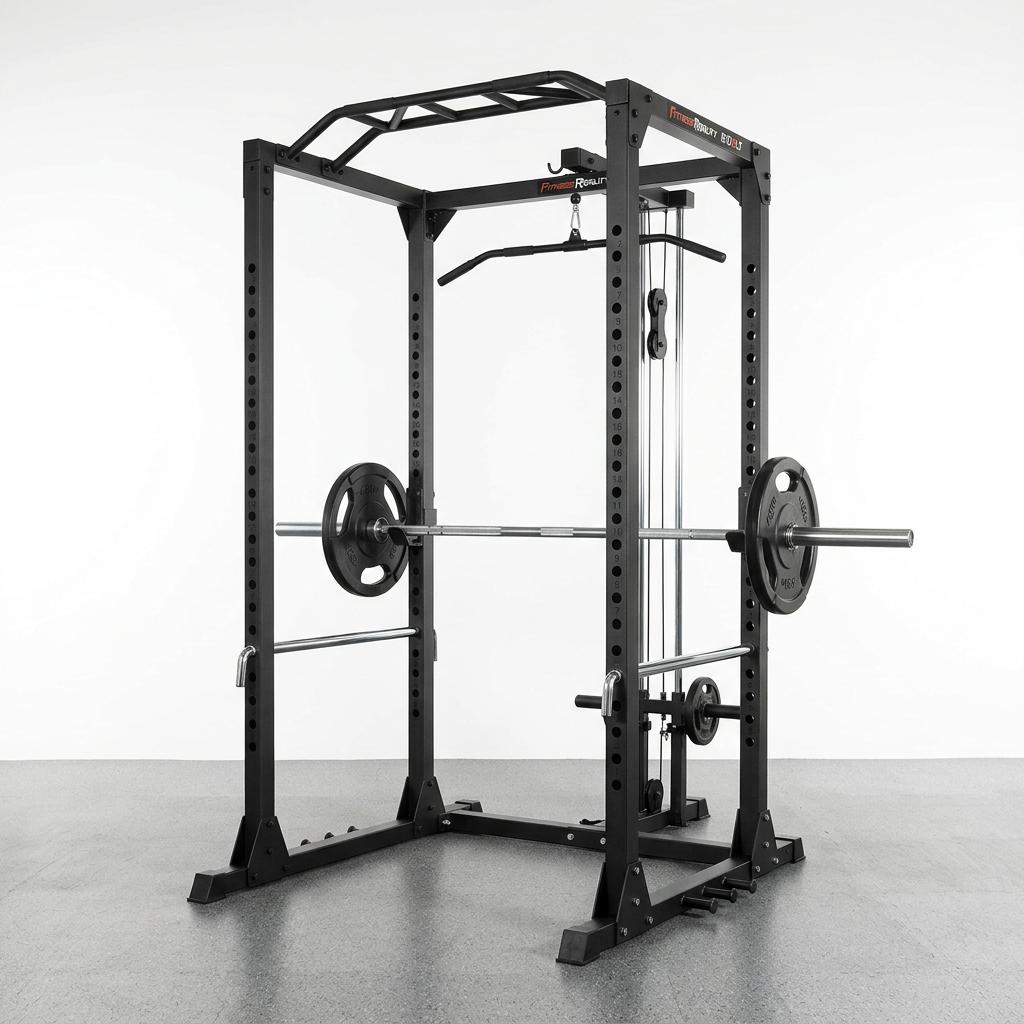
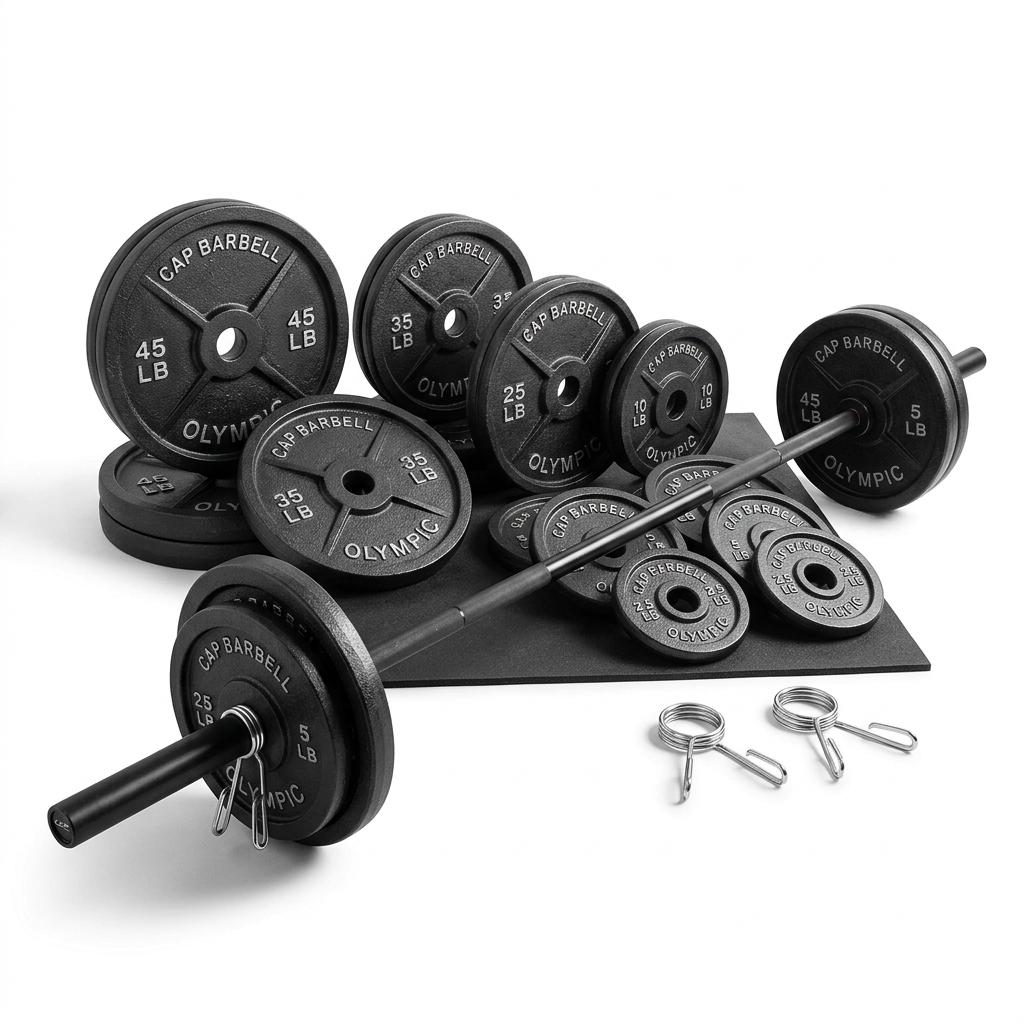
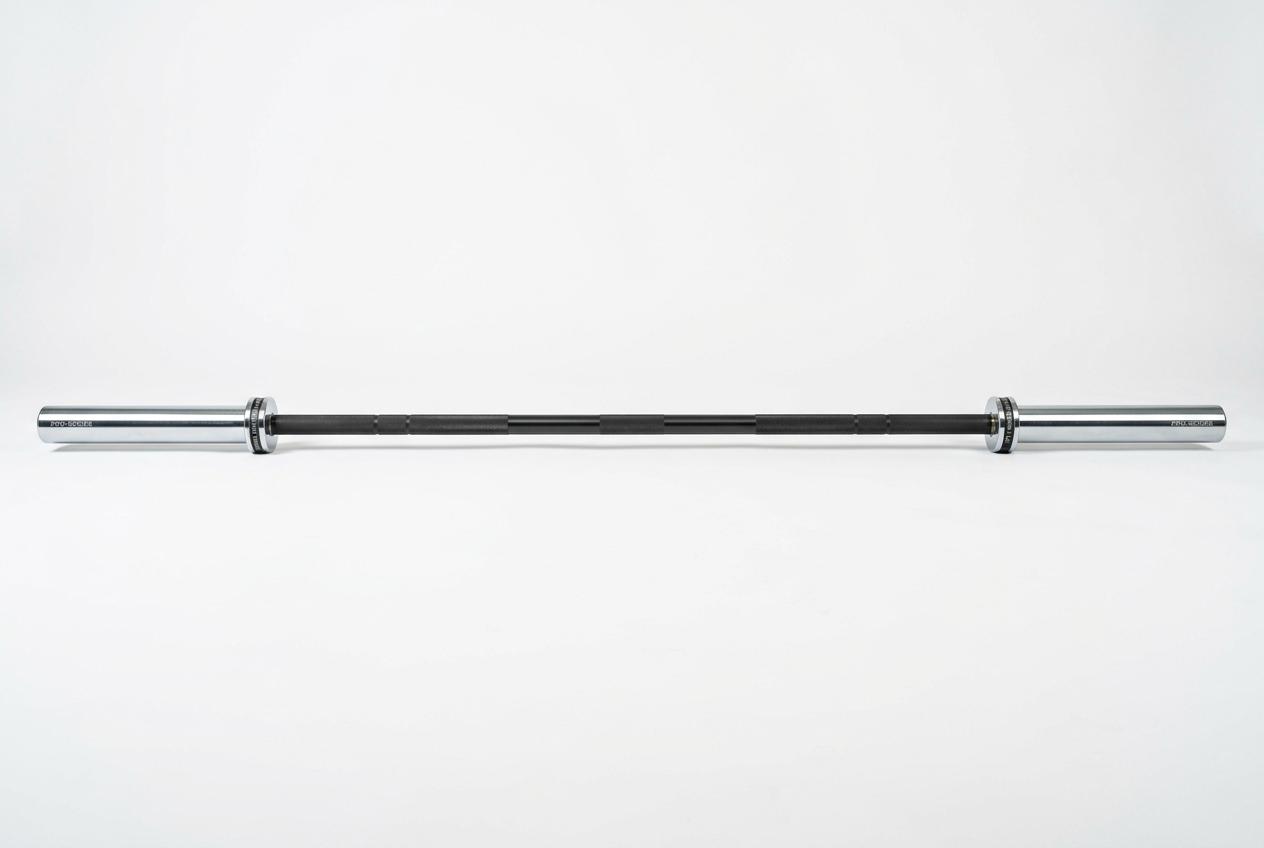
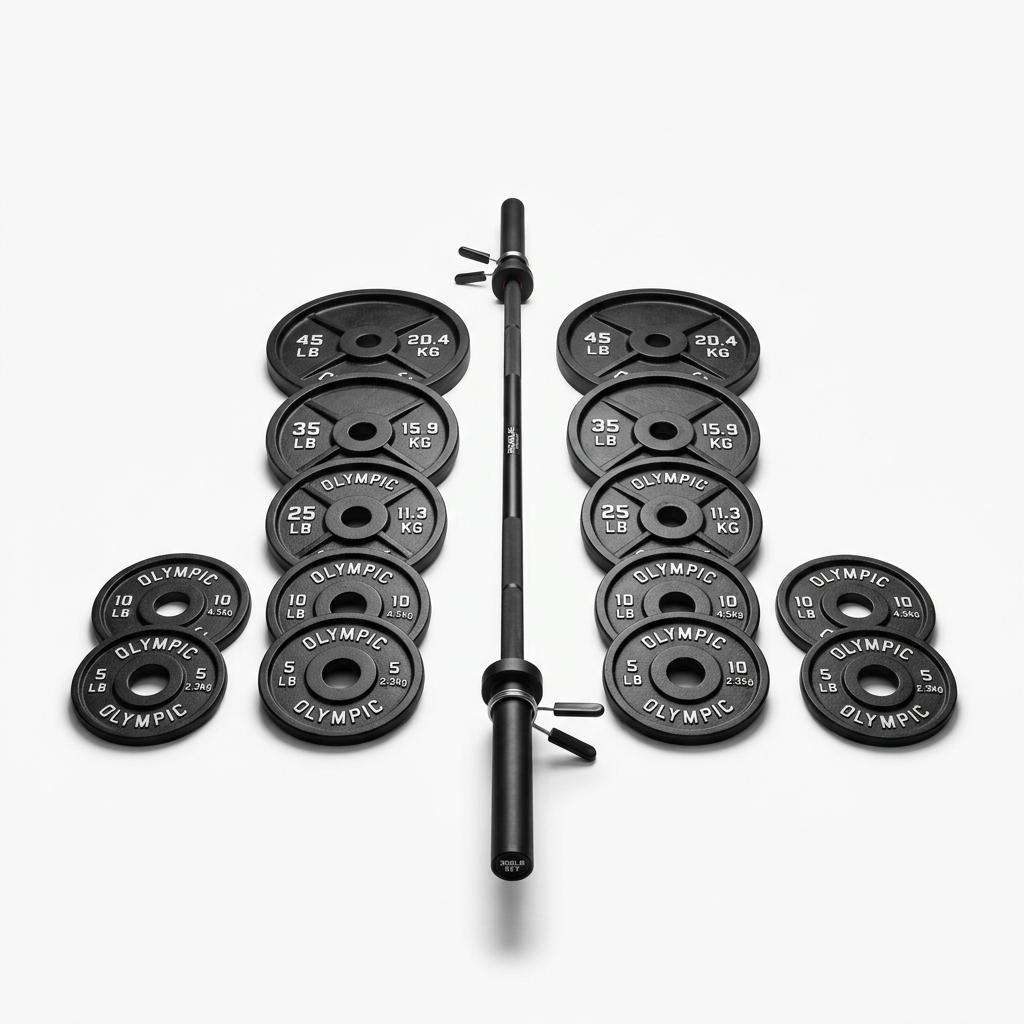
Trainees who reach these ceilings have two options: (1) transition to a commercial gym for heavy compound lifts while maintaining a home gym for accessory work, or (2) invest in a barbell, rack, and plate set if space and building constraints allow.


Training Variables for Home Gym Hypertrophy

Volume (Sets per Muscle Group per Week)

Meta-analyses indicate that 10–20 sets per muscle group per week optimize hypertrophy for most trained individuals. Beginners respond to as few as 6–10 sets. Advanced trainees may benefit from 15–25+ sets, with diminishing returns above ~20 sets for natural (non-pharmaceutically enhanced) lifters.

Home gym volume planning:

  • Full body (3×/week): 4–6 sets per muscle per session = 12–18 sets/week
  • Upper/lower split (4×/week): 6–8 sets per muscle per session = 12–16 sets/week
  • Push/pull/legs (6×/week): 4–6 sets per muscle per session = 12–18 sets/week (higher frequency, lower per-session volume)

Intensity (Proximity to Failure)

Research indicates that sets taken within ~3 reps of failure (RIR 3 or less) produce similar hypertrophy to sets taken to complete failure. Training 1–2 reps from failure most of the time balances stimulus with recovery.

Home gym application: Since you train alone without a spotter, stopping 1–2 reps before failure on pressing movements is a safety necessity as well as an optimal training strategy. Use a bench with safety catches or perform dumbbell presses that can be safely dropped to the floor.

Frequency (Training Sessions per Week)

Training a muscle group 2–3 times per week produces greater hypertrophy than once per week, given equal weekly volume. Higher frequency distributes volume more evenly, maintains elevated muscle protein synthesis (which peaks 24–48 hours post-training), and may reduce per-session fatigue.

Home gym advantage: Having equipment in your home removes the friction of traveling to a gym. Three 35-minute sessions per week are more feasible than two 60-minute trips to a commercial facility.

Rest Periods

Goal Rest Period Application
Strength (heavier loads, lower reps) 2–4 minutes 3–6 rep sets
Hypertrophy (moderate loads) 60–120 seconds 8–12 rep sets
Endurance/metabolic stress 30–60 seconds 12–20+ rep sets

In a home gym, rest periods can be timed precisely without feeling rushed by gym traffic or equipment availability constraints.


Sample Home Gym Hypertrophy Program

Full-Body (3×/week) — Minimum Equipment

Exercise Sets × Reps Rest Notes
A1. Dumbbell Goblet Squat 3 × 10–12 90 sec Deep ROM, controlled eccentric
A2. Push-Up (or DB Bench) 3 × 8–12 90 sec Add weight or elevate feet as you progress
B1. Dumbbell Romanian Deadlift 3 × 10–12 90 sec Hip hinge, feel hamstring stretch
B2. One-Arm Dumbbell Row 3 × 10–12/side 90 sec Supported on bench
C1. Dumbbell Overhead Press 3 × 8–12 90 sec Seated or standing
C2. Walking Lunge 3 × 10/leg 90 sec Bodyweight or with dumbbells
D1. Resistance Band Face Pull 3 × 15–20 60 sec Door anchor, external rotation at end
D2. Plank 3 × 30–60 sec 60 sec Add weight or progress to harder variations

Progression: Add reps until you reach the top of the range, then increase weight and work back up. Every 4th week, reduce volume by 40% (deload).


Nutrition: The Other Half of the Equation

Muscle growth requires a sustained positive energy balance and adequate protein intake. No training program overcomes inadequate nutrition.

Nutrient Target Rationale
Protein 1.6–2.2 g per kg bodyweight (0.7–1.0 g per lb) Muscle protein synthesis substrate; distributed across 3–5 meals
Total calories Maintenance + 200–500 kcal/day for lean gain Surplus required for anabolic processes; excess causes fat gain
Carbohydrates 3–5 g per kg bodyweight Fuel for training; supports recovery and glycogen replenishment
Fats 0.8–1.0 g per kg bodyweight Hormonal health; essential fatty acid requirements

Protein distribution: Consuming 20–40 g of protein per meal, spread across 3–5 meals, maximizes muscle protein synthesis stimulation versus fewer, larger protein doses.

For detailed nutrition and supplement guidance, see our electrolytes for exercise guide.


Common Home Gym Hypertrophy Mistakes

  1. Not tracking workouts — Progressive overload requires a record. A notebook or app is non-negotiable.
  2. Always training to failure — Reduces total weekly volume and increases recovery demands. Stop 1–2 reps short.
  3. Neglecting lower body — Home gyms make lower body training seem harder (no leg press, no heavy squat rack). Unilateral work solves this.
  4. Inconsistent training frequency — Three sessions every week beats five sessions one week and one the next. Consistency produces 80% of results.
  5. Insufficient protein intake — The most common nutrition failure. Track intake for one week to establish baseline.
  6. No deload periods — After 3–5 weeks of progressive training, reduce volume for one week. Recovery enables continued progress.
  7. Chasing variety over progression — Switching exercises every week prevents load accumulation. Keep core exercises consistent for 8–12 weeks.

Who This Is For

  • Home gym owners who want evidence-based muscle-building guidance
  • Trainees transitioning from commercial gyms to home setups
  • Beginners building their first hypertrophy program
  • Anyone who has plateaued in a home gym and needs systematic overload strategies

Who This Is NOT For

  • Competitive bodybuilders requiring specialized equipment and periodization
  • Powerlifters focused on maximal strength in squat, bench, and deadlift
  • People unwilling to track workouts and nutrition with reasonable precision

Bottom Line

Muscle building at home follows the same physiological principles as muscle building anywhere. Mechanical tension, metabolic stress, and progressive overload drive growth regardless of location. The home gym's constraints—primarily maximum load and exercise variety—are real but solvable through unilateral training, tempo manipulation, band resistance, and creative programming.

A $400 equipment investment (adjustable dumbbells, bench, pull-up bar, bands) supports years of productive hypertrophy training. The limiting factor is rarely equipment. It's consistency, progressive overload execution, and adequate nutrition.


As an Amazon Associate we earn from qualifying purchases.

Last updated: 2025-07-21